Thursday, 29 December 2022

What to expect at CES 2023

What to expect at CES 2023

Taking a deep breath as I write these words: Next week, TechCrunch will return to our first in-person CES in three years.

Phew. It felt good to finally get that off my chest.

The last time our team flew to Las Vegas for the event was January 2020. An auspicious date. It wouldn’t be long before the entire world went pear-shaped. It was a big show, with 117,000 in attendance, per the CTA’s (Consumer Technology Association) figures. The event, which its governing body would rather you not call the Consumer Electronics Show, has become a sprawling affair in recent decades.

Attempting to see the entire show is a fool’s errand. Back in my younger, more hopeful days, I made a point of seeing as much of it as I could, making a pretty good run at walking every official hall. That’s become increasingly impossible over the years, as the show has spilled out well beyond the confines of the Las Vegas Convention Center. There’s the Venetian Convention and Expo Center (RIP the Sands), countless hotel suites and various official and unofficial event spaces orbiting around the strip.

As with countless other live event producers, the last three years have presented a kind of existential crisis for the CTA. After much foot dragging, the organization had to finally admit that an in-person CES 2021 was a terrible idea for all parties, and the pivot to a virtual event was understandably rocky. Last year, the show dovetailed with the omicron spike, and TechCrunch — among others — made the decision to sit that one out. Highly contagious new strains, coupled with holiday travel was a bridge too far.

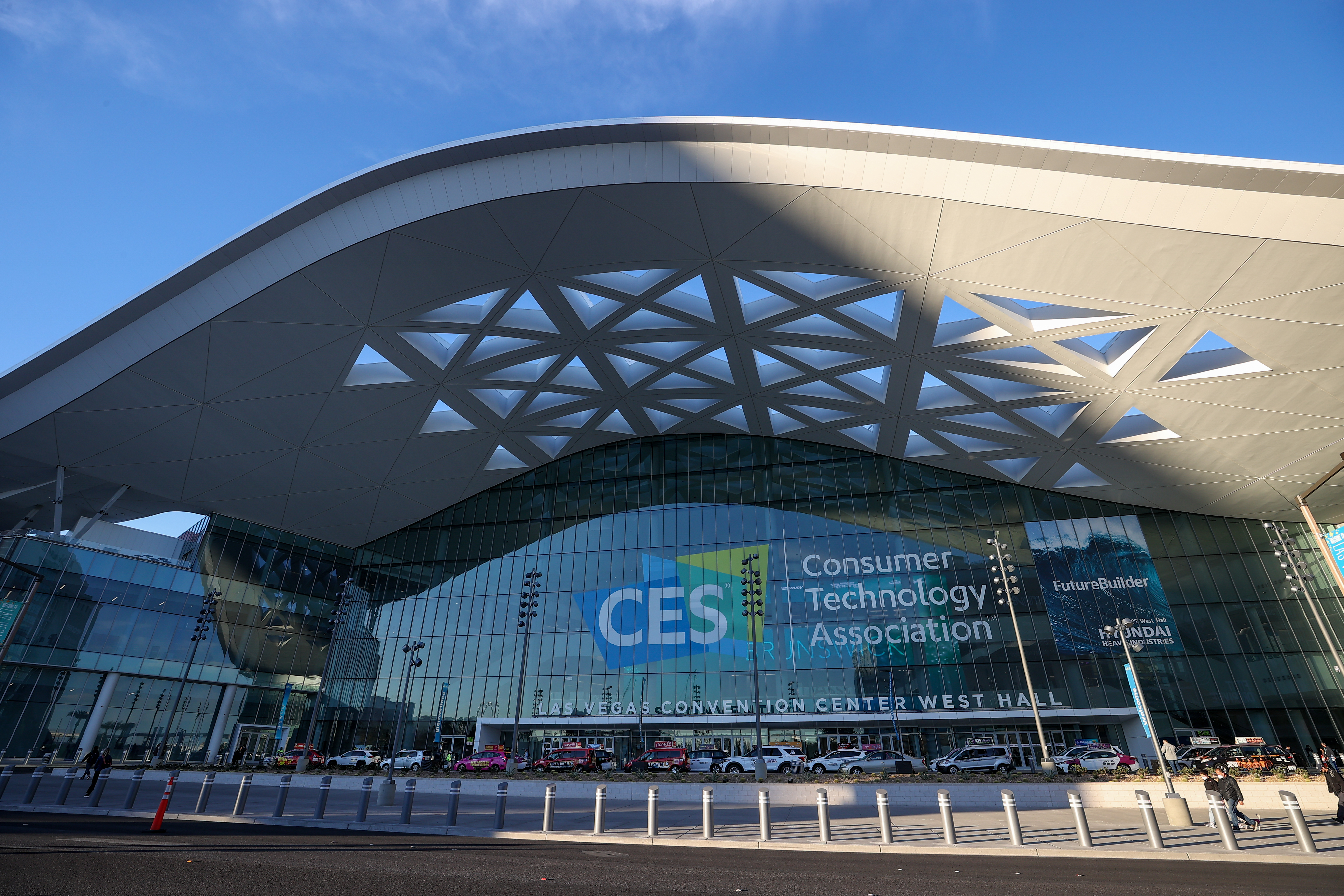
LAS VEGAS, NEVADA - JANUARY 5: CES, the world's largest annual consumer technology trade show opens its door to visitors on January 5, 2022 at the Las Vegas Convention Center in Las Vegas, Nevada, United States. (Photo by Tayfun Coskun/Anadolu Agency via Getty Images)

CES, the world’s largest annual consumer technology trade show opens its door to visitors on January 5, 2022, at the Las Vegas Convention Center in Las Vegas, Nevada, United States. Image Credits: Tayfun Coskun/Anadolu Agency via Getty Images

Last year’s numbers were down significantly. The CTA pegged the event at “well over 40,000” people (44,000 is the commonly accepted figure), marking a 75% drop from 2020. It’s a remarkable drop, but I suppose that, given everything happening at the time, cracking 40,000 was a victory of sorts. The CTA says it’s on track for 100,000 this year — seeing as how there isn’t another prominent COVID-19 variant, it seems likely that, at the very least, there will be a sizable jump from 2022.

I’m likely not alone in my suspicions that the CTA didn’t want people getting too comfortable with 2021’s virtual event. Well before COVID, there had been a longstanding question around the efficacy of in-person tech events. CES and other hardware shows have had an edge in that debate, with a focus on products that do benefit from being seen in person. That said, the last two years have demonstrated that it is, indeed, possible to cover the show reasonably well from your living room.

We have, however, moved beyond conversation about “the new normal” (honestly, when was the last time you heard that phrase uttered in earnestness?). The new normal happened when we weren’t looking. The new normal is that the virus doesn’t exist because we say it doesn’t. Have I gotten it three times, including once from attending a trade show in Vegas? Well, yeah. Do I recognize that the act of attending a show that’s billing itself as drawing in 100,000 attendees means there’s a reasonable expectation that I could be staring down time number four in mid-January? Absolutely. The CES COVID protocols are here. The TL;DR is that vaccination, testing and masking aren’t required, but you can if you want. That’s pretty much the standard everywhere at this point.

LAS VEGAS, NEVADA - JANUARY 05: Attendees pass through a hallway at the Las Vegas Convention Center on Day 1 of CES 2022, January 5, 2022 in Las Vegas, Nevada. CES, the world's largest annual consumer technology trade show, is being held in person through January 7, with some companies deciding to participate virtually only or canceling their attendance due to concerns over the major surge in COVID-19 cases. (Photo by Alex Wong/Getty Images)

Attendees pass through a hallway at the Las Vegas Convention Center on Day 1 of CES 2022, January 5, 2022, in Las Vegas, Nevada. CES is the world’s largest annual consumer technology trade show. Image Credits: Alex Wong/Getty Images

Is there still value in going? I think, yes. I mean, I’m going. Other TC staff are also going. We’ve pared down our presence from past years, and I imagine this is going to be the case moving forward. Given the amount of CES news that’s released via press release and the fact that pretty much every press conference is streamed, the right approach to covering an event like this is be smaller and more strategic.

This isn’t simply a product of this new, endemic virus. It’s a product of a shifting landscape for media in general. For all of my personal issues with the event, I do genuinely have nostalgia for those days of pure, uncut blogging, back when there was still money being dumped into format, before everything became paywalled. There’s value to be had at shows like this, but for TechCrunch, at least, it’s about taking the right meetings and finding the people who are working on cool things. It’s harder than it sounds, having come back to 1,600 unread emails after a couple of weeks off. We made this list, and I plan to check it twice more before I hop on a plane next week.
Stellantis automaker software

Image Credits: DENIS CHARLET/AFP / Getty Images

Even before these particular sets of circumstances, CES has been through a few crises of confidence. Figures have ebbed and flowed over the years, as is the nature of these things. The smartest thing the CTA has done in the past several years is lean into the automotive side. What started as an embrace of high-tech in-car systems has expanded significantly. It’s almost as if CES became a car show when none of us were looking.

One of the show’s key plays is timing. Much to the chagrin of every person who has attempted to enjoy some time off during the holidays, it’s positioned as the first show of the year in an attempt to set the cadence for the remaining 11.5 months. CES technically starts on January 5, but the press days are two days prior. This year, I’m flying out on the 2nd, just to make sure we’ve got our bases covered. There have been years when I’ve flown in on the 1st. Let’s just say I’m glad I stopped drinking a couple of years back.

By positioning the show right at the beginning of the year, it’s got a few months’ jump on major auto shows like the ones held in Chicago, Atlanta and New York. The technology angle means we get a good look at a lot of EVs and autonomous driving systems, as well as eVTOLs and micromobility. Expect some big news, including keynotes from BMW and Stellantis. Chip makers like Qualcomm and AMD also always have a lot on the automotive front at the show.

Hyundai CES 2022 plug n drive

Image Credits: Hyundai

Hyundai will have a sizable presence at the show as well, walking the line between automotive, mobility and robotics. In fact, judging by my overstuffed inbox, it’s going to be a huge year for robotics, from consumer to the presence of key industrial startups in a broad range of different categories. Robotics is always a tricky one at CES. Big companies love to show off flashy robots that never go anywhere (believe it or not, the most recent Sony Aibo is a relative success story there), and there are going to be a ton of junky robotics toys. But the show is still a great place to see some legitimate breakthroughs up close. Stay tuned for next week’s issue of Actuator to get a full breakdown.

My inbox is also flooded with web3 and crypto pitches, despite the fact that I can count on one hand the number of times I’ve written about the subject over my 6+ years at TechCrunch. To say the industry hit a rough patch in 2022 is like saying Elon is “still figuring it out” as Twitter CEO. The believer still believes theirs is the fix-all solution to every problem plaguing humankind. Expect that to trickle into every aspect of the show, including, somewhat ironically, climate.

I would love to see sustainability become a major topic at CES. Apparently there’s a section in the Convention Center’s North Hall. There’s mostly been a smattering of climate companies at the show, but I’ve certainly never been overwhelmed by them. Hopefully this is the year that starts to turn around. Ditto for accessibility. I’ve heard tell of a few companies with this focus at the show, but this is something else that really needs to be at the forefront.

Remote control / smart home Image Credits: Erhui1979 / Getty Images

Much has been written about Amazon’s Alexa struggle of late. It’s safe to say that the smart home market hasn’t worked out like everyone planned. I do, however, anticipate a sizable press at CES, bolstered by Matter. The standard, supported by Amazon, Apple and Google, among others, really started gaining steam over the last few months. If things go according to plan, this CES will be an important moment, as the various categories of connected home gadgets are on full display.
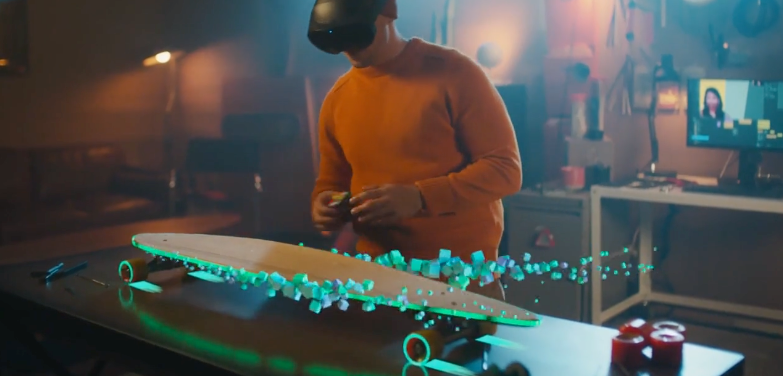
Meta Quest Pro

Image Credits: Meta

AR/VR — yes, I say this every year. Yes, even more than with smart homes, this one has yet to shake out the way many hoped. The recent debut of Meta’s Quest Pro and HTC’s Vive tease will anchor the big VR news. AR will likely be even more ubiquitous. Even more than virtual reality, augmented reality feels like the Wild West right now. There are a ton of hardware makers currently vying for a spot on your face. Traditionally, CES hasn’t been very gaming focused, but Sony does tend to make it a centerpiece of its own press conference and we’ll likely be getting some face time with PlayStation VR.

Wearables should get some love at the show. Oura’s success has catapulted the ring form factor. We already wrote up Movano’s pre-show announcement. Bigger names like Google, Samsung and Apple do most of their gadget announcing at their own events these days, but CES is an opportunity for some of the smaller firms to grab a bit of attention. I’d anticipate an even bigger focus on health metric monitoring from names like Withings. Connected home fitness remains a key trend to watch, fueled by that initial pandemic push.

Image Credits: Oura

As ever, phones are mostly a nonstarter here. Mobile World Congress is where that magic happens. Otherwise, anticipate a smattering of announcements from hardware firms like Lenovo and Sony, which don’t have much of a presence in the North American market. This has, however, traditionally been a big show for PCs. Dell, Asus and Lenovo all have big presences, while AMD and Nvidia could serve up some big news about the chips that power those systems.

We don’t cover them that much, but CES is also big for TVs, in every sense of the word. LG, Samsung, Sony and TCL will likely have the latest, greatest and largest. QD-OLED and MLA OLED are the magic words — or letters, I guess.

The press days are January 3 and 4, and the CES show floor officially opens on January 5. Plan accordingly.

Read more about CES 2023 on TechCrunch

What to expect at CES 2023 by Brian Heater originally published on TechCrunch



Spotify wants to help you ring in 2023 with its New Year’s Hub

Spotify wants to help you ring in 2023 with its New Year’s Hub

Spotify has launched a New Year’s Hub to help its users ring in 2023, the streaming service announced on Thursday. The company says the one-stop destination gives users access to classic party playlists and special takeovers from artists like Charli XCX, Rita Ora, N-Dubz and Céline Dion.

“We’ve got plenty of music to kickstart your celebration, and it’s all in our freshly launched New Year’s Hub,” Spotify wrote in a blog post. “Whether you want a low-key night or a heart-pounding dancefest, we have you set with featured playlists to match the vibe you’re channeling.”

The New Year’s Hub includes many up-beat playlists, including “Party Hits,” “Afro Party Anthems,” “Get Turnt” and more. On the other hand, there are also playlists for people who want to have a low-key New Year’s Eve, with playlists like “Chill Hits,” “Comfort Zone” and “Chillout Lounge.” The New Year’s Hub also includes many DJ mixes from artists like Tiësto, Hannah Laing and Benny Benassi.

The company also announced that starting on January 1, users will find content to help them set their resolutions on the app’s Home page. Although Spotify didn’t provide specifics about what this content will look like, it will likely include things like workout and meditation playlists.

Spotify says its platform always sees some level of anticipation around the new year, and that shows in the playlists users put together. Last year, 82,000 New Year’s Eve playlists were created between Christmas and January 31, with nearly 40,000 created on the night itself. Pop, hip-hop, trap, k-pop and indie pop were the top genres played worldwide. Genres that saw the most significant rises in listeners were cumbia, discofox, volksmusik, schlager and partyschlager.

Hey Ya!,” “Uptown Funk” and “Mr. Brightside” were all popular among these playlists. Many of the songs that gained more streams were New Year-specific tracks like Mariah Carey‘s rendition of “Auld Lang Syne – The New Year’s Anthem” and ABBA’s “Happy New Year,” which was in the lead with a 2,205% increase in plays.

Spotify wants to help you ring in 2023 with its New Year’s Hub by Aisha Malik originally published on TechCrunch


India to explore prohibition of unbacked crypto in its G20 presidency

India to explore prohibition of unbacked crypto in its G20 presidency

India said on Thursday that under its G20 presidency, it will prioritize the development of a framework for global regulation of unbacked crypto assets, stablecoins and decentralized finance and will possibly explore their “prohibition” in a potentially large setback for the nascent industry.

The Reserve Bank of India, the Indian central bank, said that crypto assets are highly volatile and exhibit high correlations with equities in ways that disputes the industry’s narrative and claims around the virtual digital assets being an alternative source of value due to their supposed inflation hedging benefits.

The Indian central bank warned that policymakers across the globe are concerned that the crypto sector may become more interconnected with mainstream finance and “divert financing away from traditional finance with broader effect on the real economy.”

India began its year-long presidency of the Group 20 early this month. The group, which comprises 19 nations across continents and the EU, represents 85% of the world’s GDP. It also invites non-member countries including Singapore and Spain and international organizations such as World Bank and the IMF.

(Developing story. More to follow.)


India to explore prohibition of unbacked crypto in its G20 presidency by Manish Singh originally published on TechCrunch


Why GGV Capital’s Hans Tung is OK with 2023 being ‘the year of down rounds’

Why GGV Capital’s Hans Tung is OK with 2023 being ‘the year of down rounds’

With over $9 billion in assets under management, GGV Capital is one of venture capital’s largest and most prominent players. The 22-year-old firm invests in startups from seed to growth stages across a variety of sectors, including consumer, internet, enterprise/cloud and fintech.

This year was one of the most difficult the startup world has seen in some time, as it forced investors and founders alike to adapt to a drastically different market than they enjoyed in 2021.

To better understand GGV’s position during a challenging venture environment, I sat down with managing partner Hans Tung to get his thoughts on the state of investing today, why he believes that there are “many more large fintechs yet to be built” and that raising a down round “is not the end of the world.”

“It’s not the end of the world if you raise a down round. The only thing that matters is that you end up having a good outcome.” GGV's Hans Tung

Principal Robin Li also joined the conversation, sharing why she thinks embedded fintech is going to play a crucial role in financial services in the coming years.

An investor for over two decades, Tung has backed the likes of publicly traded BNPL giant Affirm, real estate fintech Divvy Homes, IDwall, Karat, Rupeek, Mexico’s Stori and Turtlemint. Having seen a few cycles, Tung is perhaps less spooked by the current downturn than some other VCs. Li has led Karat Financial and Novo.

[Editor’s note: This interview has been edited for clarity and brevity.]

GGV’s Robin Li and Hans Tung. Image Credits: GGV Capital

How has this year been for you as an active fintech investor?

Tung: We don’t try to time the market. So last year, we didn’t over-invest. There was a lot of internal push away from keeping up pace with others. I think it worked out well since we have plenty of dry powder left and more time to be deliberate this year. We also have time to double down on our existing portfolio as well. That said, we have probably slowed our pace of investing in our global portfolio by about 50% this year versus last year.

Why GGV Capital’s Hans Tung is OK with 2023 being ‘the year of down rounds’ by Mary Ann Azevedo originally published on TechCrunch


How TechCrunch+ followed the roller-coaster crypto market in 2022

How TechCrunch+ followed the roller-coaster crypto market in 2022

In 2022, the crypto community rose to new heights — and then it crashed. We noted this as early as June 2022, before the FTX fiasco (which we’re using as the catchall term for the crash, alleged fraud, bankruptcy, congressional hearing, Sam Bankman-Fried‘s arrest in the Bahamas, the call for his extradition, etc.).

However, this isn’t supposed to be an article chronicling FTX’s downfall from the past year — it’s a recap of our 2022 crypto coverage, which could also be seen as a Jacquelyn Melinek highlights reel with a feature from Alex Wilhelm.

Here’s some of our top 2022 crypto coverage:

Terra community passes proposal to revive LUNA cryptocurrency following stablecoin-led implosion

In May, LUNA nosedived, and the market followed suit. Terraform Labs founder Do Kwon shared a plan to revive the Terra Ecosystem, including the formation of a new blockchain. Jacquelyn noted: “The launch of LUNA 2.0 will be a test of whether the community is as strong as it says it is. But many are wary of trusting Kwon and the Terra team again after the LUNA and UST downfall.”

Ethereum drops more than 17% after ‘way overhyped’ Merge

In early to mid-September, whispers of “the Merge” were everywhere we turned an ear. A quick refresher: The Merge was a highly anticipated event where Ethereum shifted from proof-of-work to proof-of-stake. It may have been overhyped.

Blue-chip NFT owners explore alternative uses as sales decline

During the most recent crypto bull market, the NFT subsector also rose to new heights. As NFT sales slowed, blue-chip NFT holders began looking for new ways to profit. For the uninitiated: The term “blue-chip NFTs” derives from “blue-chip stocks,” which often refer to the most valuable companies on the market. In this case, they’re the most desirable or high-value NFTs. What are they worth amid crypto winter?

Terra’s UST crash will make life harder for crypto as regulation looms

In May 2022, Terra UST crashed, which led to a push for crypto regulation. “UST is an algorithmic stablecoin mainly backed by its sister cryptocurrency, LUNA, but was also backed by bitcoin. Founder Do Kwon previously told TechCrunch that plans were in place to back it with other cryptocurrencies over time. It’s unclear if that road map is still in place for UST as it tries to recover from its downfall,” Jacquelyn wrote. To regain the trust of traders and holders, the next move would be regulation … right?

Making sense of OpenSea at a $13B valuation

At the start of 2022, OpenSea raised a $300 million round at a $13.3 billion valuation. Alex did a deep dive to figure out how the new (in January 2022) OpenSea valuation squared up with its revenues. You can follow along with Alex’s collection of data and computations to determine whether the company is underpriced or overpriced.

How TechCrunch+ followed the roller-coaster crypto market in 2022 by Miranda Halpern originally published on TechCrunch


Recall.ai helps companies make the most of virtual meeting data

Recall.ai helps companies make the most of virtual meeting data

For organizations that do a good chunk of their work through virtual meetings, simply hitting record or taking notes isn’t enough to capture everything that’s said. Some build their own meeting integrations to capture data, but that’s time-intensive and costly. Recall.ai helps with a unified API that currently works with Zoom, Google Meet and Microsoft Team, and can be used to build apps that (among other use cases) automatically fill out CRMs or prompt customer reps during support calls. The San Francisco-based startup announced today it has raised $2.7 million in seed funding.

Participants in the round include Y Combinator, Cathexis Ventures, Pioneer Fund, Rebel Fund, Bungalow Capital, SV Tech Ventures and Starling Ventures. Backing also came from individual investors like Sentry CTO David Cramer, Doppler CEO Brian Vallelunga, Grain CEO Mike Adams, BloomTech CEO Austen Allred and Runway co-founder Siqi Chen.

Recall.ai’s unified API accesses meeting data, including real-time video and audio, who meeting participants are, when they spoke and joined or left the meeting and when screen sharing started and stopped. The company is currently in private beta, and its API is used by about 50 companies in a wide range of industries, including sales, customer support, hiring, user research, translation, education and healthcare.

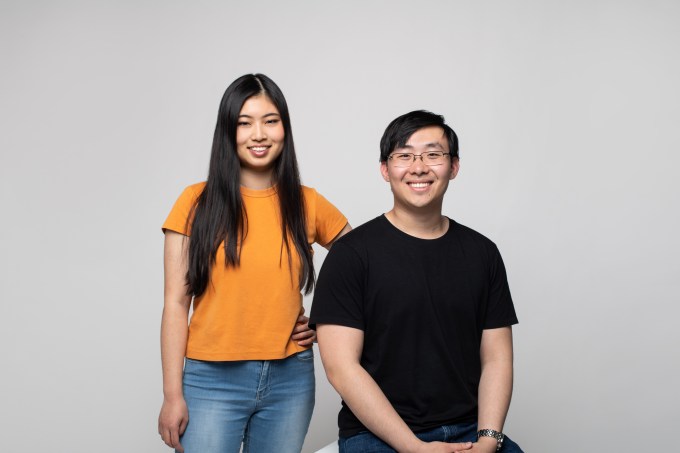
Recall.ai founders Amanda Zhu and David Gu

Recall.ai founders Amanda Zhu and David Gu

Before launching Recall.ai, co-founders David Gu and Amanda Zhu worked on a research tool that produced real-time transcription from meeting recordings. Gu told TechCrunch that a lot of his team’s engineering time was spent on building and maintaining meeting integrations, which made them realize that other companies that want to work with meeting data faced the same challenge.

The key problem Recall.ai is solving is accessing raw video and audio data from video conferencing platforms. Gu said it takes about a year for companies to build infrastructure and integrations on their own. But that’s not their only challenge—companies also have to host the infrastructure for processing, which can involve hundreds to thousands of servers. This is labor-intensive since engineering teams have to monitor and scale everything. Recall.ai’s API not only makes it faster to build meeting integrations, but also means companies can abstract away infrastructure.

A couple examples of how Recall.ai’s customers are using its platform include one that is taking audio streams from Zoom and transcribing it, then translating it to produce real-time translations. Another is using Recall.ai to capture video and audio streams from sales meetings to automatically fill in CRM software.

Recall.ai is currently making revenue and monetizes by charging customers per minute of audio and video processed through its platform. Its plans for expansion include adding more video conferencing and telephony system integrations.

Recall.ai helps companies make the most of virtual meeting data by Catherine Shu originally published on TechCrunch


Redefining ‘founder-friendly’ capital in the post-FTX era

Redefining ‘founder-friendly’ capital in the post-FTX era

For many founders in the startup community, a “founder-friendly” investor is one who stays relatively hands off. They cut the check and then watch the executive team run their business without getting involved in the day-to-day.

In 2021, investors overdid a version of “founder-friendly” capital that boiled down to founders continually raising capital and reaching record valuations, enjoying no inputs from their investors. In turn, companies across the board missed out on the balance brought by investors’ complementary breadth of guidance. Today, it’s clear many companies could have used that guidance, seeing as FTX is only our latest and most high-profile example.

Given new economic headwinds, it’s time for the startup community to redefine what “founder-friendly” capital means and balance both the source and cost of that capital. That means choosing between active and passive partners.

Some founders may be confident in their ability to execute on their vision, but most will benefit from investors who can share scaling best practices they’ve seen across companies and who know how to navigate downturns. Successful companies are created when investors and executives blend their expertise to see around corners, not when one side overpowers the other into silence.

Here are some key considerations for founders seeking a better balance of capital and external expertise for their businesses:

The fact that debt capital must be paid back is actually a sign that the company’s underlying financials are strong enough to support repayment.

Factor in founder friendliness

The two most important elements that determine your company’s growth needs are your company’s stage and what you’re willing to pay for active investors.

At the earliest stages, when your company is still doing R&D and not yet generating revenue, it’s near-impossible to secure passive capital in the form of revenue-based financing or debt financing vehicles. Instead, you’ll be raising funds on the strength of your idea, total addressable market (TAM) and team’s experience.

If you turn to a more passive equity investor at this stage, you’ll likely miss out on a true champion for your vision who can validate and evangelize your cause to future investors. This approach can limit your company’s growth potential and valuations, so you should always choose an active capital partner at this stage.

When you’ve grown enough to begin scaling, you can choose between expertise and cost. If you want best practices for growing a company through new products or markets, active investors can offer a wider view of the market. This expertise is immensely valuable and founders who need it should be willing to pay for it with equity.

That said, if you’re confident in your ability to scale the company, you can shop around to mix debt and equity investments to minimize dilution while benefiting from some external expertise, if needed.

Established or pre-IPO stage companies are better candidates for passive capital from lenders or hands-off equity investors. At this stage, companies are already generating significant revenue and have a plan to reach profitability, if they haven’t already. Having a proven record of success makes these businesses more attractive targets for institutional investors with less domain expertise but significant funds to deploy in the form of debt or equity.

Redefining ‘founder-friendly’ capital in the post-FTX era by Ram Iyer originally published on TechCrunch


Wednesday, 28 December 2022

Twitter suffers another outage

Twitter suffers another outage

If Twitter isn’t loading fine for you, you’re not alone. Tens of thousands of users are complaining that they are unable to access the Elon Musk-owned social network, seeing scores of strange error messages instead. Some are being greeted with a blank page while others are getting signed out of the service, they said. Many users said they were unable to see their replies or respond to tweets or follow trending topics.

Twitter also showed “rate-exceeding limit” to some users, suggesting its servers weren’t able to cope up with the incoming requests. The hashtag #TwitterDown is trending on the platform.

The outage, which appears to be affecting international users in the UK, Canada, Germany, Italy and India, began at about 4 p.m. Pacific time. Third-party web monitoring services including NetBlocks and DownDetector confirmed receiving reports from users. DownDetector says the vast majority of complaints suggest that Twitter is largely facing an issue on desktop.

Many are also unable to access TweetDeck, a power users-focused service from Twitter. NetBlocks additionally added that the “widespread” incident is not related to “country-level internet disruptions or filtering.” Twitter has yet to acknowledge an outage.

Musk acquired Twitter for $44 billion in late October. He has sought to cut Twitter’s costs by eliminating thousands of employees. Musk has also focused on making Twitter experience faster for users by removing bloat code from the service.

The service was operational “even after I disconnected one of the more sensitive server racks,” Musk tweeted on December 24. Earlier this month, Twitter briefly blocked traffic from about 30 mobile carriers mainly in the Asia-Pacific region as part of an attempt to rid Twitter of spam, Platformer reported.

TechCrunch

Twitter suffers another outage by Manish Singh originally published on TechCrunch


Daily Crunch: Startup says it has received $1M in preorders for its $60K hydrofoiling personal watercraft

Daily Crunch: Startup says it has received $1M in preorders for its $60K hydrofoiling personal watercraft

To get a roundup of TechCrunch’s biggest and most important stories delivered to your inbox every day at 3 p.m. PDT, subscribe here.

Hey, folks, welcome back! Below we’ve got some 2022 roundups and even some news. I suspect it’ll get even leaner as the week wears on, but no matter! There will always be stories to share. Now, here is your Wednesday edition of the Daily Crunch. — Hank

The TechCrunch Top 3

  • Sports on Amazon: The tech giant wants to continue its march into broadcasting live sports, adding to its current lineup of Thursday Night Football, Premier League soccer and the like, Aisha reports. Pro tip, Amazon: Add cricket to your plans.
  • Ring true: Movano beat the CES rush and launched Evie, a smart ring focused on women’s health, Brian reports.
  • In the water: Earlier this month, Boundary Layer pivoted to producing personal watercraft that will run interested parties upward of $60,000 once they’re ready. Haje reports that the company has more than $1 million worth of orders.

Dear Sophie: Do employees have to stop working until they get their EAD?

lone figure at entrance to maze hedge that has an American flag at the center

Image Credits: Bryce Durbin/TechCrunch

Dear Sophie,

One of our employees is on an H-4 visa and has an Employment Authorization Document. It’s been five months since he filed to renew his EAD, which will expire next month. Is there any way to expedite this process? Does he have to stop working if he doesn’t receive his new EAD card before his old one expires?

Because it’s taking so long to get EAD cards, we’re worried about another of our employees, who has an L-2 visa with an EAD scheduled to expire early next year.

In addition, the H-4 visa employee wants to visit his family in India because it’s been more than three years since he last went. Will he and his family be able to return to the U.S. after four weeks?

— Mindful Manager

We also rounded up the best of our climate coverage on TC+ this year. And Tim had a couple more favorites:

TechCrunch+ is our membership program that helps founders and startup teams get ahead of the pack. You can sign up here. Use code “DC” for a 15% discount on an annual subscription!

Big Tech, Inc.

  • Twitter trimming: A Norway-based developer told Ivan that she created a tool to help you cull the list of accounts you follow, because she was reaching the follow limit on the platform.
  • Political … tick tock: The U.S. House of Representatives has ordered all staff and lawmakers to delete TikTok from their gov-issued phones, citing “security issues,” Carly writes.
  • Bitcoin mining deal: Galaxy Digital has agreed to acquire Argo Blockchain’s bitcoin mining facility, Helios, for $65 million, Jacquie writes.
  • Code-generating AI: Sounds cool, right? Well, Kyle wrote about a study that found code-generating AI can introduce security vulnerabilities.

2022 in Review

  • Good news!: Amanda, Kyle, Tim, Devin and Rebecca have a roundup of some good news in tech for you. This crop of TC reporters put their heads together to mine 2022 for some tech goodness. Climate tech bolstered by the Inflation Reduction Act and the James Webb Space Telescope are on the list.
  • On the move: Rebecca has compiled the biggest transportation stories that drove the year.
  • Surveying investors: And Karan and Ram give you a glimpse of the investor surveys that we ran on TC+ this year.

Daily Crunch: Startup says it has received $1M in preorders for its $60K hydrofoiling personal watercraft by Henry Pickavet originally published on TechCrunch


Ample’s founder explains what it takes to scale EV battery swapping

Ample’s founder explains what it takes to scale EV battery swapping

The conversation around widespread electric vehicle adoption has been inherently linked with charging: Are the chargers plentiful? Will they charge my car fast enough? Are they plugged into a grid that’s not entirely run by coal?

Billions of dollars have gone into developing batteries that can handle fast charges as well as chargers that can top up a vehicle in as little as 20 minutes. Few, at least in the U.S., are really talking about battery swapping for cars and trucks.

Ample happens to be among the few leading that charge.

Ample, which rose from the ashes of its unsuccessful predecessor, Better Place, has brought battery swapping to Los Angeles and soon will introduce the tech to Japan and Madrid through a series of partnerships with fleet partners like Uber and Eneos. Unlike its predecessor, Ample doesn’t try to deploy battery-swapping stations until it knows it’ll have the customers to use them.

Since we last checked in with Ample’s co-founder and president John de Souza a year ago, the San Francisco-based startup has quietly grown, building new swapping stations and signing on additional fleet partners around the globe.

Meanwhile, battery-swapping tech for cars has gained footing in China. Beijing is throwing its weight behind a few companies advancing the technology as part of its broader plan to ensure 25% of all cars sold are electric by 2025. Automakers Nio and Geely, battery-swapping tech developer Aulton and oil producer Sinopec said this year they plan to build 24,000 swapping stations across China by 2025. Today there are 1,400.

We caught up with de Souza to talk about the implications of China’s investment in battery swapping, why scaling fast-charging infrastructure is a lot harder than we think and sought his advice on how hardware startups can scale while staying lean.

(Editor’s note: The following interview, part of an ongoing series with founders who are building transportation companies, has been edited for length and clarity.)


You’re calling me from Madrid, which you had said Ample was targeting as its next launch city.

Yes, we are deploying in Madrid as we speak. We’re partnering with Repsol to quickly deploy a wide network; Uber to work with ride-sharing fleet managers; and automakers (which we haven’t announced publicly yet) to deliver vehicles with the Ample solution.

From a customer standpoint, our partnerships focus on ride-sharing, car-sharing and last-mile delivery.

Battery swapping can be difficult to pull off because it requires some standardization of the battery. Ample provides modular battery swapping, which means you don’t swap the entire battery pack. Can you explain why that’s significant?

There are two aspects to Ample’s modular battery swapping that are significant. Firstly, it allows the flexibility to fit our packs into vehicles of different sizes and shapes by rearranging the modular batteries. That means we can allow for different capacities by varying the number of modules. It also makes our stations, which are run robotically, more cost-effective, because you’re moving lighter modules instead of traditional packs.

Secondly, Ample’s patent to allow modules to adjust to electrical characteristics of vehicles means we can work with OEMs without requiring any changes to the vehicle. We can also use the same modules in different vehicles, which makes it easy to introduce new chemistries into cars.

You say Ample’s batteries are vehicle agnostic, but you still need to work with automakers in some way to ensure they don’t put their own batteries in the vehicle, right?

We work with automakers on being able to purchase cars without batteries. As we work with them more closely, it’s to give them a replacement battery. They might get their batteries from Samsung, LG or CATL, but we can give them a battery that’s a drop-in replacement. So just as a customer might choose the type of tires or seats they want in the car, they can one day choose which batteries they want to use. If they put our batteries in, it’s swappable. If they put their own, they’re not.

Ample’s founder explains what it takes to scale EV battery swapping by Rebecca Bellan originally published on TechCrunch


Code-generating AI can introduce security vulnerabilities, study finds

Code-generating AI can introduce security vulnerabilities, study finds

A recent study finds that software engineers who use code-generating AI systems are more likely to cause security vulnerabilities in the apps they develop. The paper, co-authored by a team of researchers affiliated with Stanford, highlights the potential pitfalls of code-generating systems as vendors like GitHub start marketing them in earnest.

“Code-generating systems are currently not a replacement for human developers,” Neil Perry, a Ph.D. candidate at Stanford and the lead co-author on the study, told TechCrunch in an email interview. “Developers using them to complete tasks outside of their own areas of expertise should be concerned, and those using them to speed up tasks that they are already skilled at should carefully double-check the outputs and the context that they are used in in the overall project.”

The Stanford study looked specifically at Codex, the AI code-generating system developed by San Francisco-based research lab OpenAI. (Codex powers Copilot.) The researchers recruited 47 developers — ranging from undergraduate students to industry professionals with decades of programming experience — to use Codex to complete security-related problems across programming languages including Python, JavaScript and C.

Codex was trained on billions of lines of public code to suggest additional lines of code and functions given the context of existing code. The system surface a programming approach or solution in response to a description of what a developer wants to accomplish (e.g., “Say hello world”), drawing on both its knowledge base and the current context.

According to the researchers, the study participants who had access to Codex were more likely to write incorrect and “insecure” (in the cybersecurity sense) solutions to programming problems compared to a control group. Even more concerningly, they were more likely to say that their insecure answers were secure compared to the people in the control.

Megha Srivastava, a postgraduate student at Stanford and the second co-author on the study, stressed that the findings aren’t a complete condemnation of Codex and other code-generating systems. The study participants didn’t have security expertise that might’ve enabled them to better spot code vulnerabilities, for one. That aside, Srivastava believes that code-generating systems are reliably helpful for tasks that aren’t high risk, like exploratory research code, and could with fine-tuning improve in their coding suggestions. 

“Companies that develop their own [systems], perhaps further trained on their in-house source code, may be better off as the model may be encouraged to generate outputs more in-line with their coding and security practices,” Srivastava said.

So how might vendors like GitHub prevent security flaws from being introduced by developers using their code-generating AI systems? The co-authors have a few ideas, including a mechanism to “refine” users’ prompts to be more secure — akin to a supervisor looking over and revising rough drafts of code. They also suggest that developers of cryptography libraries ensure their default settings are secure, as code-generating systems tend to stick to default values that aren’t always free of exploits.

“AI assistant code generation tools are a really exciting development and it’s understandable that so many people are eager to use them. These tools bring up problems to consider moving forward, though … Our goal is to make a broader statement about the use of code generation models,” Perry said. “More work needs to be done on exploring these problems and developing techniques to address them.”

To Perry’s point, introducing security vulnerabilities isn’t code-generating AI systems’ only flaw. At least a portion of the code on which Codex was trained is under a restrictive license; users have been able to prompt Copilot to generate code from Quake, code snippets in personal codebases and example code from books like “Mastering JavaScript” and “Think JavaScript.” Some legal experts have argued that Copilot could put companies and developers at risk if they were to unwittingly incorporate copyrighted suggestions from the tool into their production software.

GitHub’s attempt at rectifying this is a filter, first introduced to the Copilot platform in June, that checks code suggestions with their surrounding code of about 150 characters against public GitHub code and hides suggestions if there’s a match or “near match.” But it’s an imperfect measure. Tim Davis, a computer science professor at Texas A&M University, found that enabling the filter caused Copilot to emit large chunks of his copyrighted code, including all attribution and license text.

“[For these reasons,] we largely express caution toward the use of these tools to replace educating beginning-stage developers about strong coding practices,” Srivastava added.

Code-generating AI can introduce security vulnerabilities, study finds by Kyle Wiggers originally published on TechCrunch


Pakistan cracks down on sketchy digital lending

Pakistan cracks down on sketchy digital lending

Pakistan’s markets regulator issued new guidelines for digital lending in the country, cracking down on several sketchy practices that it said have become prevalent in the South Asian market.

The Securities and Exchange Commission of Pakistan said Wednesday evening that non-banking finance companies that disburse loans through digital channels including mobile apps will be required to disclosure key fact statements such as the credit amount they are granting to consumers, annual percentage rates, duration of the loan, and “all fee and charges.”

The non-banking finance firms will be required to share these key facts with consumers through audio or video and emails and text messages in both English and Urdu languages. “Any fee not included in key fact statement will not be charged to the borrower,” the regulator said (PDF) in a press release.

These firms will also not be able to access borrower’s phone book or contacts lists or pictures on the device “even if the borrower has given consent in this regard,” the regulator said. (You can read the full-guidelines here {PDF}.)

“The lender shall also not be allowed to contact the persons in the borrower’s contact list, other than those who have been specifically authorized by the borrower as guarantors and who have also provided their consent to the digital lender at the time of loan approval,” it added.

The move follows the regulator noticing rise in mis-selling, breach of data privacy and “coercive” recovery practices of licensed digital lending companies” and to safeguard public interest, it said.

Neighboring nation India also introduced strict rules surrounding digital lending in a move that has toppled the local fintech industry.

Pakistan cracks down on sketchy digital lending by Manish Singh originally published on TechCrunch


Movano’s new smart ring is focused on women’s health

Movano’s new smart ring is focused on women’s health

Movano’s getting a week’s jump on what might well prove a banner CES for the smart ring. Today the Bay Area-based firm debuted Evie, a smart ring focused on women’s health set to hit the market later next year. The device capitalizes on the recent popularity of the unobtrusive form factor, led by the likes of Oura and Circular.

It is, however, among the first to be focused on a specific market segment (insofar as roughly 51% of the population can be considered a segment, I suppose). Women’s health certainly makes sense as a target. Companies like Fitbit and Apple have found some success with the addition of cycle tracking and related features.

That is, of course, included out of the box here. Evie’s top-level features include:

[R]esting heart rate, heart rate variability, SpO2, respiration rate, skin temperature variability, period and ovulation tracking, menstrual symptom tracking, activity profile, including steps, active minutes and, calories burned, sleep stages and duration, and mood tracking.

The “mood” bit here is the main selling point of the as of yet unreleased Happy Ring, which puts its data to use in hopes of helping users manage things like stress and sleep a bit better. The rest of Evie’s details are still fairly foggy — Movano is promising a better look at the product at the show next week. Of course, you can’t really blame the company for wanting to get out ahead of the scrum.

Image Credits: Movano

On top of that, Movano says it’s “planning to seek FDA clearance” for the product. Obviously no firm time line on that. It notes:

The Company plans to file for pulse oximetry metrics after having completed a successful hypoxia trial in October 2022, where accuracy for clinical SpO2 and heart rate commensurate with FDA’s consensus standard was demonstrated. While a few wearables are only FDA cleared for specific software, such as ECG and Afib, Evie is designed per regulatory standards and built in a medical device manufacturing facility that meets ISO13485 and cGMP standards. The clearance will offer women trusted and personalized insights that can help them draw connections between cause and effect, so they can better understand the “why” behind what they’re feeling. Additionally, Evie will deliver data that clinicians can deem reliable for patient care.

That’s clearly the end game for a lot of these firms, moving from the consumer space to something that’s taken a bit more seriously among medical professionals, insurance companies and the like.

“As a medical device, Evie will go beyond the status quo of other wearables on the market, and we believe it has the power to transform women’s lives and overall health,” CEO John Mastrototaro says in a release. “We are bringing together medical grade biometric data and insights in a comfortable and contemporary wearable that allows women to take ownership of their unique health journey.”

The product is expected to run around $300 and, unlike Oura, it won’t charge an additional subscription fee.

Read more about CES 2023 on TechCrunch

Movano’s new smart ring is focused on women’s health by Brian Heater originally published on TechCrunch



Tuesday, 27 December 2022

Special episode: Augmenting creativity with Alice Albrecht from re:collect (Found)

Special episode: Augmenting creativity with Alice Albrecht from re:collect (Found)

The Equity crew is kicking off your week with a special episode from our sister podcast, Found, the stories behind the startups. Co-hosts Darrell Etherington and Becca Szkutak spoke with Alice Albrecht from Re:collect, a software tool that augments creativity by helping people focus, recall, and connect their ideas. The conversation covered a lot of ground from how to hone your pitch when your product is so cerebral, how technology can help creativity but Alice argues will never replace it, and how developing AI requires building safeguards from the jump.

If you want to hear more from Equity and Found, don’t forget to take our listener survey and enter for a chance to win a free year of TC+!

For more from Found, connect with us:

Equity drops every Monday, Wednesday and Friday at 7 a.m. PT, so subscribe to us on Apple PodcastsOvercastSpotify and all the casts. TechCrunch also has a great show on crypto,  a show that details how our stories come together and more!

Special episode: Augmenting creativity with Alice Albrecht from re:collect (Found) by Theresa Loconsolo originally published on TechCrunch



An EV-plosion awaits in 2023, and it’ll be packed with tech

An EV-plosion awaits in 2023, and it’ll be packed with tech

2022 was the year that electric vehicles entered the mainstream. Not everyone has one, but buying an EV no longer makes you an outlier. Driven by policy initiatives from governments and billions of dollars in investment from automakers, we can safely say the EV industry has begun to take shape.

Over the next year, that landscape will develop beyond the foundations of 2022. Here are some of our best guesses for what you can expect. 

There will be a race to sell U.S.-built EVs in the first quarter

The Inflation Reduction Act, which the Biden administration passed in August, has already had a huge effect on the EV industry as automakers work to onshore their supply chains and factories. But with certain aspects of the IRA’s EV tax credit rules now to be delayed until March 2023, we’re expecting to see EV sales take off in the first quarter of the year.

Under the bill, eligible EVs could qualify for a $7,500 tax credit if they meet the requirements of being built in North America and having sourced critical battery materials from the U.S. or free trade agreement countries. Those rules were meant to go into effect on January 1, 2023, but the Treasury Department has delayed guidance on the critical materials rule until March. And it’s a good thing, too. While automakers in 2022 scrambled to set up factories in the U.S., most critical materials still come from China, so they need time (likely years) to set up new supply chains. 

The delay means that a whole host of North American-built cars will now be eligible for the full refund, at least for the first three months of the year. The biggest winners will probably be Tesla and General Motors, whose sales caps under the previous EV tax incentives will be waived in the new year. But others like Ford, Nissan, Rivian and Volkswagen have all got a lineup of NA-built EVs that are ready to reap the benefits. 

Even more EV models and sales

Electric vehicle sales in 2022 were pretty much dominated by who you’d expect: Tesla’s Models S, Y and 3, Chevrolet’s Bolt and Ford’s Mustang Mach-E. In the backdrop, nearly every automaker, be they a legacy OEM or a startup, unveiled a slew of impressive EVs for the 2023 market, from the Alfa Romeo Tonale to the Indi One. Most of them were geared towards the luxury consumer, though. In the next year, we’ll see even more new models come out that are priced much more affordably. 

In addition, expect the sheer number of new EVs on the market to pick up as new factories come online. McKinsey predicts legacy automakers and EV startups will produce up to 400 new models by 2023.

All the new models coming out will give Tesla a run for its money, predicts Shahar Bin-Nun, CEO of Tactile Mobility, an AV sensor tech company. Bin-Nun says he expected Tesla to still dominate the U.S. EV market in 2023, but that Ford, Hyundai and Kia will follow closely behind as they ramp up their lineups and production capacities.

We can also expect the market for secondhand EVs to creep up in 2023, which will make it much easier for people who are filthy rich to afford a zero-emission vehicle. 

The software-defined vehicle will really take hold

Every automaker has been talking about the “software-defined vehicle” throughout 2022 as a concept that’s inherently linked to the electric vehicle. In 2023, we’ll really get a chance to see what that means. 

General Motors, for example, will launch Ultifi early next year, its end-to-end vehicle software platform that promises OTA software updates, cloud connectivity and vehicle-to-everything communication. Ultifi will be the place where drivers can purchase apps, services and features – it’s an example of how automakers are increasingly trying to personalize vehicles to the individual’s needs. 

This personalization will likely lead to an increase in subscription-based services in the car, says Will White, co-founder of Mapbox, a provider of online maps. 

“We’ll also continue to see high demand for convenience-based services like in-car payments, where consumers will have a credit card on file in their app that pays for everything automotive-related,” said White.

On the backend, the software-defined vehicle will also dance with the metaverse. In 2022, a range of automakers, including Jaguar Land Rover, Nio, Polestar, Volvo and XPeng, announced plans to build software-defined vehicles on Nvidia’s Drive Orin system-on-a-chip. Automakers will in 2023 also rely on Nvidia’s recently upgraded its Omniverse platform, which stands to revolutionize everything from designing vehicles to the automotive product cycle. Using tech like this, automakers will increasingly build digital twins of both their vehicles and their production facilities in order to simulate anything from software upgrades within the vehicle to crash tests to factory efficiencies. 

I guess we have to get used to saying Level 2+ ADAS

While we’re on the subject of software, automakers in 2023 will put much more investment into launching Level 2+ and Level 3 autonomous systems, which are basically really good advanced driver assistance systems. White says these systems will be a commonplace expectation in high-trim models. 

Tesla will of course continue adding new features to its Autopilot and so-called “Full Self-Driving” softwares. But other automakers will come out with their own brands of impressive tech that will take care of more and more automated driving tasks.

Earlier this year, autonomous vehicle company Argo AI shutdown after Ford and Volkswagen pulled their investments. The IP was pretty much split between the two automakers, both of which said they were committed to pursuing near-term gains like L2+ and L3 systems. Rivian founder RJ Scaringe also said his company will focus on getting its own ADAS right.

Meanwhile in China, XPeng is rolling out the G9 SUV with its XNGP software, which the company describes as a “full scenario” ADAS that promises to automate highway driving, city driving and parking tasks. 

More investment into getting charging right

J.D. Power analysts are expecting the market share of EVs in the U.S. to reach 12% next year, which is up from 7% today. If narrowing the scope to consumers that actually have access to EVs, that market share actually looks more like 20%. 

Whatever the number, the fact remains that we’ll be seeing millions more EVs hit the streets in the U.S. next year. That means all of the ancillary services needed to keep them running will need to step up.

In 2023, we can expect to see investment – from government, utility and private firms – into charging infrastructure, energy storage and energy transmission. 

Ensuring the EV transition is a smooth one isn’t just about building more EV chargers, although we grant, that’s a really important piece. Maintaining chargers will also be prioritized next year. A separate J.D. Power study earlier this year found that not only is availability of public charging still an obstacle, but often when you do find a charger, it’s broken. We predict there’ll be some tech, either from upstarts or existing EV charge players, that helps manage maintenance, servicing and upgrades for chargers. 

In that same vein, all throughout 2022, every few months we stumble across some startup or utility company crying out that the electrical grid will never be able to handle all of the electric vehicles we’ll see in 2023. They’re probably right. So alongside energy management infrastructure, we expect to see more vehicle-to-grid software. 

There were a few pilots in 2022, many of which were focused on V2G technology at home. Ford’s F-150 Lightning pickup truck is among a few vehicles that have promised to be able to power your home in the event of an outage. But we think as more fleets go electric, we’ll start to see those pilots happening in commercial settings at a wider scale. 

The rise of EV fleets

We already saw many fleet operators begin to adopt EVs in 2022, as they aim to reach whatever carbon emissions goals they’ve set for themselves. Hertz, for example, plans to buy 65,000 Polestar vehicles, 100,000 Teslas and 175,000 General Motors vehicles over the next couple years to reach its goal of having 25% of its fleet electric by the end of 2024.

In 2023, those purchases will only ramp up, particularly as commercial EV makers get their production lines up and running.

GM’s BrightDrop, for example, has recently launched its CAMI Assembly plant in Ontario, which is expected to produce 50,000 of its Zevo delivery vans by 2025. BrightDrop has already secured over 25,000 reservations from customers like DHL and FedEx that are working towards net-zero goals.

Another commercial EV company Canoo plans to buy a vehicle manufacturing facility in Oklahoma City in order to ramp production of its Lifestyle Delivery Vehicle and bring those EVs to market next year for committed customers like NASA and Walmart.

An EV-plosion awaits in 2023, and it’ll be packed with tech by Rebecca Bellan originally published on TechCrunch



Digital health startups can incorporate clinical expertise into business models – here’s how

Digital health startups can incorporate clinical expertise into business models – here’s how

Early indications show funding to digital health startups in Q4 2022 fell so much, they’re close to levels last seen in 2019.

But the dollar amounts don’t tell the whole story. How you grow as a digital healthcare company is just as important as if you grow at all.

A company built for the long term should have clinical experts as part of its leadership to ensure that care is always based on the patient’s medical needs as well as maintain quality control.

Here’s a framework that digital health startups can consider:

Bring clinicians into senior leadership

The best-case scenario for a digital health startup is to bring on a clinician as a co-founder.

I speak from experience. My co-founder is a triple-board-certified psychiatrist who brings clinical expertise to everything she does. From evaluating product roadmap decisions with our technology department to strategy discussions at board meetings and managing our entire clinical team, her contributions are vital to the health and direction of the company.

Dedicating resources and space to full-time providers allows them to focus more on patient care — the reason they got into medicine.

Outside the C-suite, hiring clinicians as senior leaders with responsibilities beyond clinical practice is invaluable. The key is to ensure clinicians know they will report to another clinician, not a non-clinical executive.

Non-clinical leaders, including founders and non-clinical C-suite executives, should practice what they preach. They should consistently loop in their clinical partners for business discussions even if they don’t have an obvious clinical impact.

The main benefits of taking this approach include:

  • The clinical and non-clinical partnership is more active from the jump;
  • Other team members and clinical staff will see and respect the inclusion;
  • Clinicians may uncover something that has an indirect but important clinical impact.

Beyond hiring clinicians in-house, startups should consider inviting clinicians to join their board of directors. Their presence on the board helps guide a company towards becoming an ethical and sustainable medical practice focused on helping patients rather than a technology company operating at the expense of patients.

This dedication to patient outcomes is a differentiator and should be reflected at every working level of a digital health startup.

Celebrate providers’ dedication

Dedicating resources and space to full-time providers allows them to focus more on patient care — the reason they got into medicine.

Digital health startups can incorporate clinical expertise into business models – here’s how by Ram Iyer originally published on TechCrunch