Monday, 2 December 2019

Reinventing the relationship between workers and tech

Reinventing the relationship between workers and tech

A young father and kitchen worker in Pittsburgh was thrilled to get a job with a big restaurant chain that paid $15 an hour — much more than he had been making in fast food.

Soon after starting, however, he learned that his schedule was set through an algorithm that crunches a range of data — from weather forecasts to past sales — to predict customer traffic, optimize shifts, and, ultimately, maximize profits. As a result, his hours were extremely unpredictable and sometimes his shifts were cancelled minutes before they were set to start. A job he believed would provide security now barely gave him enough hours to make rent and provide for his family. And it was all because of how his employer used technology.

The Pittsburgh worker’s story is not unique; the average American worker hasn’t gotten a meaningful raise in over 40 years, which has been made worse by meager benefits packages, volatile schedules and pay, and barriers to worker voice. While technology didn’t cause these longstanding challenges, the industry has failed to disrupt them — and at times even scaled and amplified them — as new technologies proliferate the workplace. This is one of the reasons there is a growing backlash against the tech industry, from the Uber and Lyft protests that grounded New York traffic to a halt to Google walkouts to the customer uproar that spurred DoorDash to change its tipping practices. And legal action abounds. Just last week, New Jersey fined Uber $649 million, while Washington D.C. sued DoorDash.

But the future doesn’t have to be this way. New and emerging technologies have the power to improve the lives of workers and make jobs more stable, fair, and dignified, while still delivering value and profit. The first step is making sure workers have a seat at the table — and a voice — to shape every aspect of technology, from design and development, investment and adoption, and policymaking and governance. Several new initiatives led by business, government, and workers are embracing this approach and, in the process, offer models for how to create a new, win-win relationship between tech and workers.

Workers and industry are beginning to partner to develop new technologies. The Partnership on Artificial Intelligence (PAI) is a coalition of major tech companies, from Apple to Google, created with the mission of sharing the benefits of artificial intelligence. PAI recently launched an effort focused on workers and labor, engaging directly with workers and their representatives to develop a set of actionable recommendations about how to integrate AI into the workplace in a way that creates greater opportunity and security for workers. MIT, which is prolific in developing innovative technologies often in partnership with industry, is exploring inviting in groups of workers to advise their labs, an idea that emerged from the labor leaders who are involved with the University’s Work of the Future Taskforce. Tech companies should consider adopting and even deepening these practices of partnering directly with workers and worker groups and inviting them in to shape the development of new tech and business practices around tech adoption.

Government is bringing together business and workers to create policy. Government at all levels has been caught off guard by how quickly new technologies have transformed entire industries and struggled to develop the policies and programs needed to ensure that communities and workers benefit from the changes. To address this, California Governor Gavin Newsom recently launched a commission on the future of work. The president of the Service Employees International Union co-chairs the commission, and members include representatives of domestic workers and restaurant workers serving alongside leaders in business, government, and tech.

Having workers at the table for future of work conversations is all too rare, and it is already making an impact: the commission is not defaulting to only the typical solutions — guaranteed basic income and retraining — and is also exploring a range of ideas, from how workers might earn value from their data to the business case for improving job quality.  A number of cities and states are considering launching similar commissions, and New Jersey already has one in place.

When all else fails, workers are becoming the tech developers and investors they need. Many worker organizations are hopeful about the promise of technology, but they take issue with how tech is is too often used to amplify and scale business practices that hurt workers. Palak Shah, Director of National Domestic Worker Alliance’s innovation lab, is one of several, innovative leaders who is not waiting on the tech industry to develop what workers need and is instead building the tech herself. “Silicon Valley is great at optimizing for convenience… but we wanted to optimize for dignity and equity,” she said.

Over the past few years, Shah and a diverse team of organizers, developers, and domestic workers have launched a new fintech product to extend paid time off to house cleaners for the first time ever, a digital tool to help more nannies access contracts rather than work under the table, and even launched an investment fund that puts domestic workers in the investor role, directing capital to where they believe it would most improve their lives. This stands alongside a handful of other impactful efforts launched in the past few years, such as the Worker’s Lab and Employment Tech Fund, that fund a number of technologies designed for and by workers, as well as startups founded by former low-wage workers and worker organizers, such as Driver’s Seat, which supports ride-hail drivers in aggregating and capturing value from their data.

From city hall to the boardroom to protests in the streets, society is asking who tech should serve. The answer is clear: technology can and must work to disrupt the structural inequities in our workplace and economy. This starts by ensuring that workers have a seat at the table to shape how new technologies are developed, applied, and governed.


Accel closes new $550M fund for India

Accel closes new $550M fund for India

Accel, one of the world’s most influential venture capitalist firms, is becoming more bullish on India.

The Silicon Valley-headquartered firm, which largely focuses on early stage investments, said today it has closed $550 million for its sixth venture fund in India.

This is a significant amount of capital for Accel’s efforts in India, where it began investing 15 years ago and has infused roughly $1 billion through all of its previous funds combined.

Anand Daniel, a partner for Accel in India, told TechCrunch in an interview that the VC fund will continue to focus on identifying and investing in seed and early stage startups.

But the fund realized that it needed more money so that it could actively participate in follow-on rounds (later stage financing rounds) of its portfolio startups. The announcement today follows Accel’s similar recent push in Europe and Israel, where it closed a $575 million fund.

Like in many other markets, Accel’s track record in India is quite impressive. It participated in the seed financing round of e-commerce firm Flipkart, which was then valued at $4 million post-money. Walmart bought majority stake in Flipkart last year for $16 billion.

Accel, which has nine partners and more than 50 members in total in India, also invested in the seed round of SaaS giant Freshworks, which is now valued at over $3 billion, food delivery startup Swiggy, also valued at north of $3 billion, and recently turned unicorn BlackBuck.

The VC firm says 44 startups in its India portfolio today are valued at over $100 million. In total, including Flipkart’s $21 billion market value, Accel’s portfolio firms have created $44 billion in market value.

More to follow…


A bug in Microsoft’s login system put users at risk of account hijacks

A bug in Microsoft’s login system put users at risk of account hijacks

Microsoft has fixed a vulnerability in its login system, which security researchers say could have been used to trick unsuspecting victims into giving over complete access to their online accounts.

The bug allowed attackers to quietly steal account tokens, which websites and apps use to grant users access to their accounts without having them to constantly re-enter their passwords. These tokens are created by an app or a website in place of a username and password after a user logs in. That keeps the user persistently logged into the site, but also allows users to access third-party apps and websites without having to directly hand over their passwords.

Researchers at Israeli cybersecurity company CyberArk found that Microsoft left open an accidental loophole which, if exploited, could’ve been used to siphon off these account tokens used to access that victim’s account — potentially without ever alerting the user.

CyberArk’s latest research, shared exclusively with TechCrunch, found dozens of unregistered subdomains connected to a handful of apps built by Microsoft. These in-house apps are highly trusted and as such, associated subdomains can be used to generate access tokens automatically without requiring any explicit consent from the user.

With the subdomains in hand, all an attacker would need is trick an unsuspecting victim into clicking on a specially crafted link in an email or on a website, and the token can be stolen.

In some cases, the researchers said, this could be done in a “zero-click” way, which as the name suggests requires almost no user interaction at all. A malicious website hiding an embedded webpage could silently trigger the same request as a link in a malicious email to steal a user’s account token.

Luckily, the researchers registered as many of the subdomains they could find from the vulnerable Microsoft apps to prevent any malicious misuse, but warned there could be more.

The security flaw was reported to Microsoft in late October and was fixed three weeks later.

“We resolved the issue with the applications mentioned in this report in November and customers remain protected,” said a Microsoft spokesperson.

It’s not the first time Microsoft has acted to fix a bug in its login system. Almost exactly a year ago, the software and services giant fixed a similar vulnerability in which researchers were allowed to alter the records of an improperly configured Microsoft subdomain and steal Office account tokens.

Read more:


Here’s the math behind Telsa’s dumb Cybertruck vs F-150 tow test

A couple weeks back Tesla unveiled the its first pickup truck, called the Cybertruck. During its unveiling the company showed a butt-to-butt pull-off. Besides being a silly test, this particular demo was flawed in multiple ways, giving the Tesla a major advantage. Here’s the math to prove it.

It’s likely Tesla will redo this test if it hasn’t already. After the original test went viral, a VP at Ford suggested Musk send Ford a Cybertruck so the company behind the F-150 can produce a better comparison. Ford quickly released a statement saying the comment was tongue-in-cheek and Ford has nothing to prove. However, Musk had already responded, telling the Ford VP to “bring it on”, later noting that Tesla would conduct another test “next week.”

It looks great on video to connect two trucks and have a pull-off but it produces little real-world conclusions. A better test would involve weighted trailers and conclusions based off range, handling and capacity — you know, things that matter to truck buyers.


Lucid Motors breaks ground on its $700 million Arizona factory

Lucid Motors breaks ground on its $700 million Arizona factory

Lucid Motors today is breaking ground on its manufacturing facility. Located in Casa Grande, Arizona, the factory will be used to build the Lucid Motor Lucid Air electric sedan. According to the company, production will begin in late 2020.

This groundbreaking is the latest step taken by Lucid Motor towards getting the Lucid Air on the streets. Earlier this year, the company hired Peter Hochholdinger to head up its manufacturing operations. Hochholdinger came to Lucid Motors after a two-year stint at Tesla, where he oversaw its Fremont, CA factory as well as other sites around the world. Before Tesla, he was a senior director of production at Audi.

Last September, Lucid Motors secured $1 billion from Saudi Arabia’s sovereign wealth fund, which the company said at the time would be used to finance the commercial launch of the Lucid Air. Lucid Motors it will invest over $700 million into the Casa Grande factory by the mid-2020s.

“The Lucid Air is a cutting-edge electric vehicle designed, engineered, and destined for manufacture entirely in America,” said Peter Rawlinson, CEO, and CTO, Lucid Motors. “We are proud to be moving forward on our commitment to manufacturing the Lucid Air in Casa Grande. With supportive investors, an outstanding team of designers and engineers, and a product strategy that extends well beyond the Air, we expect today to be just the start of a longstanding presence in this dynamic city.”

Lucid Motor’s Casa Grande facility is said to result in approximately 4,800 direct and indirect jobs by 2029. It’s also estimated to produce $32 billion revenue impact for the city and county over 20 years.

Arizona Governor Doug Ducey said in a rebased statement that attracting a high-tech automotive company such as Lucid Motors is a testament to Arizon’s talent, business environment, and geographical location.

Lucid Motors says it picked this location after a search that included 13 US states and 60 sites. It says that it chose the area based on business climate, infrastructure, talent, location, and the Arizona-Sonora region’s automotive supply chain.

Lucid Motors was founded ten years ago with a different name and mission. Then called Atieva, the company focused on electric car battery technology until 2016 when it changed its name as it shifted to producing electric vehicles.


Ikea is helping to redesign simulated Mars habitats

Ikea is helping to redesign simulated Mars habitats

Ikea believes its approach to making small spaces more liveable applies even on other planets: The company has been working with an Earth-based research facility that is meant to mimic what a Mars habitat would be like, according to Fast Company. Originally, Ikea sent a designer to the station to seek out inspiration for creating functional furniture for small apartments – but it quickly became a two-way street, which could mean the Swedish home furnishing company has a say in how future human colonists live on other planets.

As detailed by FastCo, Ikea designer Christina Levenborn spent time living in the Mars Desert Research Station in Utah, which is situated in a desert and designed to feel as close as possible to the experience of living and working on the actual red planet. At any given time, there are usually a number of these types of simulated research projects going on, taking crews of volunteers and putting them into a simulated work/life scenario to help us prepare for when astronauts do the real thing. NASA is hoping to begin establishing a more permanent human presence on the Moon by 2024, which means this work could have real-world applications in space sooner rather than later.

Levenborn did indeed design an Ikea collection inspired by her time in the habitat, but she and others at Ikea returned the favor as well, coming up with organizational strategies and interior design layouts that emphasized a sense of privacy and personal space even in very cramped quarters, using Ikea shelving units and modular, wheeled furniture for flexibility and tidiness. Warm lighting and outdoor equipment for indoor use also contributed to making the habitat more… well, habitable.

That Ikea’s approach to making small spaces more liveable on Earth would apply off-Earth, too, is hardly surprising. But it is a good example of how contributions to ongoing efforts to help humans set up research and experimentation facilities on the Moon, Mars and beyond.


Facebook launches a photo portability tool, starting in Ireland

Facebook launches a photo portability tool, starting in Ireland

It’s not friend portability, but Facebook has announced the launch today of a photo transfer tool to enable users of its social network to port their photos directly to Google’s photo storage service, via encrypted transfer.

The photo portability feature is initially being offered to Facebook users in Ireland, where the company’s international HQ is based. Facebook says it is still testing and tweaking the feature based on feedback but slates “worldwide availability” as coming in the first half of 2020.

It also suggests porting to other photo storage services will be supported in the future, in addition to Google Photos — which specifying which services it may seek to add.

Facebook says the tool is based on code developed via its participation in the Data Transfer Project — a collaborative effort started last year that’s currently backed by five tech giants (Apple, Facebook, Google, Microsoft and Twitter) who have committed to build “a common framework with open-source code that can connect any two online service providers, enabling a seamless, direct, user initiated portability of data between the two platforms”.

Facebook also points to a white paper it published in September — where it advocates for “clear rules” to govern the types of data that should be portable and “who is responsible for protecting that data as it moves to different providers”.

Behind all these moves is of course the looming threat of antitrust regulation, with legislators and agencies on both sides of the Atlantic now closely eyeing platforms’ grip on markets, eyeballs and data.

Hence Facebook’s white paper couching portability tools as “helping keep competition vibrant among online services”. (Albeit, if the ‘choice’ being offered is to pick another tech giant to get your data that’s not exactly going to reboot the competitive landscape.)

It’s certainly true that portability of user uploaded data can be helpful in encouraging people to feel they can move from a dominant service.

However it is also something of a smokescreen — especially when A) the platform in question is a social network like Facebook (because it’s people who keep other people stuck to these types of services); and B) the value derived from the data is retained by the platform regardless of whether the photos themselves travel elsewhere.

Facebook processes user uploaded data such as photos to gain personal insights to profile users for ad targeting purposes. So even if you send your photos elsewhere that doesn’t diminish what Facebook has already learned about you, having processed your selfies, groupies, baby photos, pet shots and so on. (It has also designed the portability tool to send a copy of the data; ergo, Facebook still retains your photos unless you take additional action — such as deleting your account.)

The company does not offer users any controls (portability tools or access rights) over the inferences it makes based on personal data such as photos.

Or indeed control over insights it gleans from its analysis of people’s usage of its platform or wider browsing of the Internet (Facebook tracks both users and non users across the web via tools like social plug-ins and tracking pixels).

Given its targeted ads business is powered by a vast outgrowth of tracking (aka personal data processing), there’s little risk to Facebook to offer a portability feature buried in a sub-menu somewhere that lets a few in-the-know users click to send a copy of their photos to another tech giant.

Indeed, it may hope to benefit from similar incoming ports from other platforms in future.

“We hope this product can help advance conversations on the privacy questions we identified in our white paper,” Facebook writes. “We know we can’t do this alone, so we encourage other companies to join the Data Transfer Project to expand options for people and continue to push data portability innovation forward.”

Competition regulators looking to reboot digital markets will need to dig beneath the surface of such self-serving initiatives if they are to alight on a meaningful method of reining in platform power.


Cyber Monday Disrupt Berlin special: Get a $200 gift with purchase

Cyber Monday Disrupt Berlin special: Get a $200 gift with purchase

The holiday season is officially on, and Disrupt Berlin 2019 opens  its doors in just nine days. We’re ready to celebrate both occasions in festive style with a one-day Cyber Monday special. Buy a pass to Disrupt Berlin* today, 2 December, and you can pick any gift — up to $200 in value — from the TechCrunch Gift Guide.

Not familiar with our gift guide? You’re in for a treat. TechCrunch folk verge on the maniacal when it comes to choosing the gadgets, gear and services we use. Since we love to share, we curate the guide and pack it with absolutely awesome stuff.

Once you purchase your pass* to Disrupt Berlin today, we’ll contact you the week after the conference ends to get your preferred selection from the gift guide priced up to $200 (US). Cross a name off your holiday shopping list and choose a gift for a loved one, a friend or your kids. And if you decide to pick a cool gadget for yourself — hey, who are we to judge?

If you want to talk about gifts that keep on giving, Disrupt Berlin tops the list. This international conference boasts thousands of attendees from more than 50 countries, 200 media outlets and hundreds of early-stage startups exhibiting the very latest innovations across the tech spectrum. It’s opportunity on steroids.

We packed the Disrupt Berlin agenda with world-class speakers, presentations, in-depth Q&A Sessions, panel discussions and workshops. The cream of the international early-stage startup crop will compete in the Startup Battlefield pitch competition for a $50,000 equity-free prize and bask in the spotlight of investor and media attention.

You’ll find infinite networking opportunities in Startup Alley. Our expo floor will be home to hundreds of pre-Series A startups eager to connect and impress. While you’re in the Alley, be sure to meet our Disrupt Berlin 2019 TC Top Picks — a cadre of innovative startups handpicked by TechCrunch editors.

This year, the TC Hackathon finalists will pitch the products they built in less than 24 hours live on the Extra Crunch stage. If you’re looking for creative devs in your startup — or if you just appreciate code poetry — this is a great opportunity to see the solutions these highly skilled competitors created to address real-world problems.

And CrunchMatch, our free business match-matching service available to all attendees — makes networking easier, more productive and less stressful. Who doesn’t love that?

Disrupt Berlin 2019 takes place on 11-12 December. Tis’ the season — take advantage of our one-day Cyber Monday celebration. Buy a pass to Disrupt Berlin 2019 today*, and you get to choose a gift — worth up to $200 — from the TechCrunch Holiday Gift Guide. Come and join us in Berlin!

Is your company interested in sponsoring or exhibiting at Disrupt Berlin 2019? Contact our sponsorship sales team by filling out this form.

*Purchase must occur before 11:59pm CET on 2 December and must be a full-priced pass without any additional discounts applied. You will be contacted via the email address you submit in your registration after the event has been completed to provide your preferred gift selection valued up to $200 USD.


Cellphone plans get up to 40% costlier in India

Cellphone plans get up to 40% costlier in India

India has long been a wonderland for cellphone users. At a time when most telecom operators across the globe charge anywhere between $5 to $10 for a gigabyte of mobile data, telcos in India deliver that for just a few cents.

Spare another $2 to the same telecom operator, and you get a gigabyte of mobile data everyday for a month and all your nationwide calls become free.

How is that possible, you ask? In 2016, India’s richest man launched Reliance Jio, a telecom network that undercut the local competition by offering unlimited voice calls and bulk of 4G mobile data at industry-low prices. Vodafone and Airtel — two of the top three carriers in India — dramatically moved to revise their tariffs to aggressively compete with Jio, but in doing so they began to bleed a lot of money.

So now they are making some changes that suddenly make cellphone plans in the country less attractive — but fret not, these plans are still miles ahead of comparable offerings in most other markets.

Vodafone Idea, Bharti Airtel, and Reliance Jio — three telecom operators that command over 90% of India’s mobile subscriber base of more than 1.1 billion users — have hiked their tariffs by up to 42% for their prepaid customers. (In India, unlike many other markets, the vast majority of people prefer to pay as they go instead of signing up for a monthly subscription.)

The revised plans from Vodafone start from 26 cents for daily usage and go up to $33.4 for a year-long validity — that is about 42% costlier compared to the previous offerings. The operator’s new tariffs will go into effect starting Tuesday.

Bharti Airtel’s new tariffs are priced similarly, though the operator says it will offer “generous data and calling benefits” to make up for the hike.

The changes are a direct result to make up for the massive losses Airtel and Vodafone reported last month. In the quarter that ended in September, Airtel lost more than $3.2 billion, while Vodafone posted a loss of $7.1 billion.

While these losses reflect the competition heat that both the networks have been facing from Reliance Jio, which now leads the market with over 350 million subscribers, they largely address a one-time potential outstanding payment these companies owe to the government related to a court dispute surrounding 14-year-old adjusted gross revenue.

Last month, chief executives of both the telecom networks requested the Indian government to give them more time to pay the fine. Vodafone chief executive added that if the government did not budge, the British firm’s India business might just collapse.

The Indian government budged and offered a small bailout after it postponed certain payments.

Over the weekend, Reliance Jio said it would be introducing new plans, too, that will be “priced up to 40% higher” in a move to “strengthen the telecom sector” and strangely “keep consumers at the center of everything.” Its revised plans would go into effect this Friday.

Its announcement follows a two-month old decision to hike the prices after other telecom operators floated the idea that they would continue to levy what they call an “interconnect fee.”

When a call from one network is placed to a phone on another network, the former carrier has to pay an “interconnect fee” to the latter. Prior to 2017, the interconnect fee in the country was set at about 14 paise (roughly 1.8 cents) for each minute of the call. In 2017, the Indian telecom regulator cut the interconnect charge to 6 paise per minute, adding that in January 2020, the interconnect fee would no longer be valid. In recent months, Airtel and Vodafone, among other networks (but obviously not Reliance Jio), have been exploring ways to extend this deadline.

At any rate, some industry executives say that these tariff hikes were inevitable. Rajan Mathews, who heads the trade group Cellular Operators Association of India, said in a recent interview that the old prices were simply unsustainable for these businesses and carriers needed to address the price war more maturely.


Uncapped raises £10M to offer ‘revenue-based’ finance to growing businesses

Uncapped raises £10M to offer ‘revenue-based’ finance to growing businesses

Uncapped, a London headquartered and Warsaw-based startup that wants to provide “revenue-based” finance to growing European businesses, is officially launching today and disclosing that it has raised £10 million in funding.

The capital is a mixture of equity funding and debt (money it can use for lending), and sees the fintech company backed by Rocket Internet’s Global Founders Capital, White Star Capital, and Seedcamp.

I understand a number of angel investors also participated. They include Robert Dighero (Partner at Passion Capital), Carlos Gonzalez-Cadenas (COO of GoCardless) and David Nolan and Kevin Glynn (founders of Butternut Box).

Founded by “serial entrepreneur” Asher Ismail (who was most recently CEO of Midrive), and former VC Piotr Pisarz, Uncapped has set out to use various marketing, sales and accounting data to be able to offer finance for young businesses based on their current (and projected) revenue.

Specifically, Uncapped says it will enable founders to access working capital between £10,000 and £1 million for a flat fee of 6% interest. It’s being pitched as a smart alternative for growing companies that don’t want to give away equity in return for capital to help grow.

“The first decision that entrepreneurs need to make when raising finance is whether to give away a portion of equity in their company, or take on debt,” explains Ismail. “Equity is a slow and very expensive way to fund growth, while loans add more risk. We’re creating an alternative that sits between debt and equity financing, while offering the benefits of both. We started Uncapped so that entrepreneurs wouldn’t have to give up a piece of their company or put up their house”.

Ismail says that Uncapped provides entrepreneurs with access to capital without the need for “personal guarantees, credit checks, warrants, or equity,” and promises to move a lot quicker than investors, or for that matter, more traditional forms of debt finance, can.

“We don’t require customers to share any business plans, cap tables, or pitch decks,” he adds. “All we need is to verify their business performance. We connect to the business’ existing sales and marketing platforms, like Stripe, Shopify and Facebook. Revenue-based finance also gives founders the flexibility to repay less when their sales slow or the market hits a downturn”.

The only stipulation is that businesses must be based on online payments and have at least nine months trading history. This makes Uncapped particularly suitable for companies operating e-commerce, SaaS, direct-to-consumer, gaming and app development businesses.

“For example, our first customer was online menswear brand, L’Estrange,” Uncapped Pisarz tells me. “For e-commerce businesses, December is typically the most challenging time to invest in growth, as inventory and marketing costs are at a peak but Christmas sales have not yet come through. We were able to provide the business with an advance within three days”.

Meanwhile, Ismail claims that Uncapped is the first company of its kind to launch in Europe (which is somewhat of a stretch) and that venture capital — although very different — is probably the closest alternative form of financing.

“Despite the $35 billion invested in Europe by VCs this year, many companies do not fit the venture model,” he says. “They might be a family business that doesn’t intend to sell, an entrepreneur focused on more of a niche market, or minority who may be overlooked by traditional funders. Whilst VCs will often meet 1,500 companies and back just five of them a year, we have the ability to provide 100s of businesses with growth capital for a flat fee much faster and without sacrificing equity at an early stage”.


Sunday, 1 December 2019

Africa Roundup: Nigerian fintech gets $360M, mints unicorn, draws Chinese VC

Africa Roundup: Nigerian fintech gets $360M, mints unicorn, draws Chinese VC

November 2019 could mark when Nigeria (arguably) became Africa’s unofficial capital for fintech investment and digital finance startups.

The month saw $360 million invested in Nigerian focused payment ventures. That is equivalent to roughly one-third of all the startup VC raised for the entire continent in 2018, according to Partech stats.

A notable trend-within-the-trend is that more than half — or $170 million — of the funding to Nigerian fintech ventures in November came from Chinese investors. This marks a pivot in China’s engagement with Africa to tech. We’ll get to that.

Before the big Chinese backed rounds, one of Nigeria’s earliest fintech companies, Interswitch, confirmed its $1 billion valuation after Visa took a minority stake in the company. Interswitch would not disclose the amount to TechCrunch, but Sky News reporting pegged it at $200 million for 20%.

Founded in 2002 by Mitchell Elegbe, Interswitch pioneered the infrastructure to digitize Nigeria’s then predominantly paper-ledger and cash-based economy.

The company now provides much of the tech-wiring for Nigeria’s online banking system that serves Africa’s largest economy and population. Interswitch offers a number of personal and business finance products, including its Verve payment cards and Quickteller payment app.

The financial services firm has expanded its physical presence to Uganda, Gambia and Kenya. The Nigerian company also sells its products in 23 African countries and launched a partnership in August for Verve cardholders to make payments on Discover’s global network.

Visa and Interswitch touted the equity investment as a strategic collaboration between the two companies, without a lot of detail on what that will mean.

One point TechCrunch did lock down is Interswitch’s (long-awaited) and imminent IPO.  A source close to the matter said the company will list on a major exchange by mid-2020.

For the near to medium-term, Interswitch could stand as Africa’s sole tech-unicorn, as e-commerce venture Jumia’s volatile share-price and declining market-cap — since an April IPO — have dropped the company’s worth below $1 billion.

Circling back to China, November was the month that signaled Chinese actors are all in on African tech.

In two separate rounds, Chinese investors put $220 million into OPay and PalmPay — two fledgling startups with plans to scale in Nigeria and the broader continent.

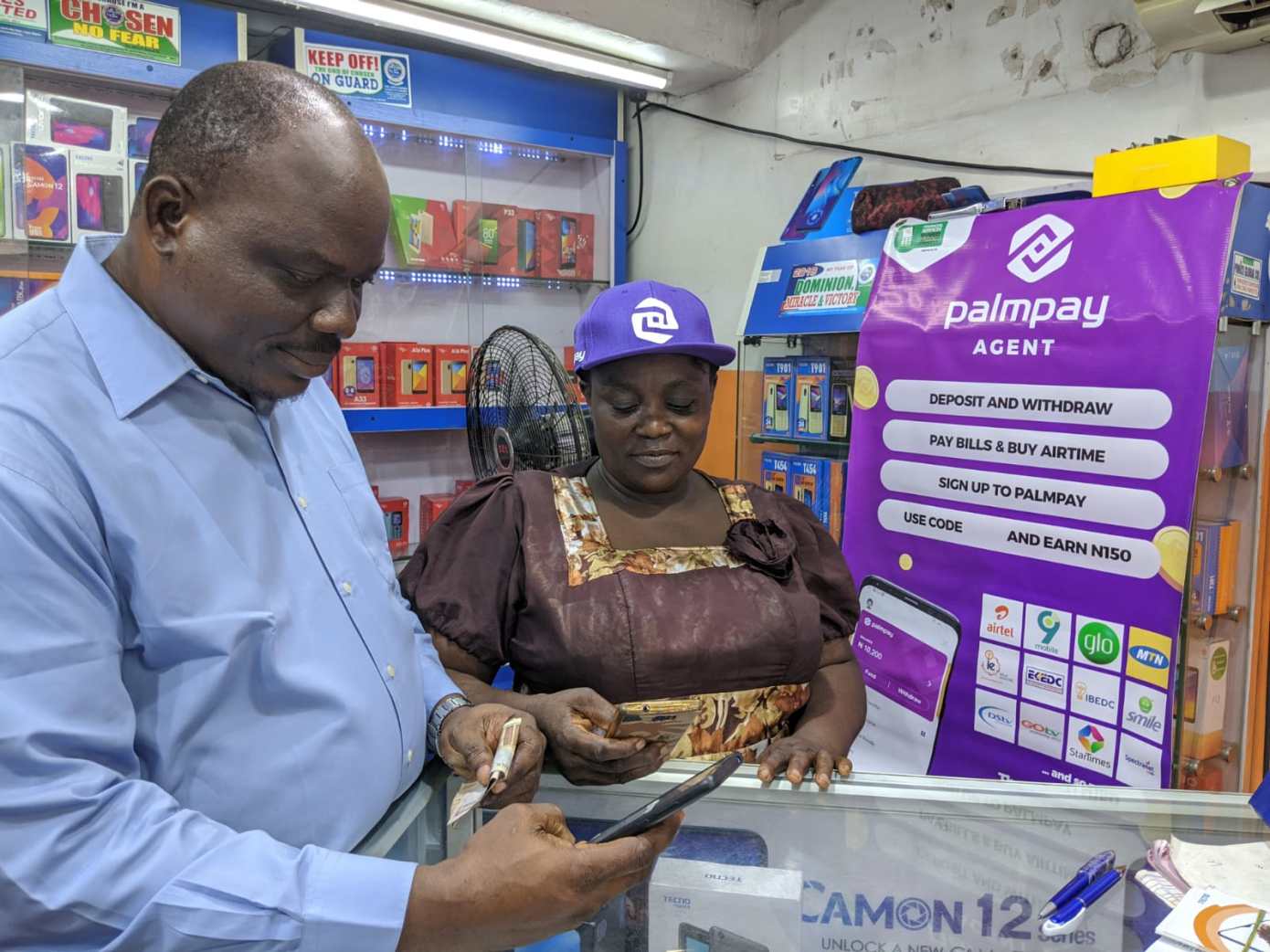
PalmPay, a consumer oriented payments product, went live last month with a $40 million seed-round (one of the largest in Africa in 2019) led by Africa’s biggest mobile-phone seller — China’s Transsion.

The startup was upfront about its ambitions, stating its goals to become “Africa’s largest financial services platform,” in a company statement.

To that end, PalmPay conveniently entered a strategic partnership with its lead investor. The startup’s payment app will come pre-installed on Transsion’s mobile device brands, such as Tecno, in Africa — for an estimated reach of 20 million phones.

PalmPay also launched in Ghana in November and its UK and Africa based CEO, Greg Reeve, confirmed plans to expand to additional African countries in 2020.

OPay’s $120 million Series B was announced several days after the PalmPay news and came only months after the mobile-based fintech venture raised $50 million.

Founded by Chinese owned consumer internet company Opera — and backed by 9 Chinese investors — OPay is the payment utility for a suite of Opera developed internet based commercial products in Nigeria. These include ride-hail apps ORide and OCar and food delivery service OFood.

With its latest Series A, OPay also announced it would expand in Kenya, South Africa, and Ghana.

Though it wasn’t fintech, Chinese investors also backed a (reported) $30 million Series B for East African trucking logistics company Lori Systems in November.

With OPay, PalmPay, and Lori Systems, startups in Africa have raised a combined $240 million from 15 Chinese investors in a span of months.

There are a number of things to note and watch out for here, as TechCrunch reporting has illuminated (and will continue to do in follow-on coverage).

These moves mark a next chapter in China’s engagement in Africa and could raise some new issues. Hereto, the country’s interaction with Africa’s tech ecosystem has been relatively light compared to China’s deal-making on infrastructure and commodities.

There continues to be plenty of debate (and critique) of China’s role in Africa. This new digital-phase will certainly add a fresh component to all that. One thing to track will be data-privacy and national-security concerns that may emerge around Chinese actors investing heavily in African mobile consumer platforms.

We’ve seen lines (allegedly) blur on these matters between Chinese state and private-sector actors with companies such as Huawei.

As OPera and PalmPay expand, they may need to do some reassuring of African regulators as countries (such as Kenya) establish more formal consumer protection protocols for digital platforms.

One more thing to follow on OPay’s funding and planned expansion is the extent to which it puts Opera (and its entire suite of consumer internet products) in competition with multiple actors in Africa’s startup ecosystem. Opera’s Africa ventures could go head to head with Uber, Jumia, and M-Pesa — the mobile money-product that put Kenya out front on digital finance in Africa before Nigeria.

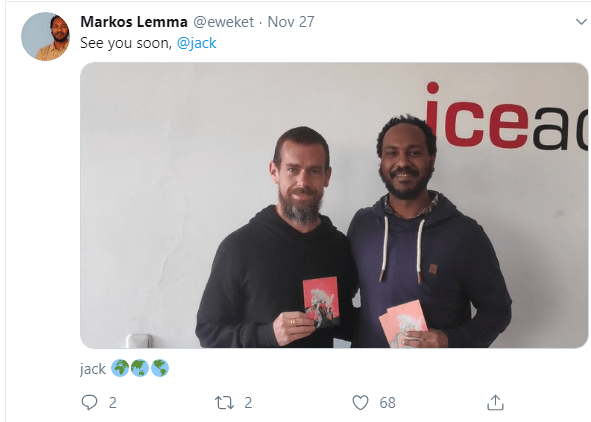
Shifting back to American engagement in African tech, Twitter and Square CEO Jack Dorsey was on the continent in November. No sooner than he’d finished his first trip, Dorsey announced plans to move to Africa in 2020, for 3 to 6 months, saying on Twitter “Africa will define the future (especially the bitcoin one!).”

We still don’t know much about what his last trip — or his future foray — mean in terms of concrete partnerships, investment, or market moves in Africa from Dorsey and his companies.

He visited Nigeria, Ghana, South Africa and Ethiopia and met with leaders at Nigeria’s CcHub (Bosun Tijani), Ethiopia’s Ice Addis (Markos Lemming), and did some meetings with fintech founders in Lagos (Paga’s Tayo Oviosu).

I know most of the organizations and people he talked to pretty well and nothing has shaken out yet in terms of partnership or investment news from his last trip.

On what could come out of Dorsey’s 2020 move to Africa, per his tweet and news highlighted in this roundup, a good bet would be it will have something to with fintech and Square.

More Africa-related stories @TechCrunch

African tech around the ‘net


Get personalized expert help for your startup at Disrupt Berlin

Get personalized expert help for your startup at Disrupt Berlin

Want to get professional feedback about your pitch deck, marketing assets, or immigration issues? Attending Disrupt Berlin?

We’ve brought in experts from around Europe (and Silicon Valley) to help you directly.

These events were hugely popular when we first did them at Disrupt in San Francisco the other month, so get your submissions in ASAP.

  • The final deadline is Sunday, Dec. 8.
  • It’s free for all attendees.
  • If we use your assets, we’ll also provide you a free ticket to any TechCrunch event of your choosing next year.

The Top 3 Immigration Mistakes Startups Make
11:25 – 11:35, Wednesday, Dec. 11
Sophie Alcorn (Alcorn Immigration Law)

Sophie Alcorn has helped hundreds of startups worldwide navigate the complexities of United States immigration law. She’ll be leading a talk on top mistakes, participating in a panel on global scaling, and providing 1:1 immigration advice sessions for any attendee who is interested.

You can now sign up for a time slot with her using our CrunchMatch offering. Attendees can request appointments through CrunchMatch in the TechCrunch events app, available upon registration.

Pitch Deck Teardown
16:45 -17:25, Wednesday, Dec. 11 
Russ Heddleston (DocSend)
Karen Stafford (Intel)
Sitar Teli (Connect Ventures)

How can you make your deck bring in the funding? Two top European investors and a startup founder with a special data set about will be reviewing submitted decks live on the Extra Crunch stage.

Want to see what they think about yours? Just fill out this form.

Growth Marketing 2020
14:05 – 14:45, Thursday, Dec. 12
Asher King Abramson (Demand Curve)

Even the biggest tech companies do marketing wrong — and startups you haven’t heard of (yet) are doing it right. Demand Curve works with dozens of top companies coming out of Y Combinator, and a long list of others around the world. Asher King Abramson has seen it all, including the best practices going into the new year.

He’ll be critiquing a selection of efforts on stage, and you can have yours included if you submit your ad and landing page assets here.


In “60 Minutes” appearance, YouTube’s CEO offers a master class in moral equivalency

In “60 Minutes” appearance, YouTube’s CEO offers a master class in moral equivalency

Susan Wojcicki may be one of the most powerful women in Silicon Valley, but she also holds the unenviable role of being ultimately responsible for a lot of garbage that we, along with our parents, siblings, friends, neighbors, colleagues, and children — not to mention billions of strangers — now consume on YouTube.

That garbage, along with valuable content, is inevitable on a platform that Wojcicki says sees 500 hours of video downloaded to the platform every single minute. But it doesn’t meant that YouTube can’t do more, particularly given the vast financial resources of its parent company, Alphabet, which had a stunning $117 billion in financial reserves as of this summer — more than any company on the planet.

Instead, as Wojcicki explains to reporter Leslie Stahl on tonight’s episode of “60 Minutes,” the company has broadly drawn a line at taking down videos that cause “harm,” versus videos that spread might merely hatred and disinformation.

The distinction is laughable. “So if you’re saying, “Don’t hire somebody because of their race, that’s discrimination,” according to Wojcicki, “and so that would be an example of something that would be a violation against our policies.” Meanwhile, as Stahl notes, a video stating that “white people are superior” but that doesn’t explicitly incite action on the part of viewers would be fine with Youtube. If that video says “nothing else, yes,” confirms Wojcicki.

It’s a horrifying position for the company to take and for Wojcicki to be responsible, and ultimately, Wojcicki’s best defense, in her own words, is that the site is better because she knows she can make it better. It’s exceedingly cold comfort.

If you missed the episode, you can read the transcript below.

[STAHL STUDIO:]  


TO GRASP THE PHENOMENAL SCALE OF YOUTUBE: CONSIDER THAT PEOPLE SPEND 1 BILLION HOURS WATCHING VIDEOS ON IT — EVERY DAY. IT IS THE MOST USED SOCIAL NETWORK IN THE U-S.  MORE QUERIES ARE TYPED INTO THE WEBSITE’S SEARCH-BAR THAN ANYWHERE ONLINE EXCEPT GOOGLE… WHICH OWNS YOUTUBE.


BUT THE SITE HAS COME UNDER INCREASING SCRUTINY, ACCUSED OF PROPAGATING WHITE SUPREMACY, PEDDLING CONSPIRACIES AND PROFITING FROM IT ALL. THEY RECENTLY AGREED TO PAY A RECORD $170 MILLION DOLLARS TO SETTLE ALLEGATIONS THAT THEY TARGETED CHILDREN WITH ADS. YOUTUBE IS BEING FORCED TO CONCENTRATE ON CLEANSING THE SITE.


WE VISITED THE COMPANY’S HEADQUARTERS IN SAN BRUNO, CALIFORNIA, TO MEET SUSAN WOJISKEY, THE 51-YR-OLD CEO, IN CHARGE OF NURTURING THE SITE’S CREATIVITY, TAMING THE HATE AND HANDLING THE CHAOS.


VIDEO:


SUSAN: We have 500 hours of video uploaded every single minute to YouTube.

STAHL: Fi– say that again.

SUSAN: So we have 500 hours of video uploaded every minute to YouTube.

STAHL: That is breathtaking.

SUSAN: It, it is, it is. We have a lot of video.


AND A LOT OF INFLUENCE ON OUR LIVES, AND HOW WE PASS OUR TIME.    


SOT: MUSIC


OVER A BILLION PEOPLE LISTEN TO MUSIC ON YOUTUBE EVERY MONTH: IT’S THE PLANET’S TOP MUSIC SITE. THERE’S A CHILDREN’S CHANNEL; WITH OVER 44-BILLION VIEWS.   


STAHL: Do you let your children watch YouTube, including the young ones?

SUSAN: So I allow my younger kids to use YouTube Kids, but I limit the amount of time that they’re on it.  I think too much of anything is not a good thing. But there’s a lot you can learn on YouTube. I think about how YouTube in many ways is this global library. You wanna see any historical speech – you could see it. You want to be able to learn a language –

STAHL: Make a soufflé?

SUSAN: – wanna laugh, you just wanna see something funny. A soufflé! Oh, yeah, cooking. Cooking’s a great example.


SO’S WATCHING PEOPLE BINGE EAT. (NAT) A GROWING NUMBER OF AMERICAN ADULTS ARE TURNING TO IT FOR THEIR NEWS… SPORTS… MEDICAL INFORMATION. IT’S NOW MANKIND’S LARGEST “HOW TO” COLLECTION: (NAT)HOW TO TIE A TIE… TIE THE KNOT…OR SPEAK THAI.


THE SITE HAS PRODUCED WHOLE NEW PASTTIMES WHERE MILLIONS WATCH STRANGERS OPEN BOXES… (NAT) WHISPER… SLEEP…  YOUTUBE’S ARTIFICIAL INTELLIGENCE ALGORITHMS KEEP RECOMMENDING NEW VIDEOS SO USERS WATCH MORE AND MORE AND MORE.


STAGE: HAPPY FRIDAY!


WOJCICKI INVITED US TO THE WEEKLY ALL-STAFF MEETING. SHE’S SURPRISINGLY DOWN-TO-EARTH FOR ONE OF THE MOST POWERFUL PEOPLE IN SILICON VALLEY, (NAT) WHERE HER TRAJECTORY STARTED IN AN UNLIKELY WAY.


SUSAN: I owned a garage. And I was worried about covering the mortgage. So I was willing to rent my garage to any student. But then two students appeared. One was named Sergey Brin. The other was named Larry Page. They are the founders of Google.

STAHL: Yes, they are.

SUSAN: But at the time they were just students. They looked like any other students.


LARRY AND SERGEY ENDED UP HIRING HER AS THEIR FIRST MARKETING MANAGER: SHE WAS GOOGLE EMPLOYEE 16.  AS THE COMPANY GREW, SO DID HER ROLE AND SO DID HER FAMILY.. SHE HAS 5 CHILDREN. GOOGLE BOUGHT YOUTUBE ON HER RECOMMENDATION, FOR OVER $1.6 BILLION, AND 8 YEARS LATER SHE BECAME CEO – WITH A MANDATE TO MAKE IT GROW AND MAKE IT PROFITABLE. AND SHE DID! IT’S ESTIMATED WORTH IS $160-BILLION.


(SOT POP)


YOUTUBE MAKES MOST OF ITS MONEY FROM ADS – (NAT) SPLITTING REVENUE WITH PEOPLE WHO CREATE ALL KINDS OF VIDEOS(NAT) FROM DO-IT-YOURSELF LESSONS… TO HIP-HOP LESSONS. THE MORE POPULAR ONES CAN BECOME MULTI-MILLION DOLLAR ENTREPRENEURS.


[Ad: Joe Biden promised Ukraine a billion dollars if they fired the prosecutor investigating his son’s company…]


YOUTUBE ALSO MAKES MONEY FROM POLITICAL ADS, A THORNY ISSUE BECAUSE SOME OF THEM HAVE BEEN USED TO SPREAD LIES ON SOCIAL MEDIA. 


STAHL: Facebook is facing a lot of controversy because it refuses to take down a President Trump ad about Biden which is not true. Would you run that ad?

SUSAN: So that is an ad that, um, right now would not be a violation of our policies.

STAHL: Is it on YouTube right now?

SUSAN: It has been on YouTube.

STAHL: Can a politician lie on YouTube?

SUSAN: For every single video I think it’s really important to look at it. Politicians are always accusing their opponents of lying. That said, it’s not okay to have technically manipulated content that would be misleading. For example, there was a video uploaded of Nancy Pelosi. It was slowed down just enough that it was unclear whether or not she was in her full capacity ’cause she was speaking in a slower voice.


PELOSI AD: Why would I work with you if you’re investigating me…


SUSAN: The title of the video actually said drunk, had that in the title. And we removed that video.

STAHL: How fast did you remove it?

SUSAN: Very fast.


BUT NOT COMPLETELY. WE JUST DID A SEARCH AND THERE IT WAS STILL AVAILABLE. THE COMPANY KEEPS TRYING TO ERASE THE PURPORTED NAME OF THE IMPEACHMENT WHISTLE-BLOWER, BUT THAT TOO IS STILL THERE. WHICH RAISES DOUBTS ABOUT THEIR SYSTEM’S ABILITY TO CLEANSE THE SITE. 


IN THE 2016 ELECTION CYCLE, YOUTUBE FAILED TO DETECT RUSSIAN TROLLS, WHO POSTED OVER 1,100 VIDEOS, ALMOST ALL MEANT TO INFLUENCE AFRICAN-AMERICANS – LIKE THIS VIDEO. 


SOT: Please don’t vote for Hillary Clinton.  She’s not our candidate… She’s a f**king old racist bitch.


YOUTUBE IS AN “OPEN PLATFORM” MEANING ANYONE CAN UPLOAD A VIDEO, AND SO THE SITE HAS BEEN USED TO SPREAD DISINFORMATION, VILE CONSPIRACIES, AND HATE. THIS PAST MARCH A WHITE SUPREMACIST LIVE-STREAMED HIS KILLING OF DOZENS OF MUSLIMS IN CHRISTCHURCH, NEW ZEALAND. HE USED FACEBOOK, BUT FOR THE NEXT 24 HOURS COPIES OF THAT FOOTAGE WERE UPLOADED ON YOUTUBE TENS OF THOUSANDS OF TIMES. 


SUSAN: This event was unique because it was really a made-for-Internet type of crisis. Every second there was a new upload. And so our teams around the world were working on this to remove this content. We had just never seen such a huge volume.

STAHL: I can only imagine when you became CEO of YouTube that you thought, “Oh, this is gonna be so fun. It’s “people are uploading wonderful things like

SUSAN: funny cat videos.

STAHL: –funny. And look at what we’re talking about here. Are you worried that these dark things are beginning to define YouTube?

SUSAN: I think it’s incredibly important that we have a responsibility framework, and that has been my number one priority. We’re removing content that violates our policies. We removed, just in the last quarter, 9 million videos.

STAHL: You recently tightened your policy on hate speech.

SUSAN: Uh-huh.

STAHL: Why.. why’d you wait so long?

SUSAN: Well, we have had hate policies since the very beginning of YouTube.  And we–

STAHL: But pretty ineffective.

SUSAN: What we really had to do was tighten our enforcement of that to make sure we were catching everything and we use a combination of people and machines. So Google as a whole has about 10,000 people that are focused on controversial content.

STAHL: I’m told that it is very stressful to be looking at these questionable videos all the time. And that there’s actually counselors to make sure that there aren’t mental problems with the people who are doing this work.  Is that true?

SUSAN: It’s a very important area for us. We try to do everything we can to make sure that this is a good work environment. Our reviewers work 5 hours of the 8 hours reviewing videos.  They have the opportunity to take a break whenever they want.

STAHL: I also heard that these monitors, reviewers, sometimes, they’re beginning to buy the conspiracy theories.

SUSAN: I’ve definitely heard about that. And we work really hard with all of our reviewers to make sure that, you know, we’re providing the right services for them.


SUSAN WOJCICKI SHOWED US TWO EXAMPLES OF HOW HARD IT IS TO DETERMINE WHAT’S TOO HATEFUL OR VIOLENT TO STAY ON THE SITE.


SUSAN@DEMO: [SEE KICK] So this is a really hard video to watch.

STAHL: Really hard.

SUSAN: And as you can see, these are prisoners in Syria. So you could look at it and say, “Well, should this– it be removed, because it shows violence, it’s graphic,” but it’s actually uploaded by a group that is trying to expose the violence.


SO SHE LEFT IT UP. THEN SHE SHOWED US THIS WORLD WAR TWO VIDEO.


STAHL:  I mean it’s totally historical footage that you would see on the History Channel.


BUT SHE TOOK IT DOWN!


STAHL:  Why?

SUSAN: There is this word down here that you’ll see, 1418.


1418 IS CODE USED BY WHITE SUPREMACISTS TO IDENTIFY ONE ANOTHER  


SUSAN: For every area we work with experts, and we know all the hand signals, the messaging, the flags, the songs, and so there’s quite a lot of context that goes into every single video to be able to under- stand what are they really trying to say with this video.


THE STRUGGLE FOR WOJCICKI IS POLICING THE SITE… WHILE KEEPING YOUTUBE AN OPEN PLATFORM. 


SUSAN@HALLWAY You can go too far and that can become censorship. And so we have been working really hard to figure out what’s the right way to balance responsibility with freedom of speech.


BUT THE PRIVATE SECTOR IS NOT LEGALLY BEHOLDEN TO THE FIRST AMENDMENT. 


STAHL: You’re not operating under some– freedom of speech mandate. You get to pick.

SUSAN: We do. But we think there’s a lot of benefit from being able to hear from groups and underrepresented groups that otherwise we never would have heard from.


[Lauren Southern: But with name calling of Nazi or propagandist…]


BUT THAT MEANS HEARING FROM PEOPLE WITH ODIOUS MESSAGES ABOUT GAYS, 

[Crowder: Mr. Lipsy Queer from Vox.] WOMEN [Naked Ape: Sex robot] AND IMMIGRANTS:


Nick Fuentes: I think the easiest way for Mexicans to not get shot and killed at Walmart —


WOJCICKI EXPLAINED THAT VIDEOS ARE ALLOWED AS LONG AS THEY DON’T CAUSE HARM: BUT HER DEFINITION OF “HARM” CAN SEEM NARROW.


SUSAN: So if you’re saying, “Don’t hire somebody because of their race, that’s discrimination.  And so that would be an example of something that would be a violation against our policies.

STAHL: But if you just said, “White people are superior” by itself, that’s okay.

SUSAN: And nothing else, yes.


BUT THAT IS HARMFUL IN THAT IT GIVES WHITE EXTREMISTS A PLATFORM TO INDOCTRINATE. 


SPENCER:  We want a flourishing, healthy white race.


AND WHAT ABOUT MEDICAL QUACKERY ON THE SITE? LIKE TUMERIC CAN REVERSE CANCER; BLEACH CURES AUTISM; VACCINES CAUSE AUTISM. 


ONCE YOU WATCH ONE OF THESE, YOUTUBE’S ALGORITHMS MIGHT RECOMMEND YOU WATCH SIMILAR CONTENT. BUT NO MATTER HOW HARMFUL OR UNTRUTHFUL, YOUTUBE CAN’T BE HELD LIABLE FOR ANY CONTENT, DUE TO A LEGAL PROTECTION CALLED “SECTION 230.”


STAHL: The law under 230 does not hold you responsible for user-generated content. But in that you recommend things, sometimes 1,000 times, sometimes 5,000 times, shouldn’t you be held responsible for that material, because you recommend it?

SUSAN: Well, our systems wouldn’t work without recommending. And so if–

STAHL: I’m not saying don’t recommend. I’m just saying be responsible for when you recommend so many times.

SUSAN: If we were held liable for every single piece of content that we recommended, we would have to review it. That would mean there’d be a much smaller set of information that people would be finding. Much, much smaller.


SHE TOLD US THAT EARLIER THIS YEAR YOUTUBE STARTED RE-PROGRAMMING ITS ALGORITHMS IN THE US TO RECOMMEND QUESTIONABLE VIDEOS MUCH LESS…  AND POINT USERS WHO SEARCH FOR THAT KIND OF MATERIAL TO AUTHORATATIVE SOURCES, LIKE NEWS CLIPS. WITH THESE CHANGES WOJCICKI SAYS THEY HAVE CUT DOWN THE AMOUNT OF TIME AMERICANS WATCH CONTROVERSIAL CONTENT BY 70 PERCENT.  


STAHL: Would you be able to say to the public: we are confident we can police our site?


SUSAN: YouTube is always going to be different than something like traditional media where every single piece of content is produced and reviewed.  We have an open platform. But I know that I can make it better.  And that’s why I’m here.



Now even the FBI is warning about your smart TV’s security

Now even the FBI is warning about your smart TV’s security

If you just bought a smart TV on Black Friday or plan to buy one for Cyber Monday tomorrow, the FBI wants you to know a few things.

Smart TVs are like regular television sets but with an internet connection. With the advent and growth of Netflix, Hulu and other streaming services, most saw internet-connected televisions as a cord-cutter’s dream. But like anything that connects to the internet, it opens up smart TVs to security vulnerabilities and hackers. Not only that, many smart TVs come with a camera and a microphone. But as is the case with most other internet-connected devices, manufacturers often don’t put security as a priority.

That’s the key takeaway from the FBI’s Portland field office, which just ahead of some of the biggest shopping days of the year posted a warning on its website about the risks that smart TVs pose.

“Beyond the risk that your TV manufacturer and app developers may be listening and watching you, that television can also be a gateway for hackers to come into your home. A bad cyber actor may not be able to access your locked-down computer directly, but it is possible that your unsecured TV can give him or her an easy way in the backdoor through your router,” wrote the FBI.

The FBI warned that hackers can take control of your unsecured smart TV and in worst cases, take control of the camera and microphone to watch and listen in.

Active attacks and exploits against smart TVs are rare, but not unheard of. Because every smart TV comes with their manufacturer’s own software and are at the mercy of their often unreliable and irregular security patching schedule, some devices are more vulnerable than others. Earlier this year, hackers showed it was possible to hijack Google’s Chromecast streaming stick and broadcast random videos to thousands of victims.

In fact, some of the biggest exploits targeting smart TVs in recent years were developed by the Central Intelligence Agency, but were stolen and published online by WikiLeaks two years ago.

But as much as the FBI’s warning is responding to genuine fears, arguably one of the bigger issues that should cause as much if not greater concerns are how much tracking data is collected on smart TV owners.

The Washington Post earlier this year found that some of the most popular smart TV makers — including Samsung and LG — collect tons of information about what users are watching in order to help advertisers better target ads against their viewers and to suggest what to watch next, for example. The TV tracking problem became so problematic a few years ago that smart TV maker Vizio had to pay $2.2 million in fines after it was caught secretly collecting customer viewing data. Earlier this year, a separate class action suit related to the tracking again Vizio was allowed to go ahead.

The FBI recommends placing black tape over an unused smart TV camera, keeping your smart TV up-to-date with the latest patches and fixes, and to read the privacy policy to better understand what your smart TV is capable of.

As convenient as it might be, the most secure smart TV might be one that isn’t connected to the internet at all.


SoFi founder Mike Cagney’s already well-funded new startup is raising another $100 million

SoFi founder Mike Cagney’s already well-funded new startup is raising another $100 million

Figure Technologies, a nearly two-year-old, San Francisco-based fintech cofounded by Mike Cagney, the founder of the more established fintech company SoFi, is raising a whole lot of money — again.

By February of this year, Figure had already raised $120 million in equity funding from a gaggle of investors, including RPM Ventures, partners at DST Global, Ribbit Capital, DCM, DCG, Nimble Ventures, and Morgan Creek. In May, it announced that it had closed an up to $1 billion uncommitted asset-based financing facility on its own custom blockchain with Jefferies and WSFS Institutional Services.

Now, according to paperwork filed with the SEC earlier this month, it appears that Figure has closed or is about to close on $103 million in Series C funding.

Presumably, investors are interested partly in the company’s growing spate of products. While Figure started out providing home loans to older customers who aren’t earning income and have much of their wealth tied up in their homes — a fast-growing demographic — it has more recently begun to chase after a demographic that Cagney knows well through SoFi, younger people looking to refinance their student loans.

According to Figure’s website, it also plans to introduce a money market product soon.

Figure talked recently with American Banker about the company’s interest in competing more directly with SoFi, citing the $1.4 trillion in outstanding loan debt as the primary reason it’s swooping into the space, and with the “same mousetrap” that Figure has developed to quickly process home loans, which it then securitizes and sells.

Specifically, all of Figure’s financial services business is executed entirely on its blockchain, Provenance, which further has a native token, Hash, that’s used to both access the blockchain and to memorialize off-chain exchange of fiat currency.

Cagney co-founded Figure with his wife, June Ou, who was the company’s chief operating officer. She was previously chief technology officer at SoFi, where Cagney lost his job in 2017 as CEO after a board investigation into sexual misconduct at the company.

Others of Figure’s cofounders include Alana Ackerson and Cynthia Chen. Ackerson was previously the CEO of the Thiel Foundation. Chen was most recently a venture partner with DHVC (Danhua Capital), a venture capital firm based in Palo Alto, Ca.


Millions of SMS messages exposed in database security lapse

Millions of SMS messages exposed in database security lapse

A massive database storing tens of millions of SMS text messages, most of which were sent by businesses to potential customers, has been found online.

The database is run by TrueDialog, a business SMS provider for businesses and higher education providers, which lets companies, colleges, and universities send bulk text messages to their customers and students. The Austin, Texas-based company says one of the advantages to its service is that recipients can also text back, allowing them to have two-way conversations with brands or businesses.

The database stored years of sent and received text messages from its customers and processed by TrueDialog. But because the database was left unprotected on the internet without a password, none of the data was encrypted and anyone could look inside.

Security researchers Noam Rotem and Ran Locar found the exposed database earlier this month as part of their internet scanning efforts.

TechCrunch examined a portion of the data, which contained detailed logs of messages sent by customers who used TrueDialog’s system, including phone numbers and SMS message contents. The database contained information about university finance applications, marketing messages from businesses with discount codes, and job alerts, among other things.

But the data also contained sensitive text messages, such as two-factor codes and other security messages, which may have allowed anyone viewing the data to gain access to a person’s online accounts. Many of the messages we reviewed contained codes to access online medical services to obtain, and password reset and login codes for sites including Facebook and Google accounts.

Because some of the two-way message conversations contained a unique conversation code, it’s possible to read entire chains of conversations. One table alone had tens of millions of messages, many of which were message recipients trying to opt-out of receiving text messages.

TechCrunch contacted TrueDialog about the exposure, which promptly pulled the database offline. Despite reaching out several times, TrueDialog’s chief executive John Wright would not acknowledge the breach nor return several requests for comment. Wright also did not answer any of our questions — including whether the company would inform customers of the security lapse and if he plans to inform regulators, such as state attorneys general, per state data breach notification laws.

The company is just one of many SMS providers that have in recent months left systems — and sensitive text messages — on the internet for anyone to access. Not only that but it’s another example of why SMS text messages may be convenient but is not a secure way to communicate — particularly for sensitive data, like sending two-factor codes.

Read more:


Week in Review: Apple’s rebirth as a content company has a forgettable debut

Week in Review: Apple’s rebirth as a content company has a forgettable debut

Hey everyone. Thank you for welcoming me into you inboxes yet again.

Hope you all had a wonderful Thanksgiving. After dodging your inboxes for a couple weeks as I ventured off to China for a TechCrunch event in Shenzhen, I am rested up and ready to go.

If you’re reading this on the TechCrunch site, you can get this in your inbox here, and follow my tweets here.


The big story

When Apple announced details on their three new subscription products (Apple TV+, Apple Arcade and Apple News+ — all of which are now live) back in March, the headlines that followed all described accurately how Apple’s business was increasingly shifting away from hardware towards services and how the future of the company may lie in these subscription businesses.

I largely accepted those headlines as fact, but one thing I have been thinking an awful lot about this week is how much I have loved Disney+ since signing up for an account and just how little I have thought about Apple TV+ despite signing up for both at their launches.

It’s admittedly not the fairest of comparisons, Disney has decades of classic content behind them while Apple is pushing out weekly updates to a few mostly meh TV shows. But no one was begging Apple to get into television. The company’s desires to diversify and own subscriptions that consumers have on their Apple devices certainly make sense for them, but their strategy of making that play without the help of any beloved series before them seems to have been a big miscalculation.

At TechCrunch, we write an awful lot about acquisitions worth hundreds of million, if not billions, of dollars. Some of the acquisitions that have intrigued me the most have been in the content space. Streaming networks are plunking down historic sums on series like Seinfeld, Friends and The Big Bang Theory. The buyers have differed throughout these deals, but they have never been Apple.

That’s because Apple isn’t bidding on history, they’re trying to nab directors and actors creating the series that will be the next hits. And while that sounds very Apple, it also sounds like a product that’s an awfully big gamble to the average consumer looking to try out a new streaming service. Why pick the service that’s starting from a standstill? Apple has ordered plenty of series and I have few doubts that at least one of the shows they plan to introduce is going to be a hit, but there isn’t much in the way of an early favorite yet and for subscribers that haven’t found “the one” yet, there’s very little reason to stick around.

Apple tv plus tv app 091019

Other networks with a half-dozen major series can afford a few flops because there’s a library of classics that’s filling up the dead space. Apple’s strategy is bold but is going to lead to awfully high churn among consumers that won’t be as forgiving of bad bets. This is an issue that’s sure to become less pronounced over time, but I would bet there will be quite a few consumers unsubscribing in the mean time leaving those on freebie subscriptions responsible for gauging which new shows are top notch.

Apple has also made the weird move of not housing their content inside an app so much as the Apple TV’s alternative UI inside the TV app. One one hand, this makes the lack of content less visible, but it also pushes all of the original series to the back of your mind. If you’re a Netflix user who has been subconsciously trained never to use the TV app on your Apple TV because none of their content is housed there, you’re really left forgetting about TV+ shows entirely when using the traditional app layout.

We haven’t received any super early numbers on Apple News+, Apple Arcade or Apple TV+, but none of the three appears to have made the sizable cultural splashes in their debuts that were hoped for at launch. Apple’s biggest bet of the three was undoubtedly TV+ and while their first series haven’t seemed to drop any jaws, what’s more concerning is whether the fundamentals of the service have been arranged so that unsatisfied subscribers feel any need to stick around.

Send me feedback
on Twitter @lucasmtny or email
lucas@techcrunch.com

On to the rest of the week’s news.

Image via AMY OSBORNE/AFP/Getty Images

Trends of the week

Here are a few big news items from big companies, with green links to all the sweet, sweet added context:

  • Facebook buys a game studio building Light saber Fruit Ninja
    One of the things I wrote about this week was Facebook buying the game studio behind one of virtual reality’s most popular titles, Beat Saber. No details on a price tag for the deal, but the buy brings the hop IP underneath Facebook’s corporate umbrella which seems poised to be eying more VR content acquisitions.
  • Twitter plans for account memorials
    Almost any time Twitter decides to make a big product change, one gets the feeling it was either snuck through or brute-forced by the CEO or another exec. That’s because there often doesn’t seem to be a lot of consideration for caveats that users seem to collectively identify almost immediately. This week was time for another one of these situations, after Twitter announced it was planning to deactivate old unused Twitter accounts en masse, something users realized was just going to lead to deactivating deceased people’s accounts and erasing what they had ever tweeted. Twitter, to their credit, decided to pause and rethink things.

GAFA Gaffes

How did the top tech companies screw up this week? This clearly needs its own section, in order of badness:

  1. Google appears to bring the hammer down on activism:
    [Google employee activist says she has been fired]

Disrupt Berlin

DISRUPT SF 530X350 V2 berlin

It’s hard to believe it’s already that time of the year again, but we just announced the agenda for Disrupt Berlin and we’ve got some all-stars making their way to the stage. I’ll be there this year, get some tickets and come say hey!

Sign up for more newsletters in your inbox (including this one) here.