Saturday, 3 October 2020

Airbnb nears IPO as Asana and Palantir land their direct listings

Airbnb nears IPO as Asana and Palantir land their direct listings

Editor’s note: Get this free weekly recap of TechCrunch news that any startup can use by email every Saturday morning (7 a.m. PT). Subscribe here.

The going has not always been easy but the tech IPOs keep coming. Airbnb itself is almost here, in what is likely to be the ultimate stock market listing of this dramatic year. After the pandemic triggered mass layoffs for the short-term rental marketplace, it has managed to make up all of the lost ground to pre-pandemic projections, TechCrunch and others have reported. Now, news is leaking out that it could seek to raise up to $3 billion at a $30 billion valuation.

The US presidential election in a month, Trump’s positive COVID-19 diagnosis, and various other world events have yet to stop the tech IPO momentum.

This past Wednesday, Palantir and Asana both opted to put a limited number of shares up for sale directly instead of working with a bank to pre-sell portions to favored clients, following in the direct-listings footsteps of Spotify and Slack.

Palantir, which is continuing to get political scrutiny around its government data businesses, and Asana both finished the first few days of trading without any pop to speak of for initial public investors (although other things have been impacting markets in the same time frame). However, both companies have already turned billions of paper funding rounds into liquid money that can start going back to the employees and investors, as intended. And now, each can sail the high seas of public markets with a smaller, friendlier group of stockholders than many, many other public companies have.

We’ve been covering Palantir in great detail recently, but Asana’s entrance provides a broader lesson for the many aspiring SaaS startups out there.

Dustin Moskovitz, who has retained a huge amount of control as a cofounder/investor, told Danny Crichton for Extra Crunch that more than 40% of the task-focused work management provider’s revenue is now coming from outside of North America, with ongoing growth, high customer loyalty and big integrations with other SaaS providers. The results bode well for other SaaS companies considering direct listings, as Alex Wilhelm analyzes for EC:

Asana grew 63% in the six months ending July 31, 2020, compared to the same period of 2019, though that growth rate decelerated to around 57% when only looking at the most recent quarter and its historical analog. Good growth then, if slowing. And Asana’s gross margins were good and improving, coming in at 86% in the six months ending July 31, 2019, and 87% in the same period of 2020. But the company’s net losses were rising in gross and relative terms at the same time. In the six months ending July 31, 2020, Asana lost $76.9 million, up from $30.5 million in the same period of 2019. And, the company’s 77% net loss as a percent of revenue in the two quarters ending in July of 2020 was up from a 50% loss during the same period of the preceding year. Asana also consumed more cash this year than last year, with its operating cash burn rising from $13.1 million during the six months ending July 31, 2019 to $40.3 million in the same period of 2020.

And yet, from a reference price of $21, valuing the company at around $4 billion on a fully diluted basis, shares of Asana have risen to $25.14 at the open of trading this morning (though Asana lost several points today thanks to general market carnage). Current market trackers value the company at $3.86 billion.

Now, on to Airbnb! (And also, Datto!)

Source: Getty Images

Pandemic upsides arrive for cannabis, mental health and language learning

As the world tries to make sense of fresh Q3 data, we took a closer look at a few fresh startup trends. First, the cannabis market seems to be as strong as you’d expect. Matt Burns caught up with a range of weed-tech founders, investors and analysts, who shared almost entirely good news for the emerging sector. Here’s a highlight from Andy Lytwynec, VP, Global Vape Business at Canopy Growth, the cannabis holding company for a range of brands, including the vaporizer preferred by your self-medicated correspondent:

Lytwynec points to Storz & Bickle as a barometer of sorts in judging the impact of COVID-19. The German-based vaporizer company saw an uptick in sales, as reported in Canopy Growth’s latest quarterly report. The company reported a 71% increase during the first quarter ending on June 30. The financial report pointed to Storz & Bickel’s increased sales and distribution expansion as a primary reason for the increase. 

Just try getting a replacement for that mouthpiece you tragically broke at the start of quarantine. And don’t fall for that fake stuff on Amazon or you’ll be huffing plastic. Anyway…

Alex also checked in on mental health funding, which were already coming into their own before the pandemic. The first half of the year was the sector’s biggest yet, with a focus on remote therapy, virtual coaching and anxiety alleviation, although Q2 was down slightly from Q1. More, from Extra Crunch:

Investors are putting dollars to work in 2020 to further the growth mental health startups managed in 2018 and 2019. Per the CB Insights dataset, in Q1 and Q2 2020, these startups saw 106 rounds worth $1.08 billion. In the year-ago period, the figures were 87 rounds worth $750 million. (Unlike some subcategories of wellness startups that CB Insights detailed, mental health upstarts have enough regular VC volume to make year-over-year comparisons reasonable.)

In a different sector of tech-powered mind improvement, Duolingo is now on track to hit $180 million bookings, chief executive Luis von Ahn tells Natasha Mascarenhas for EC. While the language-learning company has seen usage surge from 30 million to 42 million monthly active users this year, it only makes money from 3% of them (those who want to pay to avoid seeing ads, get download access, and other features).

The future of transportation

From Kirsten Korosec, our resident mobility expert and host of our next event:

If you’re interested in tech, transportation and startups — of course you are — you should make our next event a priority. And it’s coming up in just a few days. TechCrunch is hosting TC Sessions: Mobility 2020 on October 6 & 7, a virtual event that will bring together the best and brightest minds working on automated vehicle technology, shared micromobility and electrification. We’ll be talking to former Tesla co-founder and CTO JB Straubel about his new venture Redwood Materials, the CEOs of EV newcomers Polestar and Lucid Motors, Formula E driver Lucas di Grassi about a new kind of racing event (hint, scooters!), early stage-investors from Trucks VC, Hemi Ventures and Maniv as well as Uber’s director of policy for cities Shin-Pei Tsay, to name a few. Plus there will be a dedicated networking time, a pitch night on October 5 and a virtual expo. There are a variety of ticket prices to meet your budget, including one for students. But I’m also here bearing gifts: Startups Weekly readers can get 50% off the full price at this link. If you’d just like to check out the startups expo portion, Startups Weekly readers can get in free with this link.

Photographer: Anindito Mukherjee/Bloomberg via Getty Images

Top Indian app developers join global platform rebellion

Manish Singh, our lead reporter covering Indian startups, has been breaking news on the growing dissent against app platform policies. It’s getting epic:

More than 150 startups and firms in India are working to form an alliance and toying with the idea of launching an app store to cut their reliance on Google, five people familiar with the matter told TechCrunch.

The list of entrepreneurs includes high-profile names, such as Vijay Shekhar Sharma, co-founder and chief executive of Paytm (India’s most valuable startup); Deep Kalra of travel ticketing firm MakeMyTrip; and executives from PolicyBazaar, RazorPay and ShareChat. The growing list of founders expressed deep concerns about Google’s “monopolistic” hold on India, home to one of the world’s largest startup ecosystems, and discussed what they alleged was unfair and inconsistent enforcement of Play Store’s guidelines in the country.

Their effort comes days after a small group of firms — including Epic Games, Spotify, Basecamp, Match Group and ProtonMail — forged their own coalition to pressure Apple and Google to make changes to their marketplace rules.

“Where else do these dollars go?”

Danny interviewed SF-based Index Ventures partners Nina Achadjian and Sarah Cannon about the latest trends in startup fundraising. Here’s a key part about the macro trends, that also explains why all those tech IPOs continue to happen (and do well):

TechCrunch: Given the amount of capital flowing into venture these days, have you noticed any LPs starting to pull back from the market?

Cannon: They’re not pulling back. In fact, it’s like, “Could you potentially take more allocation? And what do you think of these other seed managers?”

I think the way that I’ve got my mind around this is, where else would these dollars go? What are the alternatives for the dollars that are rushing into tech? I don’t know the latest numbers, but it was something like 40% of stock market returns are actually concentrated in Apple [and FAANG]. And then we’re seeing IPOs perform the same.

We’re in a global pandemic that could easily cause [another] recession. A lot of industries like airlines and travel have more exposure. Tech is just relatively more attractive. So if the interest rates are low, which they are, and [economists] have said that they’re going to be low for the coming decades, then you’re going to have lots of capital chasing returns.

Across the week

TechCrunch

Allbirds CEO Joey Zwillinger on the startup’s $100 million round, profitability and SPAC mania

How Twilio built its own conference platform

Working for social justice isn’t a ‘distraction’ for mission-focused companies

Apple removes two RSS feed readers from China App Store

Calling VCs in Rome and Milan: Be featured in The Great TechCrunch Survey of European VC

Extra Crunch

News apps in the US and China use algorithms to drive engagement, discovery

Which neobanks will rise or fall?

9 VCs in Madrid and Barcelona discuss the COVID-19 era and look to the future

Spain’s startup ecosystem: 9 investors on remote work, green shoots and 2020 trends

Healthcare entrepreneurs should prepare for an upcoming VC/PE bubble

#EquityPod

From Natasha:

Hello and welcome back to Equity, TechCrunch’s VC-focused podcast (now on Twitter!), where we unpack the numbers behind the headlines.

This week, Alex is on a much-deserved vacation (but not from Twitter, it seems) so Danny Crichton and I chatted through the news and happenings of the week. Somehow we winded our way through the latest tech controversies, gave Chris Wallace a shout out and ended with some funding rounds. I’ll be out next week so don’t miss me too much, but expect the entire Equity team to be back full-speed in mid-October. Thanks, as always, to our producer Chris Gates for his patience and diligence.

Now, onto a sneak peek of what we got into:

  • Moderation continues to be the root of all problems. We got into the anti-semitic comments that were spewed on Clubhouse, and what that means for the future of the audio-only platform. As Danny so eloquently put it: if Clubhouse is having moderation problems even with an exclusive invite-only user base, the problem will grow.
  • We also talked about Coinbase CEO Brian Armstrong’s blog post, which triggered a debate between us on whether tech companies can even choose to not be political. For the record, Black Lives Matter is not a political statement. It’s a human statement. Read this op-ed for more.
  • I wrote a piece about how a new program wants to be the Y Combinator for emerging fund managers. The whole “YC for X” model usually makes me roll my eyes, but listen to hear why I’m actually optimistic and bullish on programs like these taking off within tech.
  • Silver Lake added a $2 billion “long-term” hedge fund backed by Abu Dhabi to its tech finance toolkit. The strategy is a signal to privately backed startups, and potentially a slap in the face to SoftBank.
  • For a quick edtech note, I caught up with Duolingo’s CEO this week in one of his rare press interviews. Luis von Ahn explained the app’s surge in bookings, and there’s one key metric we pull out to noodle over.
  • Danny explained Gusto’s latest product launch with, wait for it, Gusto. In all seriousness, he brings up interesting points about the future of fintech feeling more full-suite, and free.
  • Funding round chatter continued when we unpacked Lee Fixel’s latest investment in India’s Inshorts.
  • Finally, we ended with LiquidDeath, which is not the name of a drinking game, but instead the name of a startup that has successfully attracted millions in venture capital for mountain water.

And with that, we will be back next week. Vote like your life depends on it, because it does.

Equity  drops every Monday at 7:00 a.m. PDT and Thursday afternoon as fast as we can get it out, so subscribe to us on Apple PodcastsOvercastSpotify and all the casts.



This Week in Apps: Google Play gets new rules, Apple launches app marketing tools, EU looks to reign in tech giants

Welcome back to This Week in Apps, the TechCrunch series that recaps the latest OS news, the applications they support and the money that flows through it all.

The app industry is as hot as ever, with a record 204 billion downloads and $120 billion in consumer spending in 2019. People are now spending three hours and 40 minutes per day using apps, rivaling TV. Apps aren’t just a way to pass idle hours — they’re a big business. In 2019, mobile-first companies had a combined $544 billion valuation, 6.5x higher than those without a mobile focus.

In this series, we help you keep up with the latest news from the world of apps, delivered on a weekly basis.

Top Stories

Google changes its app store rules, too

Google Play Store screen

Google Play Store screen

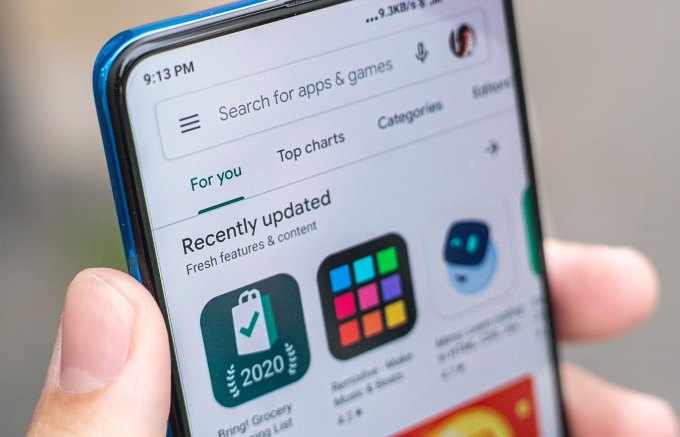
Just a couple of weeks ago, Apple revised its App Store rules to permit game streaming apps and clarify rules around in-app purchases, among other things. Now, Google has updated its rules, as well.

Under threat of regulation, Google announced this week it’s updating its Google Play billing policies to better clarify which types of transactions will be subject to Google’s commissions on in-app purchases. While the more detailed language doesn’t actually change the earlier policy’s intention, it will impact a percentage of developers who don’t currently use Google Play’s billing system when selling digital goods in their app.

In addition, the company announced it will make changes in Android 12 that will make it easier for users to install and use third-party app stores as an alternative to Google Play.

The company says that its current billing policies only apply to less than 3% of apps on Google Play. Of those apps, 97% already use Google Play’s billing library. That means there’s only a small percentage of apps that will need to come into compliance under the clarified terms.

The rules seem to want to bring into compliance larger services skirting in-app purchase rules, like Netflix and Spotify. But it’s not clear yet how permissive Google will be about allowing apps to communicate alternative ways to pay. Currently, Google says developers can tell users about how to sign up and use alternative payments outside of the Google Play app. But we don’t know if Google will allow such a link to be prominently placed on an app’s home screen, how it will allow such a link to be worded or whether an app can cater only to existing subscribers, and other key factors.

EU rule could force Apple and Google to share customer data, ban pre-installed apps

app store icon 2

Image Credits: TechCrunch

Major tech companies, including Apple and Google, may be required to share customer data with rivals, if a proposed EU rule, the Digital Services Act, comes to pass. The rule takes aim at anticompetitive business practices among tech’s top players, like Apple, Google, Amazon and Facebook. One measure, detailed by The Financial Times, says platforms can’t use the data they collect for their own commercial activities unless that’s shared with businesses pursuing the same activities.

The draft also currently recommends that big tech companies could be prohibited from favoring their own services on their websites and platforms, meaning they couldn’t pre-install their own apps on laptops or phones, or forced businesses to pre-install their apps to gain access to their platform. In practice, that could mean Android phones that ship without Google apps, like Gmail or Drive, or iPhones without stock apps beyond those that offer core functionality, like the Camera.

In addition, another clause would ban the tech companies from blocking rivals that offer their products to customers outside the gatekeeper’s own platform, Reuters reports. This could impact the current app store rules around payments and in-app purchases.

Anticipating regulatory pushback, Apple has made small concessions with iOS 14. Already, Apple had allowed users to delete some, but not all, of its stock apps. In iOS 14, Apple now lets users select their preferred web browser and email app, too. And both it and Google (see above) recently modified their app store guidelines to offer more clarity with regard to their right to collect platform fees in specific circumstances.

Apple and Google will, of course, object to any attempts at regulation. Google, in a submission to the Act, argued that a platform may only have market power in some sectors, but could be a new entrant or marginal player in others.

Weekly News Round-up

Platforms

Image Credits: Apple screenshot via TechCrunch

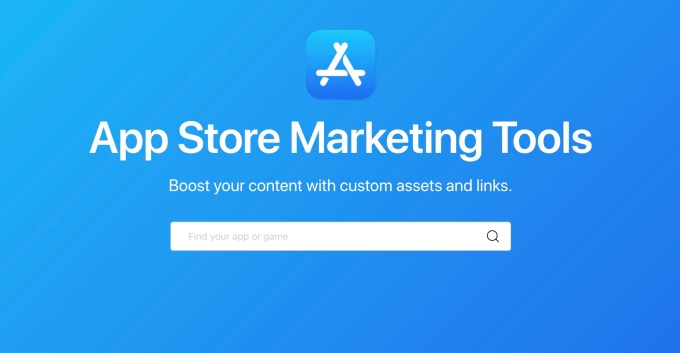
  • Apple releases new app marketing tools. Apple introduced new tools that allow developers to generate short links or embeddable codes that link to their App Store product page. These can also display your app icon, a QR code or an App Store badge.
  • Second public beta of iOS 14.2 and iPadOS 14.2 arrive. The releases bring new emoji (see below), plus changes to the Now Playing screen in the Control Center and the Home app.
  • Apple’s iOS 14.2 will bring new emoji. A new set of emoji are being tested in the beta version of iOS 14.2. The update will include the transgender flag, a smiling face with tear, pinched fingers, two people hugging, some insects and animals, a disguised face and more.
  • Google takes aim at beauty filters. Pixel phones will update to ensure face retouching features are off by default while labels and icons use “value-free” descriptions. The company said the decision to tweak the interface was based on expert recommendations over filters’ impact on people’s self-confidence and mental health.
  • Android Partner Vulnerability Initiative launches. The program will focus on managing security issues specific to Android OEMs, drive remediation and provide transparency to users about issues Google discovered that affect device models shipped by Android partners.
  • Apple bans more RSS readers in China App Store. Apple is still scouring its App Store for any services that don’t comply with Chinese censorship laws. This week, RSS reader apps — Reeder, Fiery Feeds and otherssaid their apps had been removed from the China App Store over content deemed “illegal.” Fiery Feeds only had around 1,000 MAUs, but Feedly’s latest app had 100K downloads.

Services

  • Google Play Pass launches in 24 new European countries. The deal brings Google’s subscription-based apps and games store to 34 total markets, including the U.S.
  • Twilio launches an app for frontline workers, a new IoT platform and a free video service, Video Web RTC Go. The latter allows you to add 1:1 video chat to mobile and web apps, like those aimed at distance learning or remote client consultations. It also launched Twilio Frontline, a React Native-based app for frontline workers who need to communicate with customers.

Trends

Image Credits: Sensor Tower

  • Designer earns six figures in six days for iOS 14 icon set. In a blog post, indie designer @traf details his experience building custom icons for the iOS home screen redesign trend. After a tweet showing off his home screen gained interest, he quickly created a website to sell his icon packs. Then YouTuber MKBHD linked to him and soon, he was making big sales. The day after the video, sales jumped from $6K to $40K, and as of the time of writing the post this week, the set had earned him $116,147.
  • Global app revenue up 32% year-over-year in Q3. Sensor Tower reports worldwide consumer spend grew to $29.3B and installs reached 36.5B across the App Store and Google Play in the third quarter. TikTok aws the highest-earning non-game app globally and the most downloaded.

Other News

  • Indian startups explore alternative app store to fight Google’s monopoly. More than 150 startups and firms in India are working to form an alliance and toying with the idea of launching an app store to cut their reliance on Google, TechCrunch reported this week. Participants include Paytm co-founder and CEO Vijay Shekhar Sharma, Deep Kalra of travel ticketing firm MakeMyTrip, and executives from PolicyBazaar, RazorPay and ShareChat.
  • App Store fees legal battle to be tried by a judge, not jury. Apple and Epic Games agreed this week that their court battle should be decided in a bench trial by a judge, not a jury. Apple had previously been pushing for a jury trial, but withdrew its request. The judge suggested a jury trial is preferred, as it would have allowed real people to have a voice on what’s shaping up to be a major anti-trust case. She also had harsh words for many of Epic’s tactics and arguments presented so far, noting that walled gardens already exist elsewhere and Fortnite players have many other places to play besides iOS.
  • Astropad comes to Windows. A company sherlocked by Apple brought its Astropad system to Windows. The company’s dongle turns an iPad into a second display, now for a Windows PC, a market Apple’s Sidecar doesn’t address.
  • TikTok’s U.K. numbers revealed. A leaked marketing presentation revealed that 1 in 4 U.K. users now launch TikTok every months, with 17 million users spending over an hour per day on the app. That means the app has achieved a following almost half as big as Facebook in the market in just three years.
  • TikTok launches a U.S. elections guide. The company promised not to save users’ political affiliations for use in ad targeting or recommendations.
  • Google Maps rolls out improved AR directions. Google Maps updated Live View, its AR walking directions feature that launched last year. The feature, which uses the camera and GPS to help you navigate, can now be invoked from the transit tab, identify landmarks in major cities, and use Live View in combination with Google Maps’ location sharing feature.
  • Microsoft’s Bing search app will appear as a download prompt on new Android phones in Germany, the U.K. and France after it won slots in a Google auction for rivals.

Funding and M&A, Etc.

  • Jamf acquires Mondada. MDM solution provider Jamf bought Melbourne-based Mondada, the maker of patch management solutions, Kinobi and Kinobi Pro. The deal will allow Jamf to expand Jamf’s application lifecycle capabilities, it said.
  • Bloomscape raises $15 million, acquires plant care app Vera. Online garden shop Bloomscape raised a $15 million Series B from General Catalyst and others for its e-commerce business that ships live plants to customers’ homes. It also bought Vera, a plant care and tips app, for an undisclosed sum.
  • Homer raises $50 million. Early learning app maker raised $50 million from Lego, Sesame Workshop and Gymboree for its apps that focus on early literacy and soon, more.
  • Humane raises $30 million Series A to build the next iPhone…or something. Humane’s ex-Apple founders, Imran Chaudhri and Bethany Bongiorno, haven’t revealed what they’re working on, but are promising to build something that’s as groundbreaking as the iPhone. Chaudhri had worked on the original UI design of iPhone and iPad and Bongiorno helped launch iPad. They believe technology is a net negative for society as it’s been built today, and their idea is to come up with a new computing vision entirely.
  • Macrometa raises $7 million. An edge computing service for app developers, Macrometa raised a $7 million seed round led by DNX Ventures for its Global Data Network that allows developers to send app requests to regions closest to them.
  • Beijing-based Sina Corp. agrees to go private in $2.6 billion deal. The company is the latest to delist following growing scrutiny from U.S. regulators.

Downloads

HoloVista

Mixed reality storytelling developer Aconite launched its new, story-driven puzzle game HoloVista on iOS, where players explore environments with the iPhone’s 360-degree camera in a mysterious mansion full of secrets. The game combines elements of hidden object search, puzzles and social media as you play as Carmen, a junior architect and new hire at an exclusive firm. The game also touches on themes like society’s focus on social media, for example, and our relationship with technology ($4.99 on the App Store).


Friday, 2 October 2020

Controversial former Uber exec Emil Michael has registered plans for a $250 million SPAC

Controversial former Uber exec Emil Michael has registered plans for a $250 million SPAC

SPACs, or special purpose acquisition companies, are all the rage right now, and people are emerging from all corners to raise them.

Among the latest entrants — and someone who might be of interest to Silicon Valley watchers — is Emil Michael, a former Uber executive and top lieutenant to former CEO Travis Kalanick. Earlier today, Micheal registered plans with the SEC to raise $250 million in an IPO for a blank-check company that will broadly acquire a company in the tech sector.

IPO Edge had reported earlier today that the SPAC might be in the works.

The filing lists as special advisors Alphabet’s former executive chairman Eric Schmidt, and Betsy Atkins, a founder of Ascend Communications and investor who has served on so many boards that last year she wrote a book about it. Indeed, among her other roles currently, she’s on the boards of Volvo, Wynn Resorts, and Oyo Hotels.

Michael was as senior vice president of field operations at Tellme Networks, then later served as COO of the startup Klout before landing at Uber, where he was a senior vice president for business for nearly four years.

He gained prominence in the role, but also some disrepute after he publicly made comments about hiring opposition researchers to quite journalists critical of the company and following a later report that he had attended an “escort bar” in Seoul with other Uber executives, including Kalanick. Indeed, when he left the company in 2017, Uber declined to say if he left of his own accord.

Despite — or perhaps even because of — his trajectory at Uber, Michael was reportedly vetted at one point for the position of Secretary of Transportation after Donald Trump was elected president. Now, he apparently sees a way to jump back into tech by using a SPAC to take public a still privately held company.

Certainly, it’s happening with a small but growing number of tech companies, including electric vehicle makers, such as the troubled Nikola, and the electric-truck maker Hyliion, which revealed plans in August to go public through a reverse merger into a SPAC. (Nikola is already publicly traded; Hylion’s deal is expected to close in the fourth quarter.)

But many other sectors of the economy are seemingly up for grabs. Just yesterday, Hims, a direct-to-consumer company that sells health products and services targeted at young men and women, revealed that it will go going public by merging a SPAC sponsored by Oaktree Capital Management.

Last month, Opendoor,  a home buying and selling platform, separately agreed to go public via a reverse merger with Social Capital Hedosophia Holdings Corp II, one of numerous SPACs that have been successfully raised by investor Chamath Palihapitiya.

And in late August, Desktop Metal, a Burlington, Ma.-based maker of 3D metal printing systems, agreed to go public via a reverse merger with a SPAC formed last year by veteran telecom investor Leo Hindery called Trine Acquisition Corp.

Michael has a bit more M&A experience than some who are beginning to take an interest in SPACs. For example, he was involved in selling Uber’s China business in 2016 to rival Didi Chiuxing in exchange for a stake in the company.

According to Kristi Marvin, a former investment banker who now runs the data site SPACInsider, she’s having and hearing about conversations with a much wider circle of people interested in launching SPACs than in past years — and not all of them are necessarily equipped to manage the vehicles.

“You ask, ‘Have you ever acquired a company for $500 million or more? Do you have operating experience in the vertical that you’re targeting? Do you understand the reporting requirements involved?’ Often the answers are no.”


Google research lets sign language switch ‘active speaker’ in video calls

Google research lets sign language switch ‘active speaker’ in video calls

An aspect of video calls that many of us take for granted is the way they can switch between feeds to highlight whoever’s speaking. Great — if speaking is how you communicate. Silent speech like sign language doesn’t trigger those algorithms, unfortunately, but this research from Google might change that.

It’s a real-time sign language detection engine that can tell when someone is signing (as opposed to just moving around) and when they’re done. Of course it’s trivial for humans to tell this sort of thing, but it’s harder for a video call system that’s used to just pushing pixels.

A new paper from Google researchers, presented (virtually, of course) at ECCV, shows how it can be done efficiency and with very little latency. It would defeat the point if the sign language detection worked but it resulted in delayed or degraded video, so their goal was to make sure the model was both lightweight and reliable.

The system first runs the video through a model called PoseNet, which estimates the positions of the body and limbs in each frame. This simplified visual information (essentially a stick figure) is sent to a model trained on pose data from video of people using German Sign Language, and it compares the live image to what it thinks signing looks like.

Image showing automatic detection of a person signing.

Image Credits: Google

This simple process already produces 80 percent accuracy in predicting whether a person is signing or not, and with some additional optimizing gets up to 91.5 percent accuracy. Considering how the “active speaker” detection on most calls is only so-so at telling whether a person is talking or coughing, those numbers are pretty respectable.

In order to work without adding some new “a person is signing” signal to existing calls, the system pulls clever a little trick. It uses a virtual audio source to generate a 20 kHz tone, which is outside the range of human hearing, but noticed by computer audio systems. This signal is generated whenever the person is signing, making the speech detection algorithms think that they are speaking out loud.

Right now it’s just a demo, which you can try here, but there doesn’t seem to be any reason why it couldn’t be built right into existing video call systems or even as an app that piggybacks on them. You can read the full paper here.


The next big tech hearing is scheduled for October 28

The next big tech hearing is scheduled for October 28

A day after the Senate Commerce Committee moved forward with plans to subpoena the CEOs of Twitter, Facebook and Google, it looks like some of the most powerful leaders in tech will testify willingly.

Twitter announced late Friday that Jack Dorsey would appear virtually before the committee on October 28, just days before the U.S. election. While Twitter is the only company that’s openly agreed to the hearing so far, Politico reports that Sundar Pichai and Mark Zuckerberg also plan to appear.

Members of both parties on the committee planned to use the hearings to examine Section 230, the key legal shield that protects online platforms from liability from the content their users create.

As we’ve discussed previously, the political parties are approach Section 230 from very different perspectives. Democrats see threatening changes to Section 230 as a way to force platforms to take toxic content like misinformation and harassment more seriously.

Many Republicans believe tech companies should be stripped of Section 230 protections because platforms have an anti-conservative bias — a claim that the facts don’t bear out.

Twitter had some choice words about that perspective, calling claims of political bias an “unsubstantiated allegation that we have refuted on many occasions to Congress” and noting that those accusations have been “widely disproven” by researchers.

“We do not enforce our policies on the basis of political ideology,” the company added.

It sounds like the company and members of the Senate have very different agendas. Twitter indicated that it plans to use the hearing’s timing to steer the conversation toward the election. Politico also reports that the scope of the hearing will be broadened to include “data privacy and media consolidation” — not just Section 230.

A spokesperson tweeting on the company’s public policy account insisted that the hearing “must be constructive,” addressing how tech companies can protect the integrity of the vote.

“At this critical time, we’re committed to keeping our focus squarely on what matters the most to our company: joint efforts to protect our shared democratic conversation from harm — from both foreign and domestic threats,” a Twitter spokesperson wrote.

Regardless of the approach, dismantling Section 230 could prove potentially catastrophic for the way the internet as we know it works, so the stakes are high, both for tech companies and for regular internet users.


Twitter will make users remove tweets hoping Trump dies of COVID-19

Twitter will make users remove tweets hoping Trump dies of COVID-19

President Donald Trump’s positive COVID-19 result has made Twitter a busy place in the past 24 hours, including some tweets that have publicly wished — some subtly and others more directly — that he die from the disease caused by coronavirus.

Twitter put out a reminder to folks that it doesn’t allow tweets that wish or hope for death or serious bodily harm or fatal disease against anyone. Tweets that violate this policy will need to be removed, Twitter said Friday. However, it also clarified that this does not automatically mean suspension. Several news outlets misreported that users would be suspended automatically. Of course, that doesn’t mean users won’t be suspended.

Motherboard reported that users would be suspended, citing a statement from Twitter. That runs slightly counter to Twitter’s public statement on its own platform.

On Thursday evening, Trump tweeted that he and his wife, First Lady Melania Trump, had tested positive for COVID-19. White House physician Sean Conley issued a memo Friday confirming the positive results of SAR-Cov-2 virus, which often is more commonly known as COVID-19. Trump was seen boarding a helicopter Friday evening that was bound for Walter Reed Medical Center for several days of treatment.

The diagnosis sent shares tumbling Friday on the key exchanges, including Nasdaq. The news put downward pressure on all major American indices, but heaviest on tech shares.


Singapore’s GIC to invest $752 million in Reliance Retail

Singapore’s GIC to invest $752 million in Reliance Retail

GIC, Singapore’s sovereign wealth fund, will invest $752 million in Mukesh Ambani’s Reliance Retail, the Indian firm said Saturday midnight.

The Government of Singapore Investment Corp is the fifth high-profile investor to back Reliance Retail, India’s largest retail chain, in the past four weeks. Reliance Retail — like its sister sibling Jio Platforms — is a subsidiary of Reliance Industries, India’s most valuable firm.

GIC’s investment gives Reliance Retail a pre-money valuation of $58.5 billion, the Indian firm said. GIC, which has backed firms in over 40 nations, will get a 1.22% equity stake in the retail giant.

The announcement today caps a busy week for Reliance Retail, which in the past three days has revealed that Mubadala ($855 million for a 1.4% stake), Silver Lake ($254 million for a 0.38% stake), and General Atlantic ($498 million for a 0.84% stake) would be investing in it.

In total, investors have committed about $4.1 billion in Reliance Retail in the current fundraising spree. (Silver Lake committed to invest another $1 billion in Reliance Retail last month, and KKR has announced it would invest about $754 million.)

Reliance Retail, founded in 2006, serves more than 3.5 million customers each week (as of early this year) through its nearly 12,000 physical stores in more than 6,500 cities and towns in the country. Physical retail commands about 97% of all retail sales in India, according to estimates from several research firms.

“We believe Reliance Retail will continue to use its extensive supply chain and store networks, as well as strong logistics and data infrastructure, to add value to its customers and shareholders,” said Lim Chow Kiat, CEO of GIC, in a statement.

Reliance Retail operates supermarkets, electronics chain, fashion outlets, and a cash-and-carry wholesaler. In recent months, the firm has rushed to widen its dominance in the retail market. It bought several parts of Future Group, India’s second largest retail chain, for $3.4 billion in late August.

Late last year, it also entered the e-commerce space with JioMart. JioMart, a joint venture between Reliance Retail and Jio Platforms, has presence in over 200 Indian cities and towns and maintains a partnership with Facebook for a WhatsApp integration.

Facebook, which invested $5.7 billion in Jio Platforms earlier this year, has it will explore various ways to work with Reliance to digitize the nation’s 60 million mom and pop stores as well as other small and medium-sized businesses.

Jio Platforms has raised more than $20 billion in India this year from a roster of marquee investors including Facebook, Google, General Atlantic, Mubadala, Silver Lake, and KKR. Some industry executives have argued that investments in Jio Platforms make no business case and is largely foreign firms’ push to get friendly with Ambani, India’s richest man and an ally of Prime Minister Narendra Modi.

“I am delighted that GIC, with its track record of close to four decades of successful long-term value investing across the world, is partnering with Reliance Retail in its mission to transform the Indian retail landscape. GIC’s global network and track record of long-term partnerships will be invaluable to the transformation story of Indian Retail. This investment is a strong endorsement of our strategy and India’s potential,” said Mukesh Ambani, Chairman and Managing Director of Reliance Industries, in a statement.


Which neobanks will rise or fall?

Which neobanks will rise or fall?

The neobank, or digital bank, phenomenon continues to take the world by storm, with global winners, from Brazil’s Nubank valued at $10 billion and Berlin’s N26 valued at $3.5 billion, to Chime, now valued at $14.5 billion as the most valuable consumer fintech in the United States.

Neobanks have led the charge of the $3.6 billion in venture capital funding for consumer fintech startups this year. And as the coronavirus-fueled acceleration of digital transformation continues, it seems the digital bank is here to stay, with some estimates pointing to neobanks reaching 60 million customers in North America and Europe by the end of 2020, and surpassing 145 million by 2024.

The space is also becoming more crowded, a trend which will only accelerate with fintech eating the world and creating greater infrastructure that enables any company to include a bank account as a product extension.

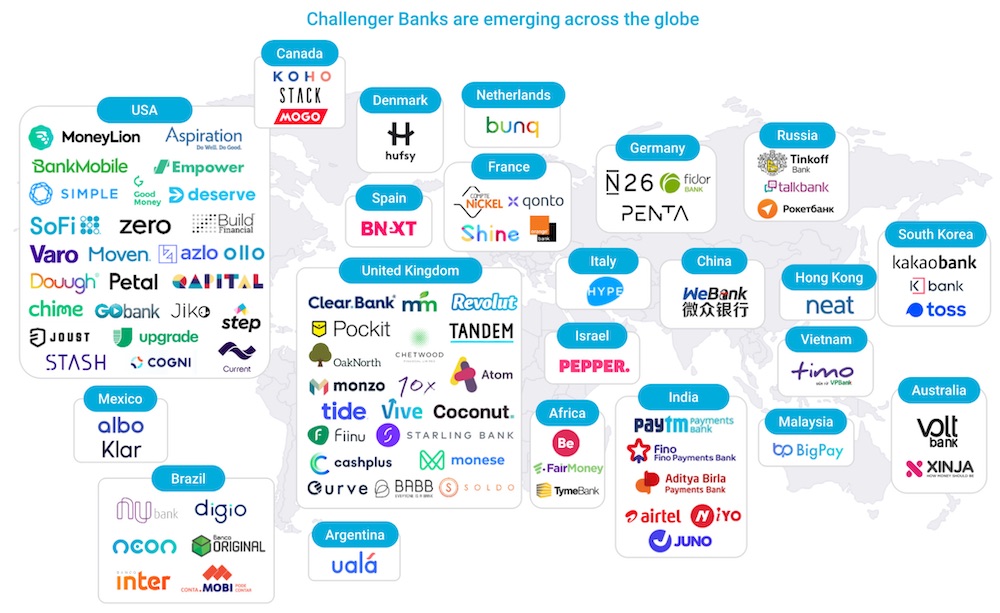
As a result, neobanks are not a monolithic model and not all are created equal. Looking underneath the hood of business models across the globe reveals remarkable operational differences and highlights specific features that are more likely to succeed in the long-term.

Five global models of neobanks

Today there are five distinct models that are leading globally:

Interchange-led: Relies on payments revenue, sourced through interchange as the revenue driver. Every time a customer uses the neobank’s card as a payment method they get paid [e.g. Chime / US; Neon (hybrid of 1 & 2) / Brazil].

Credit-led: Leverages a credit-first model, starting off with a credit card or similar offering, and later providing a bank account [e.g. Nubank, Neon (hybrid of 1 & 2) / Brazil].


Plaid improves its account linking flow

Plaid improves its account linking flow

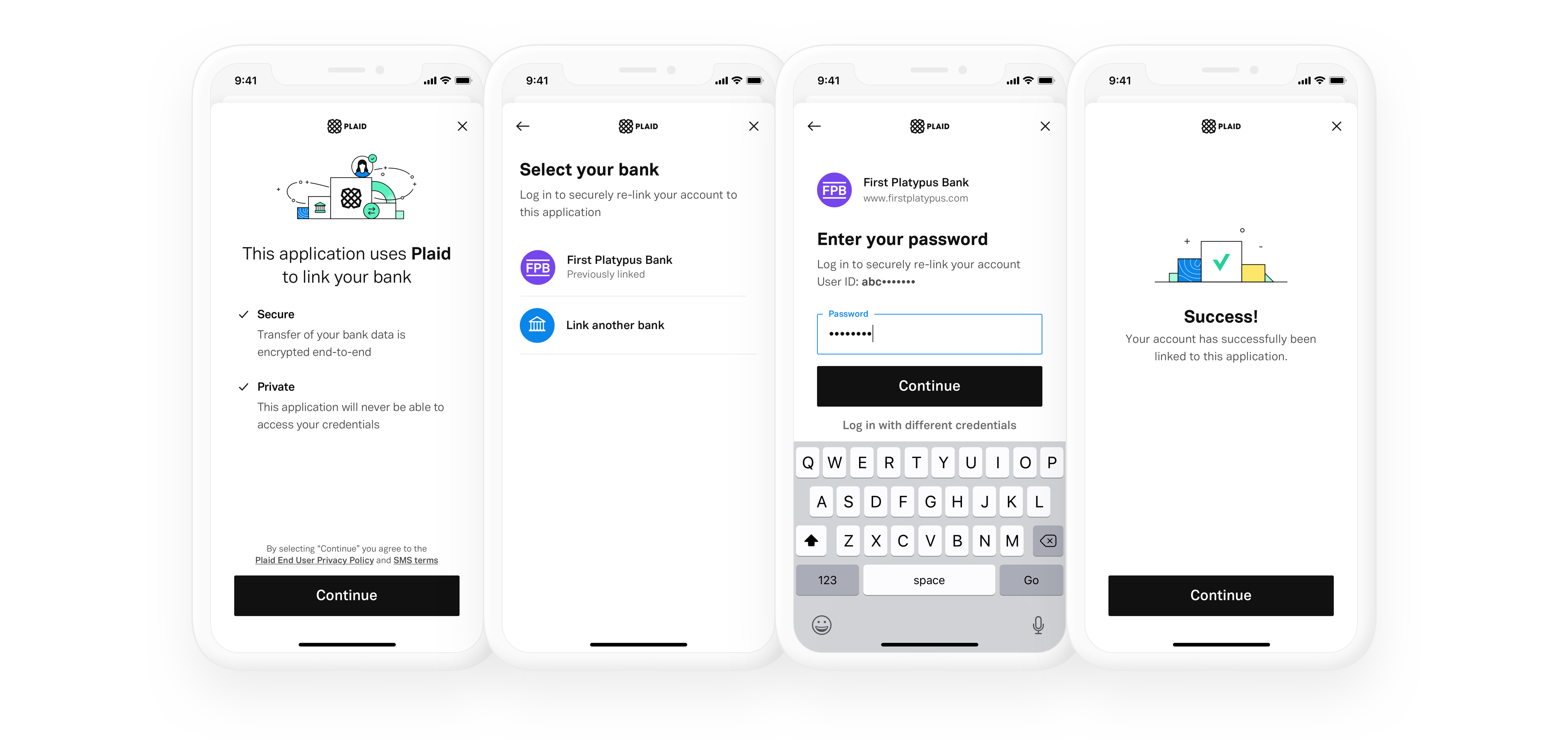
Plaid, the company building a universal banking API that lets you connect an app or service with a bank account, has updated Plaid Link. Plaid Link is the interface that you see when you add your bank account to any app or service that uses Plaid, such as Cash App or TransferWise.

Given that 3,000 apps have been using Plaid, chances are you’ve seen Plaid Link in the past. According to the company, one in four people in the U.S. have used Plaid to connect their accounts.

And today’s update is all about using Plaid with multiple apps. The first time you connect your bank account, you search for your bank, you enter your credentials and you log in.

The second time you need to add your bank account, Plaid shows you previously added bank accounts. You don’t have to scroll through a list of financial institutions and you don’t have to enter you user ID. Plaid might ask you for your password again or a one-time code.

Image Credits: Plaid

When you buy something on an e-commerce platform, you can save your card so that you don’t have to enter your card details again. With today’s update to Plaid Link, the company is doing the same thing with bank account information.

Payment cards thrived in part because it is much easier to pay with your card than connecting to your bank account to send money. Polishing Plaid Link could slowly make it easier to skip the card and use money from your bank account directly.

Plaid also says that Plaid Link is a bit faster. Each panel loads 30% faster. The list of banks now changes depending on your location. Local banks appear closer to the top of the list so that you don’t have to scroll as much.

Once you’ve added a bank account, the original app receives a Plaid token to query your bank account through Plaid.


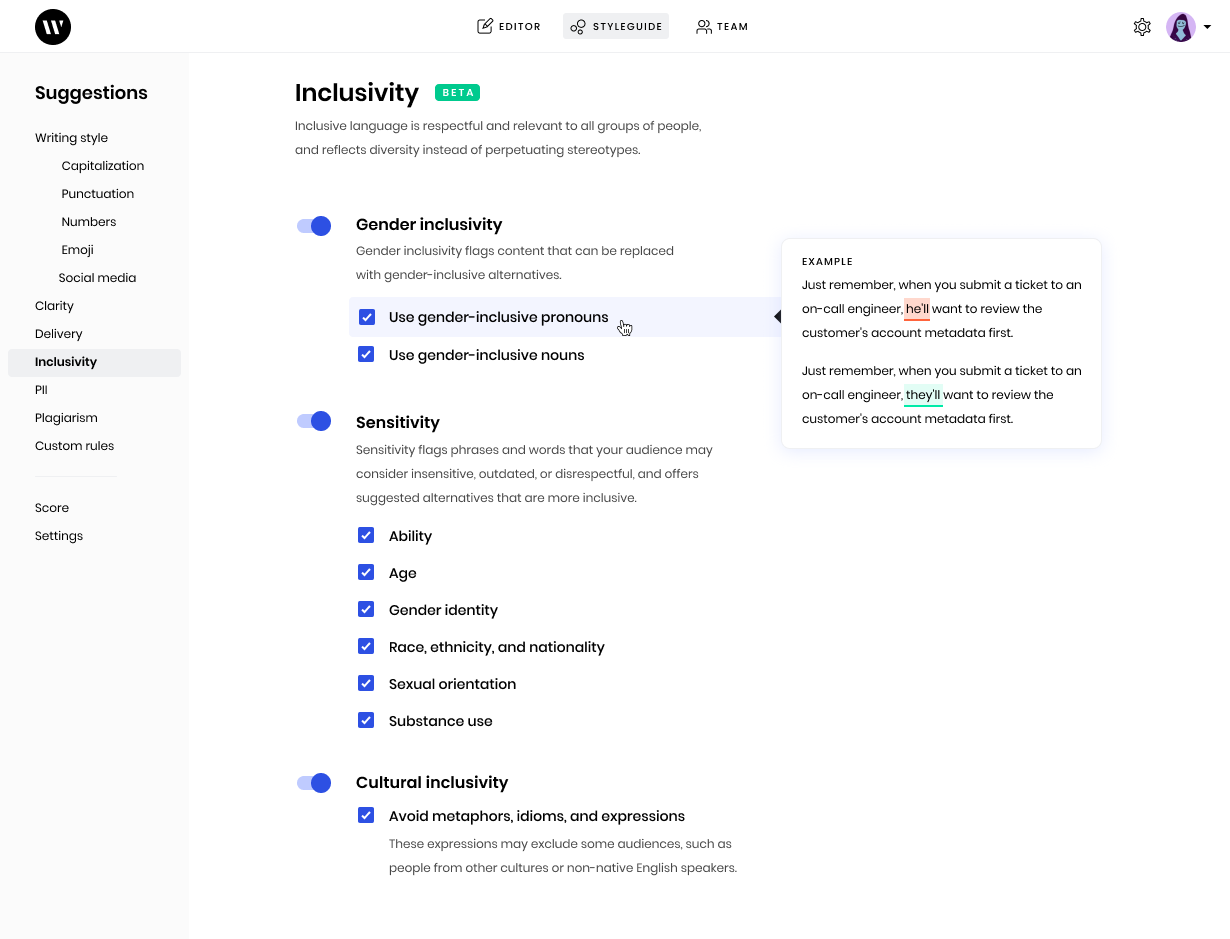
Writer pens a $5M seed round for its AI style guide that flags bias and tone

Writer pens a $5M seed round for its AI style guide that flags bias and tone

Anyone who writes online or in a word processor has likely gotten used to the inevitable squiggly line denoting a misspelled word or clumsy phrase. But what if you use a word that’s loaded, a phrase that’s too formal or not formal enough, or refer to a group of people in an outdated way? Writer is a service that watches as you type, flagging language that doesn’t match up with your style guide and values, and it just raised $5M to scale up.

Both people and the companies they work for want to improve the way they write, but not just in terms of grammar and spelling. If a company says it’s inclusive, but the language in its press releases or internal blogs are peppered with anachronism and bias, it suggests their concern only goes so far.

“Companies are hungry to put actions behind their words,” said Writer founder and CEO May Habib. “They want to be able to tell a consistent story to their users everywhere that they’re interacting with them. What Writer does is let people know when they’re using insensitive language, or things that could be considered negative, and let companies set brand guidelines.”

Right off the bat let us admit that there is a whiff of the sinister about the idea of a company dictating how its employees speak, though that’s nothing new when it comes to content and official communications. But this isn’t about controlling speech for power — it’s about recognizing that we are all flawed communicators and could use a hand keeping ourselves honest. Less thought police and more a well-informed angel sitting on your shoulder whispering things like, “Hey. Are you sure you want to describe that lawyer as ‘exotic’?”

Examples of things Writer checks for.

There are tons of slip-ups we all make along those lines, less obvious but no less potentially offensive. It’s important in public communications, among other things, to refer to a group by the term they prefer, not the first one that pops into your head; Writer has up-to-date libraries of this information sourced from the communities themselves. Some phrases may have become politically loaded in the last couple years, but you’re not aware; No problem, it has alternatives. You want to avoid unnecessarily gendered language, great, but everyone slips up now and then; Writer can spot it — or make the connection with previous pronouns to make sure you don’t, for example, gender an anonymous source.

Accusations of “political correctness” will dog the service, but as Habib put it: “This is beyond politics; This is about respect for people who live a certain way, or are a certain way, and prefer to use certain terms. We’re trying to help companies create communities of belonging.” And as we’ve seen over and over again in tech, there is often a serious disconnect between the stated aspiration of a company and how people are treated within them. Just using the right words is a pretty low bar to start with, honestly.

Image Credits: Writer

Writer isn’t just a growing blacklist of words you should think twice about using, though. The natural language processing engine at the heart of it is also very concerned with things like sentence complexity, paragraph length, and tone. It has to have this deeper understanding, Habib explained, because “it’s not enough to underline — you need to know what to replace it with, and when you replace it, you need to fit it into the sentence. These are actually hard NLP problems.”

That lets it fit into a variety of roles in addition to promoting inclusive language. It can watch for the usual spelling and grammar mistakes, as well as things like formality, active voice, “liveliness” (whatever that is, I don’t have it), and other metrics that help define a brand.

And of course you can bring in your own style guide so your editors don’t have to roll their eyes at serial commas in headlines, double dashes instead of em dashes, e-mail instead of email, and all the rest of the little nips and tucks that keep a brand’s writing in a generally recognizable shape.

Image Credits: Writer

The service can also switch between style guides or adjust or disable itself in different apps and sites — so internal emails aren’t given the same guidelines as press releases, or a blog post’s style can be differentiated from a newsletter’s.

Obviously Grammarly is a big competitor here, but Habib feels that it and the growing number of in-browser or in-app checking services are very focused on the technical piece. Writer is less about preventing an individual writer’s errors, and more about creating consistency among groups of writers and making sure they are working from the same high-level linguistic standards.

Of course security is also a concern — no one wants a keylogger running on their machine, however helpful it may be. Habib was careful to emphasize that Writer runs locally in the browser as a plug-in, integrating with Word or Chrome for now but with other apps and services on the way. “None of that data ever hits a writer server, and no metadata — all the processing is done in the text area,” she said. The only data that’s sent back is the fact that a given suggestion was used, such as changing “should of” to “should have” or “illegal aliens” to “undocumented immigrants.” No user data is used to train the models and no content apart from the correction itself is sent or stored on Writer’s servers.

Writer is available now, for $11/person/month (with the obligatory free trial period, of course) for a basic version and some unspecified amount for enterprise deals with multiple style guides, plagiarism detection, and so on. It’s only available in English, and although there is of course demand for the service in other languages, the depth of the NLP model and the specificity of what it recognizes to the language mean it does not generalize well. To take on Spanish or Korean would be to develop an entirely new product. So English it is for now.

The company is new, and has been developing its NLP engine (on the back of a previous effort, which monitored user-facing language in GitHub repos) for 18 months in something like stealth. The $5M seed round, led by Upfront Ventures, Aspect Ventures, Bonfire Ventures, and Broadway Angels should help the company scale, though it already has some top-tier, household-name customers, so with that and the money its immediate future seems to be secure.


Propy, a blockchain-verified platform for selling houses, raises funding from Tim Draper

Propy, a blockchain-verified platform for selling houses, raises funding from Tim Draper

For several years, blockchain technology has been touted as a way to verify the sale of property. Any kind of property. And so entrepreneurs busily began the process of trying to create a startup that could complete a property deal on the blockchain.

One that stood out from the start was Propy which was started by Natalie Karayaneva, an experienced, real-world property developer who had subsequently joined the blockchain world. Propy’s other co-founder is Denitza Tyufekchieva (pictured). 

Propy has now raised an undisclosed funding round from venture capitalist investor Tim Draper, best known for his early investments into Tesla, Skype, Twitter, Coindesk and Robinhood. TechCrunch understands this is part of a wider, ongoing fund-raise. 

Propy’s platform uses blockchain technology to, it says, simplify the home purchasing experience and eliminate fraudulent transactions. The idea is to close a traditional real estate deal entirely online. Thus, the offer, signed purchase agreements with Docusign, secure wire payments, and title deeds are all taken care of. Propy claims its platforms saves 10 hours of paperwork, per transaction.

“My vision for Propy is to bring self-driving real estate transactions to the world, with all of the logistics seamlessly executed on the back-end”,  Karayaneva said in a statement. “Our platform offers a terminal to observe transactions in real-time, making the process transparent for real estate executives, title companies, homebuilders, buyers, and REITs. With this new investment we are excited to bring much-needed change to the industry, satisfy consumers and empower real estate professionals all over the world.”

But this is not some out-there, wacky crypto-play. Most of the transactions are done in dollars on Propy, meaning it could be used by mainstream users from day one, as it’s able to process wire transfers via integration with a money transmitter connected to 70 banks.

Speaking to TechCrunch, Karayaneva added: “We do not replace lawyers, but rather help them, closing attorney’s share documents with consumers and agents via Propy. With DocuSign integrated, they can sign the documents on Propy and all parties get notified. In the US, agents have ready forms in Propy to fill out and they don’t need lawyers in a transaction at all.”

Crucially, Propy has an enterprise play going on here as well. Its platform can provide the back-office system to real estate enterprises with real-time transaction reports and automated compliance.

Draper said: “Propy has the potential to transform Real Estate, making transactions and titles simpler, more secure, and less expensive through innovative use of blockchain technology. [It] eliminates fraud and makes the closing process more secure, effective, and streamlined.”

According to one survey, almost one-fifth of millennials have now thought about buying a home become of the lock-downs induced by the Covid-19 pandemic, meaning that many will be looking for an easy way to transact, especially if it has the ease of use Propy has. 

Propy has some fellow-travelers in the blockchain prop-tech space. ShelterZoom is Blockchain platform used for virtual and remote collaboration with offices and clients, while StreetWire is a Blockchain-based data service for the real estate industry.


Coinbase lets you withdraw funds to your debit card

Coinbase lets you withdraw funds to your debit card

Cryptocurrency exchange Coinbase is adding a new way to withdraw funds from your Coinbase account. If you’ve added a compatible debit card to your account, you can transfer USD, EUR or GBP to your bank account nearly instantly.

There are some drawbacks, and the main one is that you’ll pay a lot of fees. In the U.S., Coinbase deducts 1.5% from the transaction, or a minimum $0.55 if it’s a small transaction. In Europe and the U.K., you pay 2% in fees or a minimum fee of £0.45/€0.52.

You also need to have a compatible card. Not all debit cards support incoming transfers. You need to have a Visa card that supports Visa Fast Funds. In the U.S., you can also use a MasterCard card with MasterCard Send.

It’s hard to know whether your bank or card issuer support those features. The best way to figure it out is probably by adding your card to Coinbase and see what Coinbase says.

Coinbase isn’t removing other withdrawal methods. For instance, if you’re looking for a cheaper way to withdraw your funds in Europe, a SEPA bank transfer costs €0.15 per transfer. And Coinbase supports instant SEPA transfers if your bank has enabled that.

The company also lets you link your PayPal account with your Coinbase account. Your funds should hit your PayPal account within a few seconds and there are no fees on Coinbase’s side.

As you can see, there are many ways to move money from your bank account to your Coinbase account. Some of them are slower than others, some of them are more expensive than others. Crypto-to-crypto transactions are a bit simpler by comparison as you only need your recipient’s wallet address to send tokens.

Image Credits: Coinbase


Kaleido’s Unscreen is dead simple drag-and-drop background removal for video

Removing the background of a video you’ve shot can be a real pain if you don’t have the kind of tools and setup used by professionals — and even then it isn’t as easy as it should be. Kaleido’s one-step background removal tool for images, remove.bg, has graduated to full motion video with the company’s new product, Unscreen.

The service itself is simple enough. You drag a video onto the Unscreen webpage, and a few minutes later (depending on the size and resolution of the content) you get it back, with everything gone but the person or object in the foreground.

The company’s first product was remove.bg, which was the same sort of thing but for still images; It was a big hit on Product Hunt. As someone who has to do a bit of work in that line myself now and then, it’s nice to know there’s a very simple, effective web service for snipping out the background quickly and accurately, even though I know I could do the same thing in Photoshop with a bit of work.

After nine months out there remove.bg is serving millions of users monthly, 25,000 of which are actually paying customers. Clearly there is demand for this type of service, and going from stills to video is a natural move, though of course the amount of computing power required is many times more. Kaleido tested the waters with an experimental MVP back in March, and developed Unscreen on the back of that.

The idea is, understandably, to become the go-to tool for creators who have little time to spare or don’t want to deal with heavy-duty options like Premiere. On YouTube and other platforms, speed is paramount if you want to have the first unboxing video or reaction to news, but maintaining production value is important, and people will be put off by janky live background removal that makes the creator look like an amateur.

Speaking of which, Kaleido chose to compete in the offline video processing space because there are entrenched and competitive offerings available from Zoom, Microsoft and others in the video chat space, where “good enough” is just fine. But there are comparatively fewer options for offline video editing, and fewer still that anyone can operate with no expertise at all.

In Hollywood (which is to say in cinema and high-end video production in general) the world of compositing is changing, with LED walls like those used on The Mandalorian an attractive, though expensive and complex, alternative to the standard green screen or frame-by-frame rotoscoping. A simple one-step process to easily remove backgrounds for quick-turnaround shoots, dailies, and other situations could be a godsend for many a VFX tech or production studio.

At all events the market is evolving but clearly exists, as paying customers attest. Kaleido is totally self-funded so far, with no need or desire to take on investors, since its income scales with its expenses and exposure.

As with most media products these days, Unscreen comes in a freemium subscription model. You can try it out with clips up to 10 seconds long for free (but the watermarked, low-resolution files aren’t really suitable for publication), then there are the usual subscription tiers, from $9 to $389 per month depending on how much footage you plan on uploading. 2/3 of its income is from small businesses, but it also counts several major enterprises and media companies among its paying customers.

Of course none of that matters if the product itself doesn’t work. I tested it out on a 5-minute, 720p video of a woman with long hair, and it finished in about 45 minutes. The end result was good, with the hair nicely preserved and only a handful of small glitches that would be easy to paint out if desired. A minute and a half of myself talking into the camera in 1080p took about 33 minutes, and a somewhat clearer 23-second video of a colleague turned out very crisp in about 10 minutes.

I bet at first you thought this still was from Fashion Week too, right?

You might say, why so long? Zoom does it in real time. Yes, but at a low resolution and quality. It’s not the kind of thing you’d want to put online publicly and permanently, or use in a commercial shoot. From what I could tell, the quality of Unscreen’s removal was considerably better, but not straight-to-final good. You’ll want to watch it first to snag any issues.

Users have the option to render the video directly with a still, video, or solid color background, or a two-channel (alpha and color files) version for feeding into an editor. Other options are limited, so if you want to upscale, resize, re-render with a different color, etc, you’re out of luck. This isn’t an online video editing platform — it’s a web-hosted video effect and should be treated as such.

One thing Kaleido has been careful to demonstrate — and it’s sad to think that this is a differentiator — is that its products work with people whose skin tone and hair confound other solutions. The bare fact that some background removal processes work better with light-skinned people than dark-skinned, or with straight hair than curly, is a sad indicator of a lack of diversity in the training set that produced those tools.

Curly hair is notoriously difficult for computer vision algorithms, but Unscreen’s does a decent job of it.

Kaleido’s Bernhard Holzer told me that this was top of mind from the beginning, and that the team has been careful to assemble training data from all over the world to make sure the product works equally well no matter what country or hemisphere the user is in. They keep an eye out for unexpected issues; For instance, it was found that a person with a commencement cap on moving the tassel from one side to the other wasn’t handled well by the system — so they added a bunch of data to fix it. Users are encouraged to give feedback and the system is constantly evolving to take advantage of it.

The company itself is growing, and expects to double in size to about 30 employees this year — and as noted remains funded by its own income. The appetite for web tools is certainly considerable, and until now the idea of a single-click background removal one didn’t exactly make sense. But by being the first Unscreen hopes to become and remain the best.


Watch SpaceX launch a GPS satellite for the U.S. Space Force live

SpaceX is set to launch a GPS-III satellite for the U.S. Space Force using a Falcon 9 rocket, with a target launch time of 9:43 PM EDT (6:43 PM PDT). That opens a 15-minute launch window, and so far weather is looking relatively good, which will hopefully help SpaceX end a recent string of launch scrubs, including one earlier this week for a reset Starlink mission.

The Falcon 9 used for this launch is a rarity these days – a brand new vehicle, including a booster being used for the first time. The attempt will include a landing of that first stage aboard SpaceX’s ‘Just Read the Instructions’ drone landing ship in the Atlantic Ocean.

There’s a good reason that SpaceX isn’t flying a previously flown booster for this one: The company’s contract with the Space Force stipulates that it can only use new, non refurbished vehicles for National Security Space Launch (NSSL) missions. But they recently announced an updated agreement that will allow SpaceX to use reflown first stages on future flights.

The webcast above will start at around 15 minutes prior to the opening of the launch window, so at around 9:28 PM EDT (6:28 PM PDT).


With $2.7M in fresh funding, Sora hopes to bring virtual high school to the mainstream

Long before the coronavirus, Sora, a startup run by a team of Atlanta entrepreneurs, was toying with the idea of live, virtual high school. The program would focus on student autonomy and organize its curriculum around projects that learners wanted to work on, such as finding ways to reduce the impact of climate change on the world. Students and teachers would use Zoom and Slack to communicate with each other, with standups everyday to pulse-check progress.

The pandemic has both undermined and underscored Sora’s focus. On one end, the millions of students that flocked home have shown how hard it is to effectively and accessibly teach in virtual settings. On the other end, the pandemic isn’t going away any time soon. Parents and students are desperate for better options.

Sora co-founder Garrett Smiley thinks he can convince parents to approach virtual high school with optimism, their kids and their checkbooks. It all starts with green algae farms.

Smiley said students turn to Sora so they can “start running instead of walking” in their education. He added how the first students in the program spent time building algae farms in their backyards, working with SpaceX engineers and taking college-level math classes upon entrance.

Smiley, who co-founded the company with Wesley Samples, says that Sora sells best to students who feel stifled or “held back” from traditional educational institutions. Sora’s product, thus, feels more apt for educationally gifted students than students who might need extra help or support.

At Sora’s heart, it is a private school replacement with a project-based curriculum. How it works beyond that is a little bit more confusing to comprehend. Firstly, students upon enrollment embark on two-week learning expeditions, exploring the answers to broad questions like “how do we recreate an alien species.” As time progresses, students are prompted to create their own projects with check-in calls twice a day. Below is an example of a standup:

Beyond the self-directed study, Sora offers a series of Socratic seminars and workshops.

There’s no such thing as science class, but there are workshops such as “the Physics of Sharks.” Here’s an example schedule of a Sora student:

Image Credits: Sora

The organization is unconventional. Smiley is insistent on the fact that students complete core subjects and standards needed for high school transcript and graduation, including math, science, English and history. Students are also required to take the SAT or ACT, with practice resources provided by the school.

Sora also has an in-person, optional element. Cohorts will be designed by geography. Students are encouraged to meet up with each other outside of school, form sports teams and attend a Sora-sponsored meet-up.

Outside of learning, Sora created a network of more than 50 career mentors and has a suite of services, such as SAT prep and counselors to aid with the college admissions process.

Smiley says that Sora hasn’t yet graduated a class, so they do not have data on most common exit paths, but he added that the company does not promote college as the only option for students.

Sora is working on partnering with the “next generation of college and university replacements,” he says, such as boot camps or internships.

The goal of Sora is to create a community of self-directed and motivated learners.

“We don’t believe schools are in the business of content creation anymore, just typing in Google search engine search specifically you’ll probably find world-class resources to learn a subject,” Smiley said. “So for us, as to be a super successful school, we knew our role was creating this super high-quality community.”

The company had seven students in its inaugural class last year. Now, more than 39 students participate in Sora School, with three-full time faculty. Monthly tuition ranges from $300 to $800 per student.

Tuition is charged in relation to parent income by using a sliding scale, which Smiley says is part of their strategy in making sure Sora is an inclusive and diverse school.

The diversity breakdown of Sora is 67% white, 15% Hispanic, 13% African American and 5% Asian/Middle Eastern. The gender split male to female is 54% and 44%, respectively, with 2% of students identifying as non-binary.

From a mental diversity perspective, Sora lacks key resources needed to support students with special needs. Virtual high school as a product isn’t built for adoption en masse, but instead works best for students who can afford to partake in self-directed and independent learning. Similar to pandemic pods, it could exacerbate the widening inequalities between wealthy and low-income students.

Smiley says that they “definitely thought about” accessibility and are working on it. Still, he says that Sora is created for “students who perhaps don’t need the extreme structure of an in-person school,” which he estimates to be 95% of the world’s learners.

As Sora scales, a key aspect of its success will be if it is able to balance its hands-on, hands-off approach. The startup announced this week that it has raised a $2.7 million round, led by Union Square Ventures, to bring on more faculty, software engineers for back-end support and managers to work on curriculum development. Other participating investors in the round include Village Global, ReThink Education, Firebolt Ventures, Peak State Ventures, Contrary Capital and angel investor Taylor Greene.