Monday, 4 January 2021

How to convert customers with subscription pricing

How to convert customers with subscription pricing

The lure of subscription pricing is the guarantee of recurring revenue for your business. Once a customer flips the switch to turn on your subscription, it’s easy money:

  • Easy to recognize your revenue.
  • Easy to determine your margins and profits.
  • Easy to enhance your product and extend that revenue out for months, even years.

While that’s true, converting a subscription customer isn’t as simple as flipping a switch. You can build a platform, launch with fanfare, offer all sorts of incentives and trials to attract potential customers — and watch as they disengage and lapse into limbo.

Contrary to popular belief, subscription pricing doesn’t work because of the lower price point that a monthly installment allows.

That’s the actual guarantee that comes with subscription pricing, which will happen unless you cultivate a funnel that catches potential subscribers as soon as they learn about your product and follows them until their very last sign-in.

I built my first subscription-model product in 1999. I’m currently in early-access on my latest, and I’ve launched a bunch more along the way.

While the customer dynamic has changed over the last 20 years, the conversion process has not. In fact, it’s actually gotten easier to convert and retain customers through the subscription funnel.

Here’s what I’ve learned.

Why subscription pricing works

Subscription pricing is a hot trend in just about every business in every industry. Pay-as-you-go is the new normal from software to retail to service.

In my mind, the major shift occurred when mobile phones started pricing unlimited usage per period instead of fixed or cost per minute. Once usage limits were removed, use cases exploded and the promise of a truly mobile computer was finally realized.

Makers of all stripes learned that lesson: From razors to video streaming to accounting software, pricing models have emerged that focus on time periods instead of units.

But contrary to popular belief, subscription pricing doesn’t work because of the lower price point that a monthly installment allows. It’s effective because a subscription reorients each customer’s mind from product function to value proposition.

I don’t care what kind of German engineering went into my razor blades, as long as I have working blades when I need them.

As an entrepreneur, you probably use at least one digital subscription service to build your own product and company, if not several. In fact, just to get to the MVP of my new project, I subscribed to AWS, MailChimp, Zapier and Bubble. I’m still on the free tier of a few more services for some lower-priority features. There’s a few more I quit or never tried.

Thus, you know that value prop plays a big part of whether the customer will pay and stay. So reinforcing your value proposition should play a big part in every level of your customer funnel.

You must catch and track customers to be effective

A subscription-pricing model without an ability to track the steps in the conversion funnel will result in all the headaches of subscription pricing without any of the benefits.


2020 was a record year for Israel’s security startup ecosystem

2020 was a record year for Israel’s security startup ecosystem

From COVID-19’s curve to election polls, public temperature checks to stimulus checks, 2020 was dominated by numbers — the guiding compass of any self-respecting venture capital investor.

As a VC exclusively focused on investments in Israeli cybersecurity, the numbers that guide us have become some of the most interesting to watch over the course of the past year.

The start of a new year presents the perfect opportunity to reflect on the annual performance of Israel’s cybersecurity ecosystem and prepare for what the next twelve months of innovation will bring. With the global cybersecurity market outperforming this year’s panic-stricken expectations, we carefully combed through the figures to see how Israel’s market, its strongest performer, compared — and predict what it has in store.

The cybersecurity market continues to draw the confidence of investors, who appear to recognize its heightened importance during times of crisis.

The “cyber nation” not only remained strong throughout the pandemic, but even saw a rise in fundraising, especially around application and cloud security, following the emergence of remote workflow security gaps brought on by social distancing. Encouraged by this, investors have demonstrated committed enthusiasm to its growth and M&A landscape.

Emboldened by the sector’s overall strength and new opportunities, today’s Israeli visionaries are developing stronger convictions to build larger companies; many of them, already successful entrepreneurs, are making their own bets in the industry as serial entrepreneurs and angel investors.

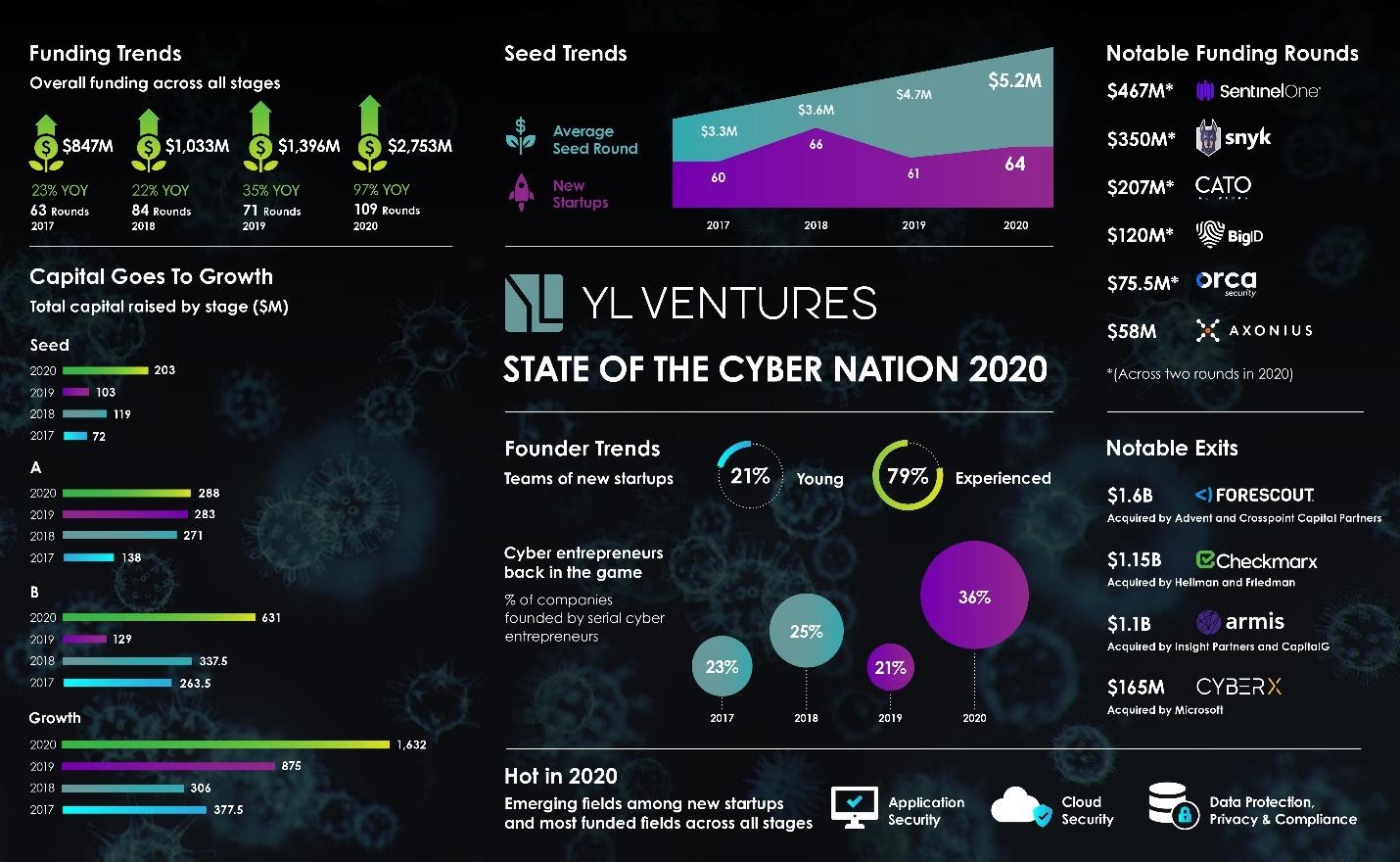
The numbers also reveal how investors are increasingly concentrating their funds on larger seed rounds for serial entrepreneurs and the foremost industry trends. More than $2.75 billion was poured into the industry this year to back companies across all stages, a 97% increase from last year’s $1.39 billion. If its long-term slope is any indication, we can only expect it to continue to grow.

However, though they clearly indicate progress, the numbers still make the need for a demographic reset clear. Like the rest of the industry, Israel’s cybersecurity ecosystem must adapt to the pace of change set out by this year’s social movements, and the time has long passed for true diversity and gender representation in cybersecurity leadership.

Seed rounds reveal fascinating shifts

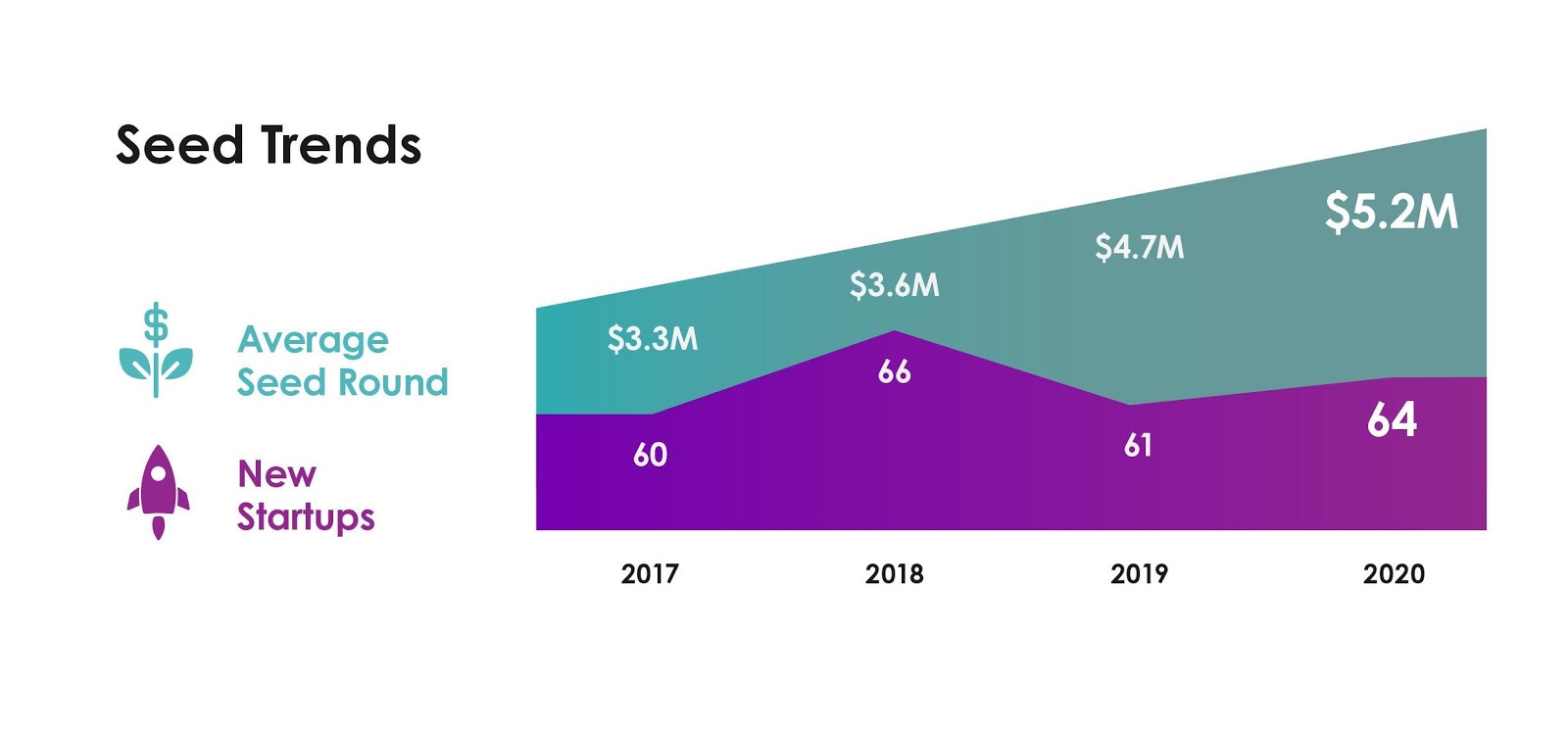
As the market’s biggest leaders garner experience and expertise, the bar for entry to Israel’s cybersecurity startup ecosystem has gradually risen over the years. However, this did not appear to impact this year’s entrepreneurial breakthroughs. 58% of Israel’s newly founded cybersecurity companies received seed rounds this year, totaling 64 seeded companies in 2020 compared with last year’s 61. The total number of newly founded companies increased by 5%, reversing last year’s downward trend.

The amount invested at seed hit an all-time high as average deal size in 2020 increased by 11%, amounting to an average of $5.2 million per deal. This continues an upward trend in average seed rounds, which have surged over the last four years due to sizable year-on-year increases. It also provides further support for a shift toward higher caliber seed rounds with a strategically focused and “all-in” approach. In other words, founders that meet the new bar for entry are raising bigger rounds for more ambitious visions.

YL ventures seed trends 2020

Image Credits: YL Ventures

Where is the money going?

2020 proved an exceptional year for application security and cloud security startups. Perhaps the runaway successes of Snyk and Checkmarx left strong impressions. This year saw an explosive 140% increase in application security company seed investments (such as Enso Security, build.security and CloudEssence), as well as a whopping 200% increase in cloud security seed investments (like Solvo and DoControl), from last year.


The cauldrons of gold theory of media and startups

The cauldrons of gold theory of media and startups

Another week, another email newsletter. This time, the story is Punchbowl, a politics-centric newsletter founded by a crop of recent Politico alums including Jake Sherman, Anna Palmer and John Bresnahan. Ben Smith has the story, as does Maxwell Tani at the Daily Beast with some more juicy details.

Why do we need another newsletter analyzing Beltway politics in a world of Politico Playbook, Axios, The Daily 202 and a hundred others? In fact, why do we need the voluminous output of tech-oriented newsletters covering startups (by my count, there are at least several thousand newsletters covering our industry)? Why, in a media world that was supposed to be all about the long-tail, does it seem that every new media startup is targeting the same single niche over and over again?

That’s where the cauldrons of gold come in. Media is not unlike many startup markets — there may be infinite needs for diverse products, but there are only a handful of those needs that have serious dollars attached to them.

In media, these are beats like DC politics, or investment banking / M&A, or VC coverage in our quaint little world of startups, where the winners get to own massive audiences and, by extension, massive dollars from subscribers and advertisers. There are thousands of other niches, but they are impoverished with limited readership, users and recourse to revenue.

Put another way, these are tournament markets, where the winners can take all and where it is worth the gamble to have a small chance at a massive outcome rather than a good chance at a mediocre one. In medicine, “everyone” wants to cure cancer, not some neglected tropical disease (which might well have millions of people who could benefit from a cure). After all, the Nobel Prizes don’t go to merely good science, they go for the biggest advances of the century that have the right level of notability. In startups, founders want to target the largest business and consumer markets, not the small application that might be useful but won’t become a juggernaut.

Unicorns are not born in small markets.

There are of course hugely negative externalities to this model for many markets. All that competition to dominate the “first-read newsletter” on Capitol Hill or along Sand Hill Road means that we are overwhelmed with identical analyses on the same subjects rather than being able to select from a wide spectrum of different options. We probably should have more coverage of emerging market tech or state capitols than we do today.

In startups, we have way too many entrants in some extremely valuable layers of fintech, for example. There are at least … 50? 100? wealth-management startups and incumbent products that focus on automated investing in ETFs (so-called “roboadvisors”). Yet, there is so much money to be made in some of these layers, that every founder with sense is essentially saying “I’ll take my chances for the reward at the end of that particular road.”

You would sort of think the free market would work itself out in these niches. All that competition for attention in the DC media world or for wealth management users should ultimately lower costs and divide the pie thinly enough that it becomes less attractive for new entrants and makes other niches and markets look far more relatively competitive.

That would be true if the pie did actually subdivide further and further. Experience over the last decade though has proven to me that this is quite often not the case. DC politics is the cauldron of gold for politics coverage, and there are one to three newsletters that will always dominate that beat. M&A coverage on Wall Street is the cauldron of gold of business journalism, and a handful of reporters are going to own that beat by being the switchboards for all the most important sources. And VC coverage is the cauldron of gold for startup media, which is why TechCrunch and a few of our friendly competitors work so hard to cover it every day.

New markets do get invented and old markets expand and contract. There are absolutely startups that sort of come from nowhere and dazzle us with their originality and ability to create whole new categories. Yet, for every unicorn that gets its start that way, there are 10 others that get built in existing major markets and compete for the big reward offered to the winner.

There isn’t anything wrong with investors who want to fund the fifteenth startup in a space. It makes sense — that’s where the rewards are, or at least, where we perceive the rewards to be. What needs to change is how to make some of those other niches offer the same incentives for innovation. How can more markets offer cauldrons of gold? Is that even possible? Or are we destined to read 100 newsletters on McConnell and Schumer’s machinations while getting ads for Marcus?


The Amazon-Berkshire Hathaway-JPMorgan healthcare joint venture is officially ending

The Amazon-Berkshire Hathaway-JPMorgan healthcare joint venture is officially ending

A somewhat nebulous, but high-profile and potentially heavily moneyed joint venture is coming to an end: Haven, the JV created by Amazon, Berkshire Hathaway and JPMorgan Chase, is being “disbanded” according to CNBC, three years after its original formation. One of the main reasons is that each partner in the venture was apparently just pursuing their own very different strategic approach to their respective healthcare challenges, meaning their really wasn’t much “joint” in the joint venture to begin with.

In a statement provided to CNBC, a Haven spokesperson highlighted some of the good results that came out of the partnership over the years, including improving access to primary care, and making insurance benefits packages easier to grasp for employees. Meanwhile, Amazon has made lots of progress on its own with its Amazon Care program, which is its internal healthcare program for employees at its Washington state facilities.

Amazon Care includes provision of both virtual and in-person primary care doctor visits, and prescription delivery. The company is also reported to be considering expansion of this service to other businesses, which signals its intent to turn it into a real business with aims very much in line with what the Haven JV had originally taken as its guiding light.

To be honest, the original announcement about the JV’s founding was light on details and seemed like one of those things that comes together when very rich people talk about their shared problems over a casual afternoon hang at the club with caviar and mineral water distilled from pristine arctic ice or whatever they enjoy during their repasts, so it’s not all that surprising it didn’t materialize into anything more substantial.


Lidar startup Aeva raises another $200M ahead of its debut as a public company

Lidar startup Aeva raises another $200M ahead of its debut as a public company

Aeva, the lidar company started by two former Apple engineers, has raised an additional $200 million in private investment from Hong Kong hedge fund Sylebra Capital ahead of its debut as a publicly traded company.

The Mountain View, California-based startup announced in fall 2020 that it was merging with special purpose acquisition company InterPrivate Acquisition Corp., with a post-deal market valuation of $2.1 billion. The new investment from Sylebra, which is a current holder of InterPrivate common stock, brings the total gross proceeds it will have once it begins trading to more than $560 million, according to the company.

Aeva had previously raised $120 million in private investment in public equity, or PIPE, including investments from Adage Capital and Porsche SE. Its combined company gross proceeds, a figure that includes $243 million held in trust by InterPrivate, was at $363 million before Sylebra stepped forward with its additional investment.

Importantly, Sylebra has also entered into a one-year lock-up agreement on the majority of its investment, and will vote all eligible shares in favor of the transaction. Aeva said the merger is expected to close in the first quarter of this year.

Aeva co-founder and CEO Soroush Salehian called the investment a “major vote of confidence” in the company’s business model and growth plans. Aeva will use the $200 million to further accelerate the company’s ability to capitalize on customer demand for its 4D LiDAR on a chip technology in the automotive, consumer and industrial markets, according to Salehian.

Lidar, light detection and ranging radar, measures distance using laser light to generate a highly accurate 3D map of the world around the car. Aeva’s founders Salehian and Mina Rezk developed what they call “4D lidar,” which can measure distance as well as instant velocity without losing range, all while preventing interference from the sun or other sensors. The company’s FMCW technology also uses less power, allowing it to fold in perception software.

Lidar sensors are widely considered critical to the commercial deployment of autonomous vehicles. However, the sensors have numerous other use cases that lidar companies have begun to pursue as the road to commercializing autonomous vehicles has turned out to be longer than expected. In the past two years, automakers have begun to view lidar as an important sensor to be used to boost the capabilities and safety of its advanced driver assistance systems in the new cars, trucks and SUVs available to consumers. Aeva’s technology has been primarily developed for use in autonomous vehicles as well as advanced driving assistance systems, Salehian has said its technology is also piquing the interest of those in consumer electronics.

Aeva is one of a handful of lidar companies to eschew the traditional IPO path and go public via a SPAC merger. Velodyne and Luminar have also merged with SPACs to to become publicly traded companies. Lidar startup Ouster announced in December that it has agreed to go public through a merger with special purpose acquisition company Colonnade Acquisition Corp.


5 questions about 2021’s startup market

5 questions about 2021’s startup market

Welcome to 2021, a year that could extend 2020’s startup market disruptions and excesses — or change patterns that previously performed well for early-stage tech companies and their investors.


The Exchange explores startups, markets and money. Read it every morning on Extra Crunch, or get The Exchange newsletter every Saturday.


As we turn the page, I have a number of questions worth raising as we muck into 2021.

Each relates to a 2020 change that is expected to persist, by either the general market or those bullish on startups. I want to know what would need to change to shake up what became the new normal last year. After all, it’s precisely when it feels like nothing could shake up a downturn (or a boom) that things often do.

Today, let’s discuss seed deals, venture investing cadence, the resulting valuation pressures from rapid-fire bets, current IPO expectations and what happens to software sales when remote work begins to fade.

1. How long can seed deal-making stay hot?

As 2020 came to a close, Natasha Mascarenhas and I reported on seed investing’s strong year and its especially strong second half. How long can that pace keep up?

Nearly all our questions today deal with the endurance of certain conditions, namely: how long the market can keep parts of startup land red-hot.

When it comes to seed deal-making, Q1 and Q2 2020 saw similar levels of investment in the United States. But Q3 proved explosive, with money invested into domestic seed deals rising from around $1.5 to $1.6 billion during the first two quarters to $2.2 billion in the July-September period.

Q4 numbers are yet to fully come in, but it’s clear that private investors were incredibly bullish on early-stage startups in the second half of 2020. How long can that keep up? I think the answer is for a while yet, as investors have shown scant enthusiasm for slowing down their dealmaking cadence.

While cadence remains hot generally, seed deals should stay heated as the number of investors who are willing to invest early has increased.

Which brings us to our second question:

2. How long can investors keep writing such quick checks?

A theme that cropped up in the second half of 2020 was the pace at which investors were conducting venture capital deals. This was for a few reasons. To start, venture capitalists have raised larger funds in recent years, meaning that they need larger returns to make the math work out. This led to many investors putting money to work in younger and younger companies, hoping to get in early on a big win. That setup led to more deal competition and faster deal-making.

How? Two things. Investors who were already on a startup’s cap table — already part-owners, in other words — led preemptive rounds, in part to get ahead of other investors who might want to poach the succeeding deal. Other investors, knowing this, seemed to do the same math and move even faster, and earlier, to get around the defense.

So how long can the trend keep up? Given that many big VC firms raised in 2020, many startups picked up some tailwinds from the COVID-19 economy and exits have been strong, forever? Until something stops things? Think of it as Newton’s First Law of startup investing.

What could be the sudden impact to shake up the current set of conditions boosting the pace at which seed and later deals occur? An asteroid strike is probably too extreme, but inertia is one hell of a drug and markets love to stay happy.

Moving along, all the competition to get money to work in hot startups now has had another effect than the mere speed of deal-making; it has also pushed prices higher.


Deep Science: Using machine learning to study anatomy, weather and earthquakes

Deep Science: Using machine learning to study anatomy, weather and earthquakes

Research papers come out far too rapidly for anyone to read them all, especially in the field of machine learning, which now affects (and produces papers in) practically every industry and company. This column aims to collect the most relevant recent discoveries and papers — particularly in but not limited to artificial intelligence — and explain why they matter.

A number of recently published research projects have used machine learning to attempt to better understand or predict these phenomena.

This week has a bit more “basic research” than consumer applications. Machine learning can be applied to advantage in many ways users benefit from, but it’s also transformative in areas like seismology and biology, where enormous backlogs of data can be leveraged to train AI models or as raw material to be mined for insights.

Inside earthshakers

We’re surrounded by natural phenomena that we don’t really understand — obviously we know where earthquakes and storms come from, but how exactly do they propagate? What secondary effects are there if you cross-reference different measurements? How far ahead can these things be predicted?

A number of recently published research projects have used machine learning to attempt to better understand or predict these phenomena. With decades of data available to draw from, there are insights to be gained across the board this way — if the seismologists, meteorologists and geologists interested in doing so can obtain the funding and expertise to do so.

The most recent discovery, made by researchers at Los Alamos National Labs, uses a new source of data as well as ML to document previously unobserved behavior along faults during “slow quakes.” Using synthetic aperture radar captured from orbit, which can see through cloud cover and at night to give accurate, regular imaging of the shape of the ground, the team was able to directly observe “rupture propagation” for the first time, along the North Anatolian Fault in Turkey.

“The deep-learning approach we developed makes it possible to automatically detect the small and transient deformation that occurs on faults with unprecedented resolution, paving the way for a systematic study of the interplay between slow and regular earthquakes, at a global scale,” said Los Alamos geophysicist Bertrand Rouet-Leduc.

Another effort, which has been ongoing for a few years now at Stanford, helps Earth science researcher Mostafa Mousavi deal with the signal-to-noise problem with seismic data. Poring over data being analyzed by old software for the billionth time one day, he felt there had to be better way and has spent years working on various methods. The most recent is a way of teasing out evidence of tiny earthquakes that went unnoticed but still left a record in the data.

The “Earthquake Transformer” (named after a machine-learning technique, not the robots) was trained on years of hand-labeled seismographic data. When tested on readings collected during Japan’s magnitude 6.6 Tottori earthquake, it isolated 21,092 separate events, more than twice what people had found in their original inspection — and using data from less than half of the stations that recorded the quake.

Map of minor seismic events detected by the Earthquake Transformer.

Image Credits: Stanford University

The tool won’t predict earthquakes on its own, but better understanding the true and full nature of the phenomena means we might be able to by other means. “By improving our ability to detect and locate these very small earthquakes, we can get a clearer view of how earthquakes interact or spread out along the fault, how they get started, even how they stop,” said co-author Gregory Beroza.


Italian court rules against ‘discriminatory’ Deliveroo rider ranking algorithm

Italian court rules against ‘discriminatory’ Deliveroo rider ranking algorithm

A court in Italy has dealt a blow to unalloyed algorithmic management after a legal challenge brought by three unions. The Bologna court ruled that a reputational ranking algorithm used by on-demand food delivery platform Deliveroo discriminated against gigging delivery workers by breaching local labor laws.

The ruling, reported earlier in the Italian press, found Deliveroo’s ranking algorithm discriminated against delivery couriers because it did not distinguish between legally protection reasons for withholding labour — namely not working because a rider was sick; or exercising their protected right to strike — and more trivial reasons for not being as productive as they’d indicated they would be.

In a statement, the Italian General Confederation of Labour (CGIL) called the Bologna court ruling “an epochal turning point in the conquest of trade union rights and freedoms in the digital world”.

Deliveroo has been contacted for comment on the ruling.

The court ordered Deliveroo to pay €50,000 per affected rider and publish the ruling on its website, according to Ansa.it — which has obtained a statement from Matteo Sarzana, general manager of Deliveroo Italy, who told it the company notes the judge’s decision but does not agree with it, as well as confirming that the shift reservation system linked to the algorithmic ranking is no longer in use in the market.  

“The fairness of our old system is confirmed by the fact that not a single case of objective and real discrimination emerged in the course of the trial. The decision is based exclusively on a hypothetical and potential evaluation without concrete evidence,” Sarzana added in the statement [which we’ve translated from Italian].

The on-demand delivery app has faced down a number of legal challenges on home turf — related to its classification of gig workers (as self employed couriers) and its opposition to collective bargaining rights for riders.

Although a 2018 inquiry led by UK MP Frank Field likened its ‘flexible’ labor model to 20th century dockyards — saying the dual labor market that Deliveroo generates works very well for some riders but very poorly for others.

The Bologna court ruling is also notable in light of a number of legal challenges against other gig platforms’ use of algorithms to manage large ‘self-employed’ workforces which have been filed in Europe in recent months.

This includes a group of Uber drivers who filed a challenge to Uber’s automated decision-making in the Netherlands last summer — making reference to pan-EU data protection law.

While ride-hailing company Ola is facing a similar challenge to its use of technological surveillance and data as a management tool to control a self-employed workforce.

Rulings on those cases are still pending.

At the same time, EU lawmakers have proposed new laws that would require large online platforms to provide regulators with information about how their algorithmic ranking systems function — with the aim of enabling wider societal oversight of AI-fuelled giants.

The move to enable oversight and accountability of platforms’ algorithms comes in response to concerns about a lack of transparency and the potential for automated decisions to scale bias, discrimination and exploitation. 


One Way Ventures, a firm focused on immigrant founders, closes second fund

One Way Ventures, a firm focused on immigrant founders, closes second fund

One Way Ventures, a venture capital firm that backs immigrant founders, has closed its second fund at $57.5 million. The close comes three years after One Way announced its debut fund, a $28 million investment vehicle.

The new fund will allow One Way to grow their check size from $500,000 to $1 million, giving them the ability to lead institutional seed rounds as a faster clip, says founding partner Semyon Dukach. The bigger fund is par-for-course now that the debut fund has been invested out, but also indicates how the seed boom is flourishing, forcing investors to recapitalize to stay competitive.

One Way is one of the few venture capital firms with an explicit focus on backing immigrant founders. Another firm that backs immigrants and helps them stay in the country is Unshackled Ventures, which last closed a $20 million fund in 2019.

Dukach says that the firm’s immigrant focus is one of its biggest competitive advantages to get into deals. One Way says it brings together immigrant founders into one community, and speaks the same language (metaphorically) of adapting to a new country, culture, and environment. While COVID-19 has limited the opportunity to meet in person, the firm is experimenting with the concept of virtual HQs and events to bring together its portfolio companies.

Community and translation in a closed-door world such as venture capital is “the reason we will almost always get into the rounds,” Dukach said.

“We’ve been able to get into competitive rounds because we were treated like an angel who provides a lot of value, even when part of the value is just the feeling of being part of something really cool.”

OneWay’s investments include Brex, Classtag, and Chipper. Of its 48 portfolio companies, two companies don’t have an immigrant co-founder. The generalist firm has bets in machine learning, fintech, and edtech prominently.

The immigration environment during the Trump Administration, both from a rhetoric and policy perspective, has impacted One Way, albeit lightly, according to Dukach. The firm has a venture partner in Montreal, Philippe Kalaf, to hedge against potential policy moves.

As for closing a fund during a pandemic and election year, One Way closed nearly double the capital it initially planned to raise, adding to the parade of check-writing and cash in this year.

“We had a couple LPs hold off until after the election,” Dukach said. “They were more comfortable investing once Biden won.”

One Way is expectedly growing its team as it scores new capital. The firm expanded to San Francisco from Boston by adding Eugene Malobrodsky, the co-founder of a consumer privacy startup, as a partner.

The firm, similar to many venture capital firms, lags when it comes to the diversity of its decision-makers. Right now, all the partners at One Way are men. The firm plans to add Nadia Asoyan, former executive at Robinhood and Trusted Health, as a venture partner, which is different from a general partner. The venture partner role needs sign off from a GP in order to make a decision or write a check. Other female members of the team include Annie Patyk, a platform associate.

From a portfolio perspective, One Way has backed 10 female-founded or co-founded companies out of its 50 companies. Its portfolio also includes 19 companies with minority co-founders and 7 companies with Black or Latinx founders.

The ideal founder, according to Dukach, embodies the firm’s name in their strategy.

“Someone who went one way, bought the ticket without having a company or any certainty of where they’re going to end up, without having the language or the culture or the network,” Dukach said. “Someone who emerges through that? It’s just more predictive of future success. It’s more predictive of being able to disrupt a big industry.”


Color raises $167 million funding at $1.5 billion valuation to expand ‘last mile’ of U.S. health infrastructure

Color raises $167 million funding at $1.5 billion valuation to expand ‘last mile’ of U.S. health infrastructure

Healthcare startup Color has raised a sizeable $167 million in Series D funding round, at a valuation of $1.5 billion post-money, the company announced today. This brings the total raised by Color to $278 million, with its latest large round intended to help it build on a record year of growth in 2020 with even more expansion to help put in place key health infrastructure systems across the U.S. – including those related to the “last mile” delivery of COVID-19 vaccines.

This latest investment into Color was led by General Catalyst, and by funds invested by T. Rowe Price, along with participation from Viking Global investors as well as others. Alongside the funding, the company is also bringing on a number of key senior executives, including Claire Vo (formerly of Optimizely) as Chief Product Officer, Emily Reuter (formerly of Uber, where she played a key role in its IPO process) as VP of Strategy and Operations, and Ashley Chandler (formerly of Stripe) as VP of Marketing.

“I think with the [COVID-19] crisis, it’s really shone the light on that lack of infrastructure. We saw it multiple times, with lab testing, with antigen testing, and now with vaccines,” Color CEO and co-founder Othman Laraki told me in an interview. “The model that we’ve been developing, that’s been working really well, and we feel like this is the opportunity to really scale it in a very major way. I think literally what’s happening is the building of the public health infrastructure for the country that’s starting off from a technology-first model, as opposed to, what ends up happening in a lot of industries, which is you start off taking your existing logistics and assets, and add technology to them.”

Color’s 2020 was a record year for the company, thanks in part to partnerships like the one it formed with the the City of San Francisco to establish testing for health care workers and residents. Laraki told me they did about five-fold their prior year’s business, and while the company is already set up to grow on its own sustainably based on the revenue it pulls in from customers, its ambitions and plans for 2021 and beyond made this the right time to help it accelerate further with the addition of more capital.

Laraki described Color’s approach as one that is both cost-efficient for the company, and also significant cost-saving for the healthcare providers it works with. He likens their approach to the shift that happened in retail with the move to online sales – and the contribution of one industry heavyweight in particular.

“At some point, you build Amazon – a technology-first stack that’s optimized around access and scale,” Laraki said. “I think that’s literally what we’re seeing now with healthcare. What’s kind of getting catalyzed right now is we’ve been realizing it applies to the COVID crisis, but also, we started actually working on that for prevention and I think actually it’s going to be applying to a huge surface area in healthcare; basically all the aspects of health that are not acute care where you don’t need to show up in hospital.”

Ultimately, Color’s approach is to re-think healthcare delivery in order to “make it accessible at the edge directly in people’s lives,” with “low transaction costs,” in a way that’s “scalable, [and] doesn’t use a lot of clinical resourcing,” Laraki says. He notes that this is actually very possible once you re-asses the problem without relying on a lot of accepted knowledge about the way things are done today, which result in a “heavy stack” vs. what you actually need to deliver the desired outcomes.

Laraki doesn’t think the problem is easy to solve – on the contrary, he acknowledges that 2021 is likely to be even more difficult and challenging than 2020 in many ways for the healthcare industry, and we’ve already begun to see evidence of that in the many challenges already faced by vaccine distribution and delivery in its initial rollout. But he’s optimistic about Color’s ability to help address those challenges, and to build out a ‘last mile’ delivery system for crucial care that expands accessibility, while also making sure things are done right.

“When you take a step back, doing COVID testing, or COVID vaccinations is actually those are not complex procedures at all – they’re extremely simple procedures,” he said. “What’s hard is doing them massive scale, and with a very low transaction cost to the individual and to the system. And that’s a very different tooling.”


Discovery+ launches in the US today

Discovery+ launches in the US today

The new year is kicking off with the launch of a new streaming service — Discovery+, which offers programming from Discovery’s networks including HGTV, Food Network, TLC, ID, OWN, Travel Channel, Discovery Channel and Animal Planet.

Discovery+ actually launched in the United Kingdom and Ireland last fall through a deal with Sky, but the company is treating today as the big launch, as the service becomes available in the United States.

Despite the crowded field of competing streaming services (including the similarly named Disney+, ESPN+, Apple TV+ and upcoming Paramount+), Discovery+ is aiming to stand out with a focus on documentary and reality content — it bills itself as “the definitive non-fiction, real-life subscription streaming service.”

Plus, it’s priced at just $4.99 per month, or $6.99 if you want to go ad-free. And it will be free to some Verizon and Vodafone subscribers. (Verizon owns TechCrunch.)

At launch, original shows available on Discovery+ include several “90 Day Fiancé” spinoffs, “Amy Schumer Learns to Cook: Uncensored,” “Bobby and Giada in Italy” with Bobby Flay, “House Hunters: Comedians on Couches Unfiltered” (in which comedians watch classic episodes of “house Hunters”), the nature documentary “Mysterious Planet,” “Judi Dench’s Wild Borneo Adventure and a whole lineup of preview episodes for the upcoming Magnolia Network.

Discovery says the service includes more than 55,000 total episodes, with plans to launch 1,000 hours of original in the first year. And the content goes beyond Discovery-owned brands, with nature documentaries from the BBC and programming from A&E, The History Channel and Lifetime.

Discovery+ is available on Amazon Fire TV devices, iOS devices, Google TV/Android TV/Chromecast devices, Microsoft Xbox One and Series S/X, Roku and Samsung smart TVs (2017 and later models). The plan is to launch in 25 markets this year, including the Nordics, Italy, the Netherlands and Spain, as well as parts of Latin America and Asia.

“As we go live with discovery+ today in the U.S., we are thrilled to be working with best-in-class partners to make it available everywhere our fans are,” said Discovery President and CEO David Zaslav in a statement. “Our ambition is simple: bring consumers the definitive and most complete destination for real life entertainment at a price point that makes this the perfect companion for every household’s streaming and TV portfolio. There is nothing like it in the market today.”


Hulu’s live TV service gains 14 new channels as result of ViacomCBS deal

Hulu’s live TV service gains 14 new channels as result of ViacomCBS deal

A new agreement between Hulu and ViacomCBS will bring 14 new channels to Hulu’s live TV streaming service, while also renewing the deal that allows Hulu to carry various CBS broadcast stations and Showtime. According to ViacomCBS, the new multi-year distribution deal will for the first time allow Hulu + Live TV subscribers to stream cable networks like BET, Comedy Central, MTV, Nickelodeon, Paramount Network, VH1, CMT, Nick Jr., TV Land, BET Her, MTV2, NickToons, TeenNick and MTV Classic.

With the Hulu agreement in place, the two top live TV streaming services available in the U.S. will now carry the ViacomCBS channel lineup. Hulu with Live TV is the largest of the two, with 4.1 million subscribers as of Disney’s Q4 earnings. Meanwhile, YouTube TV has 3 million subscribers, as of Alphabet’s Q4 earnings.

ViacomCBS had forged its agreement with Google-owned YouTube TV earlier in 2020, which introduced the same channel lineup and had allowed the streamer to keep carrying CBS broadcast stations and the premium subscription channel Showtime.

Hulu + Live TV will now also be able to continue to carry CBS stations including CBS Sports Network, Pop TV, Smithsonian Channel, and The CW, as well as Showtime.

Offering the ViacomCBS cable lineup to live TV streamers represents a different strategy than Viacom had in the past, before the 2019 merger with CBS. In previous years, it allowed a deal with Hulu to fall through as well as those with other streamers, like the now-shuttered PlayStation Vue. In the meantime, the company focused on more traditional carriage agreements with pay TV operators.


During its first full year as a newly combined company, ViacomCBS in 2020 has pursued a different course. It got the major carriage deals done with Comcast, Dish, Verizon (TechCrunch’s parent), Nextstar, Meredith, Cox and Sinclair, but it also hashed out agreements with YouTube TV and Hulu for incremental revenues.

For streaming service customers, however, these deals aren’t always welcome. While it’s nice to gain access to new channels, agreements like this have also resulted in increased subscription prices. YouTube TV, for example, hiked its price 30% in June 2020 due to the addition of the ViacomCBS channels.

Hulu had announced in November 2020 that it would also raise the prices of its Live TV service to $65 per month starting on Dec. 18, 2020, due to the rising costs of programming. It didn’t attribute the price hike to any specific deal at the time, but it now seems clear the ViacomCBS-led expansion of its Live TV service was a factor in that decision.

The ViacomCBS deals with YouTube TV and now Hulu do raise the question as to how the company plans to attract customers to its own forthcoming streaming service, Paramount+. The service, which will be an expanded and rebranded version of CBS All Access, is set to launch in 2021. Though ViacomCBS channels are not its only draw, they do make up a far bit of its offering, in addition to the library content, CBS channels, and original series, like the new “Star Trek” shows.

“We are excited to have reached an expanded agreement with Hulu that underscores the value of our powerful portfolio of brands to next-generation TV platforms and viewers,” said Ray Hopkins, President, U.S. Networks Distribution, ViacomCBS, in a statement about the new deal. “Hulu continues to be a great partner, and this agreement ensures that Hulu + Live TV subscribers are now able to enjoy the full breadth of our leading content across news, sports and entertainment for the first time.”


It’s not just you, Slack is struggling this morning

It’s not just you, Slack is struggling this morning

Slack did its best to ease the working world back into their jobs this morning by breaking, ensuring that everyone’s return to the grind would be as chaotic and unproductive as possible.

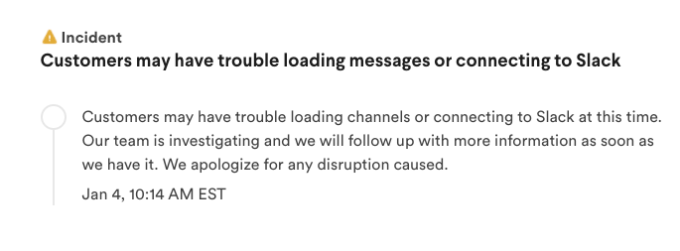
Precisely when the downtime began is not clear, though problems amongst the TechCrunch staff began a little after ten o’clock in the morning. Slack itself posted at 10:14 am Eastern Time that there was a problem:

Downtime issues are not new for the workplace chat application that went public in mid-2019, before announcing a deal to sell itself to Salesforce towards the end of 2020. TechCrunch covered the service’s uptime issues in 2020, 2019, 2018, 2017, and so forth.

The downtime is embarrassing as Slack is in the midst of selling itself for a hefty check. For a service designed to help folks work, falling apart precisely when the users — customers! — you serve are trying to gear back up for a working year is simply awful.

I suppose we can call one another until Slack is back up.

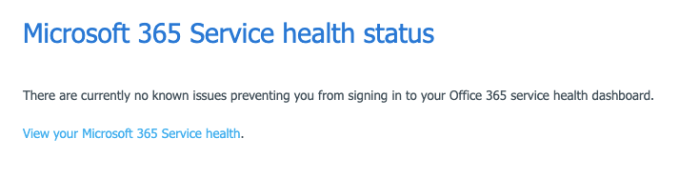
To close, here’s the view from Redmond, with its competing Teams product:


Teledyne to acquire FLIR in $8 billion cash and stock deal

Teledyne to acquire FLIR in $8 billion cash and stock deal

Industrial sensor giant Teledyne is set to acquire sensing company FLIR in a deal valued at around $8 billion in a mix of stock and cash, pending approvals with an expected closing date sometime in the middle of this year. While both companies make sensors, aimed primarily at industrial and commercial customers, they actually focus on different specialties that Teledyne said in a press release makes FLIR’s business complimentary to, rather than competitive with, its existing offerings.

FLIR’s technology has appeared in the consumer market via add-on thermal cameras designed for mobile devices, including the iPhone. These are useful for things like identifying the source of drafts and potential plumbing leaks, but the company’s main business, which includes not only thermal imaging, but also visible light imaging, video analysts and threat detection technology, serves deep-pocketed customers including the aerospace and defense industries.

Teledyne also serves aerospace and defense customers, including NASA, as well as healthcare, marine and climate monitoring agencies. The company’s suite of offerings include seismic sensors, oscilloscopes and other instrumentation, as well as digital imaging, but FLIR’s products cover some areas not currently addressed by Teledyne, and in more depth.


Venmo adds a check cashing feature, waives fees for stimulus checks

Venmo adds a check cashing feature, waives fees for stimulus checks

Venmo this morning announced it will begin to offer a new check cashing service, “Cash a Check,” in the Venmo mobile app. The feature, which is being rolled out to select users starting today, can be used to cash printed, payroll and U.S. government checks, including the new stimulus checks, the company says. Though typically there will be fees associated with the Cash a Check feature, Venmo says these are being waived on stimulus funds for a limited time.

To be eligible to use Cash a Check, Venmo customers will need to have either Direct Deposit or a Venmo Debit Card enabled on their account, location services turned on, and a verified email address.

Customers who gain access to the feature will then be able take a picture of their endorsed check and send it to the Venmo app to review, much like they would if cashing a check in a mobile banking app. The check will be reviewed in a few seconds, though in special circumstances, the review may take several minutes or even up to an hour before the approval decision is made.

If approved, the money will be immediately transferred to the customer’s Venmo account.

Venmo will temporarily waive fees on stimulus checks rolling out now and over the next couple of weeks, but eventually 1% fees will apply to any government or payroll check cashed in the app with a pre-printed signature, with a minimum fee of $5.00. Other checks, including hand-signed payroll and government checks, will have a 5% check cashing fee, or $5.00 minimum, according to PayPal’s terms.

At launch, the Cash a Check service is provided by partners First Century Bank, N.A. and Ingo Money, Inc. Ingo Money already offers a similar feature to Venmo parent company, PayPal, to allow users to cash checks in the PayPal app. 

“We’re always looking for new ways to make it easier for our community to access and manage their money, especially as people continue to experience financial hardships amidst the global pandemic,” said Darrell Esch, Venmo SVP and GM, in a statement about the new service.

“We know that with health and safety top of mind for many, having a safe way to access stimulus payments is essential for many of our customers, especially those who are receiving paper checks and traditionally would have to visit a physical check-cashing location,” he said. “By introducing the Venmo Cash a Check feature, we are not only enabling our customers to access their money quickly and safely from the comfort of their own homes but are also waiving all fees for cashing government issued checks to ensure customers can use their stimulus funds to pay for the things they need most,” he added.

The company’s move into check cashing doesn’t make the peer-to-peer payment app an alternative to online banking, however. Instead, it serves largely as a way for Venmo to benefit from the influx of stimulus payments that are rolling out now to its U.S. users.

Fintech companies have been scrambling to prove their worth to customers by offering faster and easier access to stimulus payments. Banking startups like Current and Chime, for example, began sending out payments to customers ahead of other traditional banking institutions.

In addition, the stimulus funds can help boost Venmo’s bottom line beyond just the fees it charges. As Venmo users gain access to their stimulus payments or payroll in the app, they may then use that money to make transactions with online merchants or with their Venmo debit card. This transactions allow Venmo to make money through transaction fees, as well.

Venmo said the feature is rolling out now to mobile app users on iOS and Android. The company recommends users download the latest version of the app and updated to the latest operating system on their mobile device for the best performance.


Equity Monday: Unionization at Alphabet, Tesla’s delivery achievement, and CRED raises $81M

Equity Monday: Unionization at Alphabet, Tesla’s delivery achievement, and CRED raises $81M

Hello and welcome back to Equity, TechCrunch’s venture capital-focused podcast where we unpack the numbers behind the headlines.

This is Equity Monday, our weekly kickoff that tracks the latest private market news, talks about the coming week, digs into some recent funding rounds and mulls over a larger theme or narrative from the private markets. You can follow the show on Twitter here and myself here — and don’t forget to check out the second of our two holiday eps, the most recent looking at what we think might happen this year.

What did we get into today? A great question. Here’s the rundown:

Mostly we’re still making sure that our brains still work and that the return of work really is here. Taking a break was nice. Now the news is coming back, so we are as well. Hugs, and chat Thursday.

Equity drops every Monday at 7:00 a.m. PST and Thursday afternoon as fast as we can get it out, so subscribe to us on Apple Podcasts, Overcast, Spotify and all the casts.


Google and Snap in talks to invest in India’s ShareChat

Google and Snap in talks to invest in India’s ShareChat

ShareChat, an Indian social network that added Twitter as an investor in 2019, may soon receive the backing of two more American firms.

The Bangalore-based startup is in advanced stages of talks to raise money from Google and Snap, three sources familiar with the matter told TechCrunch.

The new financing round — a Series E — is slated to be larger than $200 million with Google alone financing more than $100 million of it, four sources said, requesting anonymity as the talks are private. The round values ShareChat at more than $1 billion, two of the sources said.

Twitter as well as a couple of other existing investors are also engaging to participate in the round. ShareChat, Google, and Snap did not immediately respond to a request for comment. ShareChat has raised about $264 million to date and was valued at nearly $700 million last year.

The terms of the deal could change and the talks may not materialize into an investment, the sources cautioned. Local TV channel ET Now reported last year that Google was in talks to acquire ShareChat.

ShareChat’s marquee and eponymous app caters to users in 15 Indian languages and has a large following in small Indian cities and towns. Twitter and Snap, on the other hand, are struggling to gain users beyond urban cities in the world’s second largest internet market. Both Twitter and Snapchat have about 50 million monthly active users in India, according to a popular mobile insight firm.

In an interview with TechCrunch last year, Ankush Sachdeva, co-founder and chief executive of ShareChat, said the app was growing “exponentially” and that users were spending, on an average, more than 30 minutes on the app each day.

If the deal goes through, it would be the first investment from Snapchat’s parent company into an Indian startup. Google, on the other hand, has been on a spree of late. The Android-maker last month invested in DailyHunt and InMobi’s Glance, both of which operate short-video apps.

Like the two, ShareChat also operates a short-video app. Its app, called Moj, had amassed more than 80 million monthly active users as of September last year, the startup said at the time.

Last year, Google announced that it plans to invest $10 billion in India over the course of five to seven years. Days later, the company invested $4.5 billion in Indian telecom giant Jio Platforms. Google and Facebook, which invested $5.7 billion in Jio Platforms last year, reach more than 400 million users in the country.

More to follow…


UK judge denies US request to extradite WikiLeaks’ founder, Julian Assange

UK judge denies US request to extradite WikiLeaks’ founder, Julian Assange

A UK district court judge has refused to extradite WikiLeaks founder Julian Assange to the US.

In a hearing at Westminster Magistrates’ Court this morning, Judge Vanessa Baraitser denied the extradition on grounds that Assange is a suicide risk and extradition to the US prison system would be oppressive, given the likely impact on his fragile mental health.

The US, which has been seeking to bring Assange to the country to put him on trial for conspiracy to hack as well as a number of charges under the controversial Espionage Act, has said it will appeal.

The case has been seen as a pivotal test of press freedoms and freedom of expression vs state power.

In the judgement Baraitser dismissed a number of other defence arguments against Assange’s extradition but concurred with clinical testimony that he is a suicide risk and that he possesses the intellect to circumvent measures that could be taken to prevent him taking his own life.

“I am satisfied that the risk that Mr. Assange will commit suicide is a substantial one,” she writes in the 132-page judgement, discussing the testimony of a number of psychiatrists during last year’s extradition hearing.

“I accept that oppression as a bar to extradition requires a high threshold. I also accept that there is a strong public interest in giving effect to treaty obligations and that this is an important factor to have in mind. However, I am satisfied that, in these harsh conditions, Mr. Assange’s mental health would deteriorate causing him to commit suicide with the “single minded determination” of his autism spectrum disorder.

“I find that the mental condition of Mr. Assange is such that it would be oppressive to extradite him to the United States of America,” she added.

The judgement orders Assange’s immediate release although at the time of writing the WikiLeaks founder remains in custody — pending a bail hearing.

The US has 14 days to lodge an appeal.

Assange, who (self) incarcerated in the Embassy of Ecuador in London between 2012 and 2019 to avoid a warrant against him, was arrested last year after Ecuador withdrew his diplomatic asylum.

He was found guilty in a UK court of breaching bail conditions and sentenced to 50 weeks.

The US immediately said it would seek his extradition on its separate roster of charges — which relate to how the WikiLeaks founder obtained and published classified information leaked to it by former army intelligence analyst and whistleblower, Chelsea Manning.


Google, Alphabet employees seek to form a union

Google, Alphabet employees seek to form a union

A group of more than 200 Google and Alphabet workers have announced their efforts to form a union. With the help of Communication Workers of America Union’s Campaign to Organize Digital Employees (CODE-CWA), the Alphabet Workers Union seeks to be open to both employees and contractors.

Of the roughly 227 workers who have so far signed on to support the union, they have all committed to set aside 1% of the yearly compensation to go toward union dues. The bulk of the workers who have signed on are mostly based in offices in the San Francisco Bay Area and one in Cambridge.

“This is historic—the first union at a major tech company by and for all tech workers,” Dylan Baker, a software engineer at Google, said in a statement. “We will elect representatives, we will make decisions democratically, we will pay dues, and we will hire skilled organizers to ensure all workers at Google know they can work with us if they actually want to see their company reflect their values.”

Efforts to unionize at Google and Alphabet come following the creation of unions at tech companies Kickstarter and Glitch early last year. Additionally, workers at HCL Technologies workers who contract for Google in Pittsburgh and tech company cafeteria workers in the Bay Area formed unions last year.

“You have an industry of workers — the new generation of workers and the industry, especially tech and games, has been growing exponentially with young people,” CODE-CWA union organizer Wes McEnany previously told TechCrunch about why we’re seeing more tech companies organize. “Some of them make a lot of money and are working at companies that do really bad things. I think they’re at a position socially where they’re like enough is enough.”

Google has been at the center of a plethora of labor issues over the past few years. Between the the Google walkout, the reported retaliation against organizers of the walkout and the recent departure of Dr. Timnit Gebru, it should come as no surprise that folks at the company decided to make their organizing efforts more official.

In a press release, workers also pointed to how more than half of the people who work at Alphabet companies are contract workers and therefore lack many benefits. Additionally, workers take issue with hefty payout packages to executives accused of harassment, as well as with some of the company’s government contracts, such a s the one around military drone targeting.

Meanwhile, just last month, the National Labor Relations Board filed a complaint against Google alleging the company violated parts of the National Labor Relations Act by surveilling employees, and generally interfered with, restrained and coerced employees in the exercise of their rights guaranteed by Section 7 of the National Labor Relations Act.

The NLRB also alleges Google discouraged “its employees from forming, joining, assisting a union or engaging in other protected, concerted activities,” the complaint stated.

Those are just some of the reasons why workers want to unionize and gain the legal right to collectively bargain over workplace conditions. Still, there is a lot that needs to happen before Alphabet Workers Union fully comes into fruition. As of right now, the 227 or so workers still need to get other Google and Alphabet workers on board in order to reach a strong majority of people in favor the union. As of September 30, 2020, Alphabet employed 132,121 people. The next step is then seeking recognition from Alphabet.

That last part can be difficult. Case in point: Kickstarter. When workers asked for voluntary recognition from Kickstarter in 2019, the company’s leadership refused to do so, despite workers having majority support. Instead, Kickstarter leadership forced workers to have a formal election with the National Labor Relations Board. It all worked out for Kickstarter workers in the end but it took about ten months from going public with its efforts to being recognized as the Kickstarter Union. Once official, Alphabet Workers Union will be part of CWA Local 1400.

“This union builds upon years of courageous organizing by Google workers,” Nicki Anselmo, a program manager at Google, said in a statement. “From fighting the ‘real names’ policy, to opposing Project Maven, to protesting the egregious, multi-million dollar payouts that have been given to executives who’ve committed sexual harassment, we’ve seen first-hand that Alphabet responds when we act collectively. Our new union provides a sustainable structure to ensure that our shared values as Alphabet employees are respected even after the headlines fade.”


India’s CRED raises $81 million, buys back shares worth $1.2 million from employees

India’s CRED raises $81 million, buys back shares worth $1.2 million from employees

Bangalore-based CRED is kickstarting the new year on a high note.

The two-year-old startup, led by high-profile entrepreneur Kunal Shah, said on Monday it has raised $81 million in a new financing round and bought shares worth $1.2 million (about 90 million Indian rupees) from employees.

The Series C financing round, as first reported by TechCrunch in late November, was led by DST Global. Existing investors Sequoia Capital, Ribbit Capital, Tiger Global, and General Catalyst also participated in the round, and so did a few new names including Satyan Gajwani of Indian conglomerate Times Internet, Sofina, and Coatue.

The round gave CRED — which operates an eponymous app to reward customers for paying their credit card bill on time and offers deals from interesting online brands — a post-money valuation of $806 million.

In an interview with TechCrunch, Shah said that about 10 percent of CRED’s captable is currently allocated to employees and those who held vested stocks were eligible to sell up to 50% of their shares back to the startup in its first ESOP liquidity program. “We believe that startups should think about creating wealth for every shareholder, including employees.”

CRED has nearly doubled its customer base to about 5.9 million in the past year, or about 20% of the credit card holder base in India. The startup said that the median credit score of its customer was about 830, and about 30% of its customer base today holds a premium credit card. (On a side note, more than 50% of CRED customers pay their bills using UPI.)

CRED is one of the most talked about startups in India, in part because of the scale at which its valuation has soared and the amount of capital it has been able to raise in such a short period.

One of the biggest questions surrounding CRED today is just how it makes money, given how most fintech startups in the country today — and there are many of them — are struggling to find a business model.

Shah said CRED makes money by cross-selling financing products — for which it has a revenue-sharing arrangement with banks and other financial institutions — and levies a similar cut from merchants who are on the platform today. More than 1,300 brands including big names Starbucks, TAGG, Eat.Fit, Nykaa, and emerging premium direct-to-consumer brands such as The Man Company, Sleepy Cat, and Crossbeats have joined the platform in recent years.

Direct-to-consumer market in India is still in its nascent stage, though some estimates say it could be worth $100 billion by 2025.

“I don’t think we were very deliberate to make D2C happen. It just so happened that in the early days when we offered rewards for D2C brands, they started to see huge traction,” he said, adding that CRED drove more than 30% sales for some brands.

“We realized that we were able to solve the discovery problem for customers. We are approaching this with themes — work-from-home and coffee — and it’s working out well. We are now playing matchmaking role between customers and brands that otherwise had to spend a lot of money in marketing.”

One of the biggest propositions of CRED is that it has been able to court some of the most sought-after customers in India. Unlike many other startups and giants such as Google and Facebook, CRED is not going after the next billion users.

“About 20 million customers account for 90% of all online consumption in India. These are the customers we are focusing on,” said Shah, who previously ran financial services firm Freecharge and delivered one of the rare successful exits in the country. The core challenge in chasing customers in smaller cities and towns in India is that very few people have the financial capacity to buy things, Shah said.

For that model to work, the GDP of India — where the average annual income of an individual is about $2,000 — needs to grow. And for that, we need more participation from females, said Shah. Fewer than 10% of the female population in India are currently part of the workforce, compared to over 90% in China.

An interesting use case for CRED today is that it could potentially license data about the traction D2C brands are seeing on its platform to venture firms, who could use it as a signal to inform their investment decisions.

Shah cautioned that the startup is “extraordinarily sensitive about data” but said the team is thinking about ways to help venture firms discover these firms. “We are planning to create a newsletter to showcase many of these brands to the investor world,” he said.

And finally, will CRED launch a credit card? “Will we cross-sell every product that banks today offer? The answer is yes,” said Shah, though he cautioned that the startup is in no hurry to supercharge its offerings and will likely engage with other players in the industry to enable these services.


Tesla’s China rival Xpeng to use lidar sensors from DJI affiliate Livox

Tesla’s China rival Xpeng to use lidar sensors from DJI affiliate Livox

The battle is heating up between Tesla and its Chinese challenger Xpeng as the latter makes clearer its stance on the future of autonomous driving. Over the weekend, Xpeng, which counts Xiaomi and Alibaba among its investors, announced that it will be using lidar sensors from Livox, a startup with closes ties to the Chinese drone giant DJI.

The choice of remote sensing technology lidar and a Chinese supplier reflects the complexities of the U.S.-China tech war. Tesla has accused Xpeng of alleged intellectual property theft, a claim that the Chinese electric vehicle maker repeatedly denied. In a turn that surprises some industry experts, Xpeng said it will be adding lidar to its mass-produced autonomous cars in 2021, a strategy that would differentiate it from Tesla. Having seen Xpeng’s announcement, Elon Musk scoffed that Xpeng lacks Tesla’s technology.

Musk has long dismissed the use of lidar in autonomous driving, calling the technology “expensive sensors that are unnecessary.” Instead, Tesla relies on neural network training and camera-enabled visual recognition for its autonomous vehicles. Some Chinese players agree with Musk’s vision. Daimler-backed Momenta, for instance, is betting on less expensive millimeter-wave radars and high-definition cameras.

Xpeng already utilizes several sources to collect data: camera, millimeter-wave radar, ultrasonic, among other sensors. The addition of lidar, it says, will “provide a greater level of safety redundancy,” which allows a self-driving car to continue operating even when the primary system component fails, “by allowing more accurate imaging of the road situation.” Lidar will also “enhance target detection, measurement accuracy, performance in low ambient light and other challenging perception conditions,” the company claims.

The choice of Livox is also intriguing. There are mature foreign options such as Velodyne and Luminar, but Xpeng’s pick is expected given the Chinese government’s push for technological autonomy in key industries. In China, Livox faces some strong opponents like Hesai, which is backed by Bosch and Chinese search giant Baidu, and Robosense, which has fundings from state-backed carmakers BAIC and SAIC.

Livox itself was founded as an “independent company” in 2016 through DJI’s internal incubation program, according to the startup’s own description. One of its selling points has been to lower the price point of lidar, which the company claims is made possible by its unique optoelectronic scanning method.

The foray into autonomous driving is fitting as DJI has been pivoting to B2B businesses like agriculture drones. But the giant’s relationship with the lidar startup remains mystic, at least from the public viewpoint. Livox’s company boilerplate states it is “backed by DJI’s deep expertise in sensor innovation and hardware manufacturing” and its products are sold through DJI’s official retail store. Other than that, it hasn’t addressed whether DJI holds any equity in it or has controlling power over its management.

As it turns out, Livox is “just a team within DJI, which was later positioned as a separate company” while enjoying access to DJI resources including manufacturing and supply chain “just like another product brand,” a person with knowledge of the matter told TechCrunch.

One possible motive for Livox’s deliberate distancing from DJI is to avoid potential scrutiny from the U.S. government, which sees lidar as a key area in the tech war with China, the person said. DJI was recently added to the U.S. government’s trade blacklist, which has sanctioned other Chinese tech titans like Huawei and SenseTime from accessing key components from U.S. suppliers. Frank Wang, founder and chief executive of DJI, is also believed to want less public attention.

Livox and DJI couldn’t be immediately reached for comment.