Friday, 28 October 2022

Why “generative AI” is suddenly on everyone’s lips: it’s an “open field”

Why “generative AI” is suddenly on everyone’s lips: it’s an “open field”

If you’ve been closely following the progress of Open AI, the company run by Sam Altman whose neural nets can now write original text and create original pictures with astonishing ease and speed, you might just skip this piece.

If, on the other hand, you’ve only been vaguely paying attention to the company’s progress and the increasing traction that other so-called “generative” AI companies are suddenly gaining and want to better understand why, you might benefit from this interview with James Currier, a five-time founder and now venture investor who cofounded the firm NFX five years ago with several of his serial founder friends.

Currier falls into the camp of people following the progress closely — so closely that NFX has made numerous related investments in “generative tech” as he describes it, and it’s garnering more of the team’s attention every month. In fact, Currier doesn’t think the buzz about this new wrinkle on AI isn’t hype so much as a realization that the broader startup world is suddenly facing a very big opportunity for the first time in a long time. “Every 14 years,” says Currier, “we get one of these Cambrian explosions. We had one around the internet in ’94. We had one around mobile phones in 2008. Now we’re having another one in 2022.”

In retrospect, this editor wishes she’d asked better questions, but I’m learning here, too. Excerpts from our chat follow, edited for length and clarity. You can listen to our longer conversation here.

TC: There’s a lot of confusion about generative AI, including how new exactly it is, or whether it’s just become the latest buzzword.

JC: I think what happened to the AI world in general is that we had a sense that we could have deterministic AI, which would help us identify the truth of something. For example, is that a broken piece on the manufacturing line? Is that an appropriate meeting to have? It’s where you’re determining something using AI in the same way that a human determines something. That’s largely what AI has been for the last 10 to 15 years.

The other sets of algorithms in AI were more these diffusion algorithms, which were intended to look at huge corpuses of content and then generate something new from them, saying, ‘Here are 10,000 examples. Can we create the 10,001st example that is similar?’

Those were pretty fragile, pretty brittle, up until about a year and a half ago. [Now] the algorithms have gotten better. But more importantly, the corpuses of content we’ve been looking at have gotten bigger because we just have more processing power. So what’s happened is, these algorithms are riding Moore’s law — [with vastly improved] storage, bandwidth, speed of computation — and have suddenly become able to produce something that looks very much like what a human would produce. That means the face value of the text that it will write, and the face value of the drawing it will draw, looks very similar to what a human will do. And that’s all taken place in the last two years. So it’s not a new idea, but it’s newly at that threshold. That’s why everyone looks at this and says, ‘Wow, that’s magic.’

So it was compute power that suddenly changed the game, not some previously missing piece of tech infrastructure?

It didn’t change suddenly, it just changed gradually until the quality of its generation got to where it was meaningful for us. So the answer is generally no, the algorithms have been very similar. In these diffusion algorithms, they have gotten somewhat better. But really, it’s about the processing power. Then, about two years ago, the [powerful language model] GPT  came out, which was an on-premise type of calculation, then GPT3 came out where [the AI company Open AI] would do [the calculation] for you in the cloud; because the data models were so much bigger, they needed to do it on their own servers. You just can’t afford to do it [on your own]. And at that point, things really took a jump up.

We know because we invested in a company doing AI-based generative games, including “AI Dungeon,” and I think the vast majority of all GPT-3’s computation was coming through “AI Dungeon” at one point.

Does “AI Dungeon” then require a smaller team than another game-maker might? 

That’s one of the big advantages, absolutely. They don’t have to spend all that money to house all that data, and they can, with a small group of people, produce tens of gaming experiences that all take advantage of that. [In fact] the idea is that you’re going to add generative AI to old games, so your non-player characters can actually say something more interesting than they do today, though you’re going to get fundamentally different gaming experiences coming out of AI into gaming, versus adding AI into the existing games.

So a big change is in the quality? Will this technology plateau at some point?

No, it will always be incrementally better. It’s just that the differences of the increments will be will be smaller over time because they’re already getting pretty good,

But the other big change is that Open AI wasn’t really open. They generated this amazing thing, but then it wasn’t open and was very expensive. So groups got together like Stability AI and other folks, and they said, ‘Let’s just make open source versions of this.’ And at that point, the cost dropped by 100x, just in the last two or three months.

These are not offshoots of Open AI.

All this generative tech is not going to be built just on the Open AI GPT-3 model; that was just the first one. The open source community has now replicated a lot of their work, and they’re probably eight months behind, six months behind, in terms of quality. But it’s going to get there. And because the open source versions are a third or a fifth or a twentieth the cost of Open AI, you’re going to see a lot of price competition, and you’re going to see a proliferation of these models that compete with Open AI. And you’re probably going to end up with five, or six, or eight, or maybe, maybe 100 of them.

Then on top of those will be built unique AI models. So you might have an AI model that really looks at making poetry, or AI models that really look at how you make visual images of dogs and dog hair, or you’ll have one that’s really specialized in writing sales emails. You’re going to have a whole layer of these specialized AI models that will then be purpose built. Then on top of those, you’ll have all the generative tech, which will be: how do you get people using the product? How do you get people paying for the product? How do you get people to sign in? How do you get people to share it? How do you create network effects?

Who makes money here?

The application layer where people are going to go after the distribution and the network effects is where you’re going to make the money.

What about large companies that will be able to incorporate this technology into their networks. Won’t it be very hard for a company that doesn’t have that advantage to come out of nowhere and make money?

I think what you’re looking for is something like a Twitch where YouTube could have integrated that into its model, but they didn’t. And Twitch created a new platform and a valuable new part of culture and value for the investors and the founders, even though it was hard. So you’re going to have great founders who are going to use this technology to give them an advantage. And that will create a seam in the market. And while the big guys are doing other things, they’ll be able to build billion dollar companies.

The New York Times ran a piece recently featuring a handful of creatives who said the generative AI apps that they’re using in their respective fields are tools in a broader toolbox. Are people being naive here? Are they at risk of being replaced by this technology? As you mentioned,  the team working on “AI Dungeon”is smaller. That’s good for the company but potentially bad for developers who might have worked on the game otherwise.

I think with most technologies, there is sort of an uncomfortableness that people have of [for example] robots replacing a job at an auto factory. When the internet came along, a lot of the people who were doing direct mail felt threatened that companies would be able to sell direct and not use their paper-based advertising services. But [after] they embraced digital marketing, or digital communication through email, they probably had tremendous bumps in their careers, their productivity went up there, the speed and efficiency went up. The same thing happened with credit cards online. We didn’t feel comfortable putting credit cards online until maybe 2002. But those who embraced [this wave in] 2000 to 2003 did better.

I think that what’s happening now. The writers and designers and architects who are thinking forward and embracing these tools to give themselves a 2x or 3x or 5x productivity lift are going to do incredibly well. I think the whole world is going to end up over the next 10 years seeing a productivity lift. It’s a huge opportunity for 90% of people to just do more, be more, make more, connect more.

NFX has much more on its site about generative AI that’s worth reading, by the way; you can find that here.

Why “generative AI” is suddenly on everyone’s lips: it’s an “open field” by Connie Loizos originally published on TechCrunch


Europe schools Elon Musk that Twitter’s wings are already clipped

Europe schools Elon Musk that Twitter’s wings are already clipped

And so the it begins… Elon Musk has only been owner of Twitter for a few hours but he’s already earned himself a schooling from the European Union in response to his suggestive “the bird is freed” tweet.

(For those not obsessively online, Musk means “freed” as in speech, and “bird” as in Twitter.)

The European Commission’s internet market commissioner, Thierry Breton — who is fairly obsessively online himself — quickly tweeted back at Musk, offering a passive-aggressive emoji wave greeting, following by a further punch: “In Europe, the bird will fly by our [EU flag emoji] rules. #DSA”

DSA is a reference to the Digital Services Act — aka, the bloc’s newly minted reboot of ecommerce and digital services rules which intends to drive accountability on Internet businesses by laying out governance expectations for how they handle societal risks like illegal speech.

So Breton is warning Musk that his platform must abide by European rules — ergo the bird’s freedom is relative.

The EU commissioner has also brought receipts: Linking to his earlier trip to see Musk when he extracted an awkward ‘thumbs up’ from the Tesla CEO for Europe’s approach to digital regulation.

“That’s what he said,” wrote Breton in a pithy reminder now.

The immediate fear for Twitter users — and a watchful concern for European regulators — is that Musk’s ownership of the modest-sized speech platform (which nonetheless punches far above its weight in political and media influence terms) will usher in a new era of toxicity for global discourse if he tosses out a civilized rulebook and opts to let all speech rip on Twitter, giving a free pass for hateful and abusive tweets to flow, supercharging divisive and damaging conspiracy theories and being a friend to violence-inciting bullies everywhere (Musk has signalled he’d give Donald Trump his Twitter bully-pulpit back, for instance).

This is not an academic fear. Musk has already sacked a number of senior execs including former Twitter CEO, Parag Agrawal, and former head of legal policy, trust and safety Vijaya Gadde, per reports.

Gadde’s sacking is particularly concerning as it could signal the start of an intentional ripping out of internal checks and balances and a dismantling of Twitter’s whole painstakingly constructed approach to trust and safety — which took years to build up and dig the platform out of the worst depths/totally toxic swamp enabled by earlier Twitter leaders having a hopelessly reductive philosophy of ‘the tweets must flow’.

The risk, therefore, is of Twitter being set back at nazi ground zero double quick.

The shitposting billionaire that’s now in charge of the platform also recently joked (?) about sacking 75% of Twitter staff, before claiming to have rowed back on that particular slash and burn plan. (‘Worst boss ever: Lolz! Just kidding!’)

But it’s anyone’s guess what Musk will actually do now he has his hands on Twitter’s steering wheel. (And mass sackings would certainly be one way to indirectly dismantle vital content checks and balances by starving the community-minded function of the necessary resource to keep the most toxic speech in check.)

But, well, like everything that Musk touches, it’s complicated.

Prior to the deal closing, he not only gave the EU’s rules an apparent thumbs up (assuming he had the vaguest idea what he was actually agreeing with) — he also claimed he would respect all legal requirements, vis-a-vis speech on Twitter, everywhere around the world.

It’s a claim that’s extremely complicated in itself as it suggests his ‘freeing of the bird’ could also require him to (at least) region-lock the bird in sound-proof cages if — for e.g. — an autocratic regime demands he censor specific expressions of political dissent and can undemocratically pass a law requiring same…

One thing is clear: Musk’s freedom to do what he likes with Twitter is already relative and will only shrink from here on in as hard realities (and the potential for hefty fines) bite the bird.

A spokesman for Breton declined to comment on whether the Commission has concerns that Musk’s Twitter will breach the DSA when the regulation starts applying from next year. However an EU source expressed confidence that, in Europe at least, Musk’s wings are already as good as clipped.

“With the EU Digital Services Act, the time of big online platforms behaving like they are ‘too big to care’ is coming to an end. The DSA sets clear, harmonised obligations for platforms – proportionate to size, impact and risk,” the source told us.

“Europe is open — but on our conditions. Anyone who wants to benefit from the European market will have to fulfil our rules, including on moderation, open algorithms, freedom of speech, transparency, hate speech, revenge porn and harassment.

“The Commission will supervise very large platforms, including the possibility to impose effective and dissuasive sanctions of up to 6% of global turnover or even a ban on operating in the EU single market in case of repeated serious breaches.”

For more on Musk’s international regulatory challenges, check out our earlier report.

Europe schools Elon Musk that Twitter’s wings are already clipped by Natasha Lomas originally published on TechCrunch


54gene valuation slashed by over $100M amid job cuts and CEO exit

54gene valuation slashed by over $100M amid job cuts and CEO exit

It’s been a strange couple of months at African genomics startup 54gene. In August, it sacked 95 employees, mostly contract staff (in labs and sales departments) hired to work in 54gene’s COVID business line launched in 2020. In September, co-founder and VP of Engineering Ogochukwu Francis Osifo left the company. And this week, founder and now ex-CEO Dr. Abasi Ene-Obong stepped down from his executive role to be replaced by General Counsel Teresia L. Bost. 

This news coincided with more job cuts. The company confirmed to TechCrunch that this second round of layoffs, which took place on Tuesday, affected over 100 staff: 55% of the total workforce remaining after the first round of layoffs. The biotech didn’t specify what roles and departments got trimmed.

The Washington- and Lagos-based genomics startup has been considered the showpiece of Africa’s fledging biotech space since it got into Y Combinator in 2019. But while 54gene launched to address the gap in the global genomics market, where Africans make up less than 3% of genetic material used in pharmaceutical research, its growth in 2020 overlapped elsewhere, with the COVID-19 pandemic, and it hired aggressively to meet the demands of being one of Nigeria’s largest providers of COVID testing.

Its preparedness to meet this opportunity with its clinical diagnostic arm was also a catalyst to increasing its revenue and raising two huge growth rounds in quick succession: a $15 million Series A that year and a $25 million Series B in 2021 from investors such as New York-based Adjuvant Capital, Pan-African firm Cathay AfricInvest Innovation Fund (CAIF), KdT Ventures and Endeavor Catalyst.

Yet, 2022 will be a year to forget for the biotech startup. Not only has its revenues dwindled and laid off almost 200 employees, but the company’s value has also been significantly trimmed in a period when startups’ valuations are taking a beating. According to people with knowledge of the matter, 54gene’s valuation has dropped by two-thirds, from the $170 million secured when it raised its Series B to about $50 million in a bridge round involving lead investors from the company’s board.

Sources also said the down round closed at a 3x to 4x liquidation preference, meaning that investors — typically the lead investor — would be paid back triple or quadruple their money before other stakeholders, including other investors, founders and employees in the case of an exit. These terms, which shift power back to investors, were rare during the venture capital boom between mid-2020 and last year but are now commonplace in this fundraising environment.

54gene didn’t confirm or deny the premise of this deal. Still, it stated in an email response: “The existing investors injected fresh capital into the company at terms that reflect current market conditions. We hope this round not only supports the company through this challenging period but also positions it for success in the future — whether it be to raise additional capital, attract strategic partners, or another future path.”

Often, liquidation preferences signal that investors want to protect themselves if a growth-stage portfolio company exits at a value lower than initially expected. In some cases, the investors believe that the startup might struggle to produce a solid exit due to underlying challenges affecting its business.

When the company’s first layoff news broke, allegations of financial impropriety were leveled against the then-CEO and his executives from a group of employees. And though they remain unfounded, these accusations have come to light again following Ene-Obong’s resignation. Affected employees — who claim they haven’t received their severance packages and spoke to TechCrunch on the condition of anonymity — unsubstantially blame 54gene’s current troubles on irresponsible hiring, questionable expansion drives and misappropriation of funds. The YC-backed biotech didn’t respond to TechCrunch’s request for comments about its former executives’ alleged mismanagement of funds and employees’ unpaid severance packages.

54gene’s tight-lippedness on the matter and Bost’s appointment from her legal role to interim CEO arbitrarily raises questions and leaves room for interpretation tilting toward these accusations, especially as both co-founders resigned a few weeks apart. However, in an email to TechCrunch, the company subtly counterargues that Osifo’s resignation had been in process for some time and was unrelated to this month’s activities, while Bost, hired last September, was what 54gene needed — with support from COO Delali Attipoe — for its next phase.

“Teresia is a well-rounded executive with a depth of experience in the global pharmaceutical and biotech industry, leading global teams and overseeing corporate governance,” the company said. “These skills, coupled with her breadth of experience driving business operations and translating complex regulatory requirements, will be invaluable at the helm of 54gene in this next phase of the company. Delali and Teresia will make a great team that together will strengthen 54gene’s position as a genomics leader in the industry.”

Meanwhile, 54gene stated that its ex-chief executive “will continue to support the company in its go-forward plans such as strategic partnerships and fundraising” without explaining why he stepped down.

However, according to several people with knowledge of happenings at the company, the terms of 54gene’s new deal contributed to Ene-Obong’s resignation. They say Ene-Obong — retaining his position on 54gene’s board while moving to a new senior advisor role — may have resigned as CEO in protest of 54gene’s new valuation and the liquidation preference offered by investors in the bridge round. There is some speculation that some of the investors also attempted to reprise the company’s previous prized round to get more shares while diluting that of the founders and other investors. 54gene declined to comment on the matter.

The fact that 54gene had to arrange a bridge round in-house despite securing over $45 million over the last three years is a reminder that biotech projects are highly capital-intensive — for instance, it costs about $700 to sequence a human genome (one of 54gene’s main procedures). Typically, biotechs deploy investors’ funds into research while thinking about revenue later and the case isn’t different with 54gene. Still, the manner in which the genome startup is aggressively cutting costs by laying off staff in two batches– and shutting down its clinical diagnostic arm — is somewhat troubling despite the obvious effects of the pandemic. This current crisis, coupled with the arduous task ahead of the company, has also led many tech observers to wonder if its present and past executives can keep the moonshot project afloat long enough to generate substantial revenue, let alone build a solid business.

54gene valuation slashed by over $100M amid job cuts and CEO exit by Tage Kene-Okafor originally published on TechCrunch


Thursday, 27 October 2022

Xiaomi winds down financial services business in India

Xiaomi winds down financial services business in India

Xiaomi has quietly discontinued its financial services in India, less than three years after launching payment and lending apps in the key global market, two sources familiar with the matter told TechCrunch, retreating from what analysts say is a $1 trillion opportunity.

The Chinese giant recently pulled the Mi Pay and Mi Credit apps in the country from the local Play Store and its own app store. Mi Pay, which allowed users to make transactions on the nation’s UPI payments network, is also no longer listed among the recognized UPI apps by NPCI, an industry body that oversees UPI.

Xiaomi and NPCI did not respond to a request for comment.

The abrupt wind down of the financial services business is a setback for Xiaomi India, which commands the smartphone market in the country and has aggressively expanded its offerings to increase profits as the company’s hardware business operates on razor-thin margins.

Xiaomi launched Mi Pay in India in March 2019. The app had amassed over 20 million registered users in the country that year itself, company executives said at the time.

Later in the year, the company launched Mi Credit, an app that lent customers between $70 to $1,400 at low interest rates. It accessed users’ texts and call logs to look for transactions information and some other details to determine their credit-worthiness and approved loans to them through partners in a matter of minutes.

In August last year, Xiaomi India’s then head Manu Jain told media outlets that the company was aiming to become one of the largest players in India’s fintech space through Mi Credit and Mi Pay apps. The company considered India as the biggest market for Mi Credit after China, he said.

Scores of giants including Facebook and Google have entered India’s digital loan market, offering small businesses loans via partners. Digital lending is expected to be worth $1 trillion by 2025, according to estimates from the Boston Consulting Group.

Jain, who has transitioned to a different role within the firm since, said last year that the company was looking to bring several more financial services including gold loans, credit line cards and insurance to the South Asian market.

It’s unclear why Xiaomi discontinued the financial services offerings in the country, but the move comes at a time when India’s central bank has proposed stringent rules surrounding lending in India, mandating what all data they can access on a customer’s phone and broader disclosures about the terms of their credit agreement.

Xiaomi has also been at the center of intense scrutiny from the Indian government agencies. The Indian Enforcement Directorate earlier this year seized bank accounts of Xiaomi India after finding that the company had remitted $725 million to three foreign-based entities “in the guise of royalty” payments.

Executives of Xiaomi, which has refuted the charges and has legally challenged the ruling, faced threats of “physical violence” during their investigation with the ED, Reuters reported earlier.

Xiaomi winds down financial services business in India by Manish Singh originally published on TechCrunch


US sanctions on China could extend to biotech, official says

US sanctions on China could extend to biotech, official says

On the heels of the Biden administration’s decision to impose sweeping chip sanctions on China, there are signs that China might also lose access to other types of critical U.S. technologies including biotechnology, an area that has historically seen close cooperation between the two countries.

Areas “on my radar” for possible additional export controls include quantum computing, biotechnology, and artificial intelligence, said Alan Estevez, Commerce Department undersecretary for industry and security, according to The Washington Post.

The message is worrying for an industry that’s intrinsically global. Biotech is one of the few areas, alongside climate policy, that transcends nationalities and boundaries between countries. Scientific progress in China could well save lives in the U.S.

The globalization of the sector has also resulted in greater efficiency. As we wrote before, biotech firms often maintain a presence in China and the U.S. to leverage the different strengths of both sides. In China, they harness large reams of patient data, fast and cost-efficient clinical trials, as well as local tax cuts, government funding, and subsidized offices to advance their research.

At the same time, they keep operations in the U.S. to tap the country’s R&D talent and work towards FDA regulatory approval and commercialization. It’s not uncommon to see biotech startups increasingly labeling themselves “born global” and employing executives with experiences in China, the U.S., and other countries.

Needleless injection device maker NovaXS, for example, was founded by a Berkeley researcher who headquarters the company in the U.S. but conducts clinical trials in China. Xtalpi, one of China’s most-funded drug discovery startups, conducts research and business development in Boston, where it “maintains close communication with professors and experts from the research community as well as from the pharmaceutical industry,” while keeping multiple R&D centers across China.

When asked previously why the drug discovery firm Insilico straddles China and the U.S., founder and CEO Alex Zhavoronkov compared the space to the early semiconductor industry where “research was done mostly in the U.S. while hardware production happened in China.” Eastern Chinese city Wuxi especially has emerged as a global hub for contract research organizations, which conduct outsourced work for international pharmaceutical and medical device companies.

Biotechnology is “a highly complex, uncertain, and very risky process that fails 95-99% of the time if you start from target discovery. To put one drug on the market, you need 10-15 years, $2-3 billion dollars, and the process fails 95-99% of the time,” Zhavoronkov observed.

“International collaboration in biotechnology is a way to share this huge risk and cost. And by limiting collaboration in this field or even talking about it, the politicians demonstrate a lack of fundamental understanding of the industry and disregard for the health and well-being of their electorate,” he added.

Indeed, treating the biotech sector with a security-driven approach could harm U.S. competitiveness, argued two U.S. scholars specializing in China, writing for ChinaFile:

Unlike the semiconductor and telecommunication sectors, whose development depends on expensive equipment and hard-to-acquire manufacturing expertise, barriers to entry in biotechnology are low. Likewise, as Eric Lander’s now infamous mapping of CRISPR’s development illustrates, both foundational research and key innovations in biotechnology often take place in the public domain and build on incremental advancements made across the globe. When breakthroughs, like employing CRISPR as a means of gene-editing, do occur they spread through global scientific networks with little heed for national boundaries. Consequently, it is not a zero-sum industry in which a single innovation sets any firm or country ahead for a prolonged period.

US sanctions on China could extend to biotech, official says by Rita Liao originally published on TechCrunch


Elon Musk fired top Twitter execs including CEO, reports say

Elon Musk fired top Twitter execs including CEO, reports say

The deal is done, according to multiple sources, which is what gave Musk the mandate to clean house among the executive ranks. The Tesla CEO had previously criticized Gadde on the platform, and he has also tangled with Agrawal with the two exchanging messages that indicated a falling out as revealed by chat logs disclosed in discovery in the legal battle between the billionaire and the social network.

This story is developing…


Elon Musk fired top Twitter execs including CEO, reports say by Amanda Silberling originally published on TechCrunch


It happened: Elon Musk officially owns Twitter

It happened: Elon Musk officially owns Twitter

It’s for real this time. After months of legal drama, bad memes, and will-they-or-won’t-they-chaos to put your favorite rom-com to shame, Elon Musk has closed his $44 billion acquisition of Twitter. A number of outlets reported that Musk sealed the deal Thursday night, taking Twitter private and ousting a handful of top executives — CEO Parag Agrawal included — in the process.

Musk reportedly cleaned house on Thursday, firing CFO Ned Segal, Head of Legal, Policy, and Trust Vijaya Gadde and General Counsel Sean Edgett right out of the gate. Though it’s still an aggressive and abrupt day one move, Agrawal was inevitable given his well-documented clashes and a failed virtual meeting with Musk. It’s also no surprise that Gadde was among the first to go. Musk previously singled the top policy executive out with accusations of “left wing bias” over her role in politically-charged decision making at the company, driving a wave of racist hate and harassment her way.

The road to take Twitter private has been a rocky one. Musk first began flirting with the idea of owning Twitter in early April, when he bought 9.2% of the company for $3 billion. But he didn’t stop there. Less than ten fateful days later, the Tesla and SpaceX CEO declared his intent to buy Twitter for $44 billion. Twitter accepted, but Musk soon got cold feet and pulled out all the stops to get out of the deal, landing the parties in the Delaware Court of Chancery. After enduring some embarrassing pre-trial discovery and facing a swiftly approaching date for his deposition, Musk announced that he would follow through after all.

It’s not immediately clear why Musk backtracked, agreeing to buy Twitter after all. It’s possible that Musk and his legal team read the tea leaves on their coming trial, which was originally set to begin on October 17. Twitter sued Musk over the summer to force the Tesla and SpaceX CEO to follow through with the deal. Musk countersued Twitter in response, making unfounded claims that the company mislead him about the number of automated accounts on the platform — a number that is critical for advertisers and brands who want human eyeballs on their paid ads.

As litigation between Musk and Twitter ramped up, Delaware Chancery Court Judge Kathaleen McCormick made it clear that she wasn’t here to humor Musk’s erratic shenanigans. In early October when Musk announced, again, that he would buy Twitter if he could kill the upcoming trial, Judge McCormick only agreed if Musk could close the deal by Friday, October 28. If he had missed the deadline, we’d all be looking at a fresh Musk/Twitter trial date set for November.

On this, the first day that Elon Musk officially owns Twitter, it’s also not clear what direction Musk plans to take the platform. The chaotic and often contradictory billionaire has in the past promised to restore former President Trump’s account, rid the platform of all automated bots, which personally bother him as one of the most followed users on the platform (good luck), and touted Twitter’s potential as a neutral ground square and a counterbalance to his complaints about traditional media outlets, which at times do not report on his goings-on favorably.

In reality, Twitter is a struggling yet incredibly prominent platform, one where heads of state and hardcore porn regularly intermix and one that, after a long phase of stagnation, had finally begun to introduce improvements to its products and policies. It remains to be seen if Musk will turn back the clock on those experiments or see some through while claiming to reinvent the wheel (monetizing creators, certainly an original idea!), but it’s difficult to imagine how he can accomplish any of his goals while potentially gutting the company’s workforce. Musk’s denial of reports that he plans to cut 75% of Twitter’s staff is far from reassuring considering that laying off a third or half of employees would still cost thousands of workers their jobs.

Musk has also talked a big game about turning back Twitter’s moderation and platform safety efforts, but he seemed to suddenly realize how this might make advertisers intensely skittish, publishing a letter reassuring them on Thursday. “Twitter obviously cannot become a free-for-all hellscape, where anything can be said with no consequences!” he wrote, backtracking on his promises to make Twitter a free-for-all hellscape.

We don’t know what the future has in store for one of the world’s biggest social networks but we do know that Musk has accomplished what once was unthinkable, taking control of Twitter for $44 billion. But the conclusion to the monthslong saga is just the beginning of a new chapter of uncertainty at Twitter, raising a million questions about what the platform is actually worth, what it’s for and what, exactly, he plans to do with it.

This story is developing…

It happened: Elon Musk officially owns Twitter by Amanda Silberling originally published on TechCrunch


Hidden Door wants to turn fiction into immersive roleplaying experiences

The first season of “House of Dragon” just ended, and I find myself wishing for more. I’ve seen each episode twice already, read through the lore and even re-watched some “Game of Thrones” episodes. If I had the option to immerse myself in that world and roleplay as a dragon-riding Targaryen queen, you bet your ass I would do it.

That’s eventually the vision of Hidden Door, a game studio that specializes in narrative AI and which participated in TechCrunch Disrupt’s Startup Battlefield 200 last week. Hidden Door wants to be able to turn any work of fiction into an immersive collaborative roleplaying experience, where players can jump into their favorite story worlds turned into dynamic graphic novels, with text and images being generated based on their choices.

Hidden Door is currently testing out an adaptation of “The Wizard of Oz” because the story addresses various age groups and the original text is “so banana pants, which is perfect because it’s supposed to be silly and fun,” Matt Brandwein, Hidden Door’s co-founder, told TechCrunch.

What the platform looks like is a combination of Dungeons & Dragons and Roblox, where you have the vibe of a tabletop roleplaying game that allows you and your friends to “conjure” a story together — only with Hidden Door it doesn’t take four hours to get into character. An in-game AI dungeon master serves as the narrator and builds out a world based on the choices you make as you play.

(The above YouTube demo is an early development preview, not the final experience, says Hidden Door.) 

To set up the game, players decide which characters, items, locations, tropes and vibe1s they want to encounter and “it all comes together like the dynamic back of a book, which doesn’t tell you everything that will happen, but it gives you the sorts of things you will encounter,” said Brandwein.

When players choose a character type, the AI dynamically arts that character into a simplistic but cute 2D cartoon avatar. So, for example, a character called “Mischief Maker” might look something like Dennis the Menace in the Land of Oz.

Once the character is chosen, the story begins and you’re given a challenge to complete, which you can do in myriad different ways based on how you choose to move through the game. The AI creates a host of responsively generated non-player characters, items and locations, which can then be collected, traded and shared with friends to make into new worlds and stories, according to Brandwein.

“It’s a trope machine,” said Brandwein about his company’s narrative AI. “It’s trained on 2 million stories in addition to being fine-tuned on the author’s work. It knows what sorts of things could plausibly happen, but also what’s implausible. And a lot of the work we’re doing right now is to fine tune it to have the right level of surprise, the right level of subterfuge.”

Game studio Latitude last month came out with a similar type of game, AI Dungeon, which writes dialogue and scene descriptions using text-generating AI models. But the company has faced headwinds in both content and image generation.

Hidden Door says its AI has the content generation part solved at least, and not only because the model was trained on millions of stories. The more the game is played, the bigger the world gets. Artifacts are created out of that play, which you can share with other players who can mix them into their own stories. Hilary Mason, Hidden Door’s CEO, said the creativity of the players coupled with the machine’s ability to riff off those ideas is a breakthrough on the impossible problem of generative storytelling.

The company’s next move is to work with a dozen “fairly well known” sci-fi and fantasy authors who are interested in world building and want to loosely define a world for their fans to inhabit in order to “make this more of a community collaborative entertainment experience,” said Brandwein.

“Beyond that, the vision we have for this is that someday, you know, if you’re on Amazon, or something like it, you can read the book, you can listen to the book, and then you might just play the book or whatever it is,” Brandwein continued. “Or if you look at Netflix’s game strategy, it’s some very trivial free-to-play game. But why can’t you put yourself into ‘Bridgerton’ and seduce the dude?”

Netflix attempted an immersive TV experience a few years back with “Black Mirror: Bandersnatch,” which gave players an option to choose their own adventure. But that was pre-scripted, only giving you an A or a B at every moment, said Brandwein.

Hidden Door recently raised a $7 million seed round led by Makers Fund with participation from Northzone and Betaworks. The startup is testing its current product with a cohort of nine- to 12-year-olds, and is actively looking for authors to collaborate with for future stories, as well as other potential tech partners with an interest in generative AI.

Hidden Door wants to turn fiction into immersive roleplaying experiences by Rebecca Bellan originally published on TechCrunch


Wednesday, 26 October 2022

Now Elon Musk says he won’t fire 75% of Twitter’s staff

Now Elon Musk says he won’t fire 75% of Twitter’s staff

Elon Musk told Twitter employees Wednesday that he’s not planning on laying off 75% of staff when he takes over the company, Bloomberg reports, citing “people familiar with the matter.”

This is a walk back from what Musk reportedly said last week. The celebrity executive denied the previously reported number when he addressed employees at Twitter’s San Francisco office on Wednesday.

The “Chief Twit” as his Twitter profile now describes, posted a video of himself walking into Twitter headquarters before the meeting holding a sink with the caption “Let that sink in!”

Musk has casually made mention of laying off staff when he takes over Twitter, a $44 billion deal that’s expected to close on Friday. However, immediately losing 75% of Twitter’s staff, or about 5,600 employees, would probably leave the social media company inoperable.

Twitter employees are still anxious about expected staff cuts as part of the takeover, according to the report.

Now Elon Musk says he won’t fire 75% of Twitter’s staff by Rebecca Bellan originally published on TechCrunch


China’s smartphone shipments slumped 23% in Jan-Aug

China’s smartphone shipments slumped 23% in Jan-Aug

Smartphone shipment is often seen as the bellwether of China’s consumer spending, and right now, the picture isn’t very rosy.

The world’s largest market for smartphones shipped 175.1 million handsets between January and August, marking a sharp 22.9% decline year-over-year, according to research from a state-backed institution. In August alone, shipments dropped 21.9% year-over-year.

The global smartphone market as a whole is experiencing a slowdown, logging a 9% decline in the second quarter due to a mix of challenges including a COVID-struck economy, inflation, and deceleration following years of frantic growth. China’s growing consumer appetite obviously played a big part in driving the boom, and now that the world’s second-largest economy is hitting a speed bump, the smartphone industry is inevitably taking a hit.

The era of economic miracles is coming to a close in China. On Monday, official data reported a 3.9% GDP growth rate from July to September, which beat forecasts but was way below the double digits that propelled the country’s economy forward for three decades.

China is not only the world’s largest market for hanset users but is also its largest phone producer, with home-grown brands like Huawei, Oppo, Vivo, and Xiaomi rising over the years to rival Apple and Samsung. These domestic phone markers began seeking overseas expansion well before their home market start cooling down. And they’ve successfully carved out their international market share and have in recent years consistently shared the top five spots alongside Apple and Samsung.

The smartphone industry is notoriously cut-throat with modest margins, so it wasn’t unsurprising when Xiaomi and Oppo, which are long known for selling budget phones, started offering higher-end models in recent years. Huawei established a strong presence in the premium handset space before the U.S. cut off its supply of critical chipsets and key Android services. Having seen how overdependence on advanced U.S. technologies and geopolitical tensions has wrecked Huawei’s revenues, Oppo and the likes are rushing to work on their own smartphone processors.

The need for Chinese firms to have their own high-end chips is getting dire as the Biden administration hit China with possibly the strictest export controls earlier this month. Analysts are still parsing the impact of the policy, but initial observation shows that the new rules will not only restrict Chinese companies’ access to high-end U.S. chips but will also bar their access to chip-making equipment, which will hobble the country’s ability to develop such advanced technologies.

China’s smartphone shipments slumped 23% in Jan-Aug by Rita Liao originally published on TechCrunch


Apis in talks to back fintech Money View at $1 billion valuation despite market slump

Apis in talks to back fintech Money View at $1 billion valuation despite market slump

India’s Money View is in talks to raise a new round of funding at a unicorn valuation, two sources familiar with the matter told TechCrunch, in a boost to the local fintech community that has been rattled by the central bank’s stringent guidelines and funding crunch in recent months.

Apis Partners is deliberating leading a funding round of about $125 million to $150 million in the Bengaluru-headquartered startup at a valuation of about $1 billion, the sources said. The round, a Series E, hasn’t been finalized, so terms of the deal may still change, the sources cautioned, requesting anonymity speaking about nonpublic information.

Apis Partners, Money View and the startup’s founders did not respond to a request for comment Wednesday evening local time.

The eight-year-old startup, which was valued at $615 million in a Series D funding round in March this year, offers lending to individuals who can’t avail credit from banks and other financial institutions. The startup has said in the past that the majority of its customers live in small Indian cities and towns.

“India is one of the most underserved large economies when it comes to access to credit. More than 70% of the credit provided by banks is only given to the top 10% of affluent Indians,” it describes on its website.

“The most underserved segments are people who earn less than 5L [$6,070] a year. Money View aims to bridge this credit gap by providing personalized loan offers for its customers through its robust data and risk assessment model. The company’s proprietary data models provide a 360-degree risk assessment, enabling credit for the underserved segments.”

Money View — which counts Ribbit Capital, Tiger Global and Accel among its existing backers — has been profitable for over a year, its founder Puneet Agarwal said in a press statement in May, and was on pace to clock an annualized revenue run rate of about $80 million.

“In the age of cash burning businesses, we are one of the very few fintech startups to be profitable for more than a year now,” Agarwal said in a press release in May.

Its new funding deliberations come at a time when the dealflow activity has slowed down dramatically in the South Asian market as investors grow cautious of writing new checks and evaluate their underwriting models after valuations of publicly listed firms take a tumble.

Indian startups raised $3 billion in the quarter that ended in September, down 57% from the previous quarter and 80% year-over-year, according to market intelligence platform Tracxn.

Apis in talks to back fintech Money View at $1 billion valuation despite market slump by Manish Singh originally published on TechCrunch


Y’all really made Mark Zuckerberg defend himself to investors because of your memes

Y’all really made Mark Zuckerberg defend himself to investors because of your memes

On today’s quarterly earnings call, Meta founder and CEO Mark Zuckerberg was on the defensive when it comes to the company’s investment in the metaverse. Once again, the company lost over $3 billion dollars to its Reality Labs division this quarter, and Meta’s net income took a big hit.

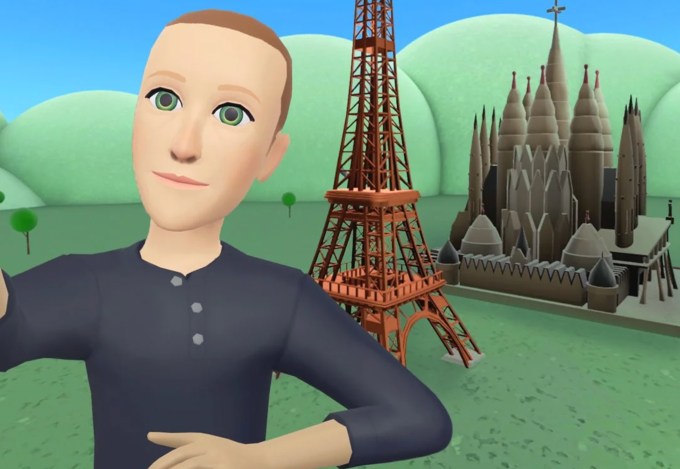
Since rebranding from Facebook to Meta, Zuckerberg’s company has gotten a lot of flack for its complete nosedive into the metaverse. But perhaps one of the most brutal moments came in August, when the CEO posted a selfie in front of a metaverse Eiffel Tower to celebrate the expansion of VR social platform Horizon Worlds into France and Spain.

Mark Zuckerberg avatar

Image Credits: Facebook

His selfie looked so bad that it became a meme, which he had to address by posting another mock-up of what avatars will look like in the future.

Clearly, Mark took the criticism to heart, as he brought it up again on today’s earnings call when an investor asked if Meta’s progress so far has lived up to his expectations.

“I know sometimes when we ship products, there’s a meme where people say, ‘You’re spending all this money and you produce this thing,'” Zuckerberg said. “I think that’s not really the right way to think about it.”

He continued, “I think there’s a number of different products and platforms that we’re building, where we think we’re doing leading work that will become… launching consumer products and then eventually mature products at different cadences, different periods of time over the next 5 to 10 years.”

Some of these consumer products include… legs.

He added that he thinks that the Reality Labs teams are making good progress, and that there’s no indication that suggests that VR and AR won’t be dominant technologies in the future. But he changed the way that he characterized products like Horizon Worlds, describing it as something that Meta is building out in the open and iterating upon in public.

“Obviously it has a long way to go before it’s going to be what we aspire for it to be,” Zuckerberg said about Horizon Worlds. “We think we’re doing some leading work there, but obviously we need to get that into the product and continue innovating on that.”

Still, Zuckerberg continues to project confidence that the billions of dollars Meta is pumping into VR is a good idea.

“A lot of people might disagree with this investment,” Zuckerberg said. “But from what I can tell, I think that this is going to be a very important thing, and I think it would be a mistake for us to not focus on any of these areas, which I think are going to be fundamentally important to the future.”

Zuckerberg sounds a bit more human than normal when he points out that VR and AR are big opportunities for growth in the tech industry. But Zuckerberg’s vision for the metaverse — one in which we are constantly strapped into our headsets — remains a bit hard to swallow. The Quest 2 is actually pretty cool piece of technology, and the next consumer grade headset is sure to be even better. Already on the Quest 2, you can play extremely realistic ping pong with friends from across the world and talk to them like they’re standing right next to you! But do we really want to spend our nine-to-five with a giant screen right against our eyeballs? Would we rather hang out in Horizon Worlds than grab IRL coffee with a friend? Not me, at least.

Y’all really made Mark Zuckerberg defend himself to investors because of your memes by Amanda Silberling originally published on TechCrunch


Daily Crunch: After buying Twitter, will Musk bite back at Apple’s in-app purchase fees?

Daily Crunch: After buying Twitter, will Musk bite back at Apple’s in-app purchase fees?

To get a roundup of TechCrunch’s biggest and most important stories delivered to your inbox every day at 3 p.m. PDT, subscribe here.

Wednesday, and we’re excited to bring you another round of our esteemed Daily Crunch newsletter. There’s a wide variety of morsels, nuggets, and other bite-sized delights, so let’s go! — Christine and Haje

The TechCrunch Top 3

Startups and VC

Asset management firm Stone Ridge has launched a startup accelerator, Wolf, that will be dedicated to growing Bitcoin-focused applications. The program will bring four cohorts per year, each consisting of about eight to 12 teams, or about 30 to 50 founders, to New York City from around the world for eight weeks at a time to focus on building on the Bitcoin-centric Lightning Network and Taro protocol, Kelly Brewster, CEO of Wolf, told Jacquelyn.

Today, for a series of climate-related conversations organized by the global venture firm SOSV, Connie interviewed famed investor Chris Sacca. In their chat, Sacca dismissed questions around whether efforts like carbon capture can work at scale. (“The naysayers kind of fuel me, actually.”) He also said — naturally — that he has “no doubt we will have multiple companies worth trillions of dollars that emerge from our portfolio.” It wound up being a fairly wide-ranging conversation.

Moar? Moar!

Investors are sitting on mountains of cash: Where will it be deployed?

A landscape of gold coins

Image Credits: H-Gall (opens in a new window) / Getty Images

No matter what’s happening in the public markets, bees make honey and venture capitalists raise money: It’s just what they do.

But since the “extreme valuation recalibration” in the public markets, VCs are amassing more and more dry powder, write Jeremy Abelson and Jacob Sonnenberg of Irving Investors.

More frustrating news for founders: Investor fundraising “is on pace to finish the year at $172 billion,” but capital deployment is way down.

“Dollars are flowing and will continue to flow, but it will be more capital to fewer companies,” they write. Now that “traditional SaaS has become too expensive and secondarily saturated,” sectors like web3, life sciences and agtech will attract more investors, they predict.

Three more from the TC+ team:

TechCrunch+ is our membership program that helps founders and startup teams get ahead of the pack. You can sign up here. Use code “DC” for a 15% discount on an annual subscription!

Big Tech Inc.

Kirsten has some late-breaking news that Ford’s and VW’s autonomous vehicle startup Argo AI will be shut down and parts of it will be absorbed by the two companies. This story is still developing, so keep going back to it for more, particularly a comment from the companies in question.

Who doesn’t like a good fraction yelled at them? Duolingo certainly does not. Natasha M writes that Duolingo’s owl will now shout all the fractions you want at you as part of its new math app that is now public after spending some months in beta.

And we have five more for you:

Daily Crunch: After buying Twitter, will Musk bite back at Apple’s in-app purchase fees? by Christine Hall originally published on TechCrunch


Meta will release a new consumer-grade VR headset next year

Meta will release a new consumer-grade VR headset next year

A follow-up to the Quest 2, Meta is launching another consumer-grade virtual reality headset next year.

The company announced this during today’s Q3 earnings call, in which the company marked yet another $3 billion quarterly loss to its metaverse investments. But CFO David Wehner says that some of this continued cost can be explained via Meta’s continued investment in new hardware development, including another consumer-grade headset that will come out next year.

Just weeks ago, Meta unveiled the Quest Pro, a $1,499 headset that is targeted toward power users, especially those who will use it to work. But existing headsets like the Quest 2 are aimed to immerse average people in the company’s dreams for the metaverse. Right now, the Quest 2 retails for $399, but this summer, Meta hiked the price by $100 to try to make up for lost costs.

We don’t know much more about Meta’s new headset, aside from the fact that … it’s in the works! But in the lead up to the Quest Pro, previously referred to as “Project Cambria,” Meta dropped a whole lot of breadcrumbs to hype up the powerful headset, so it’s only a matter of time before we learn more.

“There’s still a long road ahead to build the next computing platform. But we’re clearly doing leading work here. This is a massive undertaking and it’s often gonna take a few versions of each product before they become mainstream,” Zuckerberg said on today’s earnings call. “But I think that our work here is going to be of historic importance and create the foundation for an entirely new way that we will interact with each other and blend technology into our lives, as well as the foundation for the long term of our business.”


Meta will release a new consumer-grade VR headset next year by Amanda Silberling originally published on TechCrunch


Ford takes $2.7B hit on Argo shutdown, shifts its bet to driver assist tech

Ford takes $2.7B hit on Argo shutdown, shifts its bet to driver assist tech

As the third-quarter earnings drumbeat continues, we learned more about the state of global supply chains, global consumer appetite for big-ticket items and the future of self-driving technology.

After the bell this afternoon, Ford beat Wall Street analyst revenue estimates of $36.25 billion, per Yahoo Finance, with automotive Q3 2022 top line of $37.2 billion, and total revenues of $39.25 billion, up 10% despite lingering supply chain issues. The company’s adjusted earnings per share also came in ahead of expectations.

However, the financial news was quickly outweighed at least in commentary terms by the company’s choices regarding autonomous vehicle technology. TechCrunch broke the news earlier Wednesday that Argo AI, a self-driving company in which Ford was an investor, is shutting down.

Ford, in its earnings report, wrote that it is shifting its capital spend from the Level 4 autonomous systems being developed by Argo AI to internally developed “L2+/L3” advanced driver assistance technology.

“So it’s taking that investment and putting it towards a business where we think we will have a sizable return in the near term relative to one that’s going to have a long arc,” said Doug Field, chief advanced product development and technology officer at Ford, during Wednesday’s investor call. 

Jim Farley, Ford’s CEO, even went so far as to say “profitable, fully autonomous vehicles at scale are a long way off and we won’t necessarily have to create that technology for ourselves.” 

“We don’t expect a single ‘Aha!’ moment like we used to,” he said during a call with investors. “Advancing Level 2 hardware and software beyond what Blue Cruise can do today, and ultimately enabling our customers to travel in very large ODDs or operating domains with their eyes off the road will give them back the single most valuable commodity in our modern lives. Time.”

Letting go of the Argo AI investment, however, had a material impact on the company’s profitability in the quarter. To unwind the trade, Ford had to endure a $2.7 billion “non-cash, pretax impairment” on its Argo stake. That pushed the company’s GAAP results into negative territory for the three-month period.

Taking a huge pre-tax loss is notable, as is the shift to focus on lower-level driver-assist technologies. 

The company had some good news to report, however, apart from its top-and-bottom line beats: profitability. Per the automotive company, Ford expects 2022 to bring in $11.5 billion in earnings before interest and taxes. Free cash flow projections for the year also ticked higher, with Ford anticipating $9.5 billion to $10.0 billion worth of the substance in 2022. (Ford’s EBIT in the third-quarter of $1.8 billion was above its own expectations.)

The news of Argo’s dissolution comes not even a month after the company officially launched a robotaxi service on Lyft’s network in Austin using a fleet of Ford Escape hybrid vehicles. Last month, Argo also launched an ecosystem of products and services aiming to support commercial delivery and robotaxi operations. It’s not clear what will happen with those services now, and Argo did not respond to TechCrunch in time. 

Ford’s view that it can forgo investments into pricey — and seemingly yet far-out — self-driving technology could mean a dearth of future deals from major car companies into smaller, tech-heavy autonomous companies. And the pullback in optimism could impact suppliers for those companies — the lidar concerns, and their ilk.

Last week at TechCrunch Disrupt, Rivian founder and CEO RJ Scaringe shared similar sentiments to Farley’s, saying that fully autonomous vehicles would be harder to achieve and scale. He said Rivian would pursue Level 2 and Level 3 systems which are on cars now and are getting increasingly better every day. 

Ford is not the only company struggling with its self-driving ambitions; Tesla is reportedly in trouble with the U.S. government about its own self-driving tech. The U.S. Department of Justice is reportedly investigating the company regarding its “Autopilot” capabilities, which is Tesla’s advanced driver assistance system that CEO Elon Musk has boldly claimed can drive itself in certain scenarios. 

This story is developing. Check back in for updates.

Ford takes $2.7B hit on Argo shutdown, shifts its bet to driver assist tech by Rebecca Bellan originally published on TechCrunch